
The Lumorrow Blog
The ad-tech library.
Plain-English guides to how programmatic really works — plus analysis of where the industry is heading. 74 articles, organized by topic.
Latest
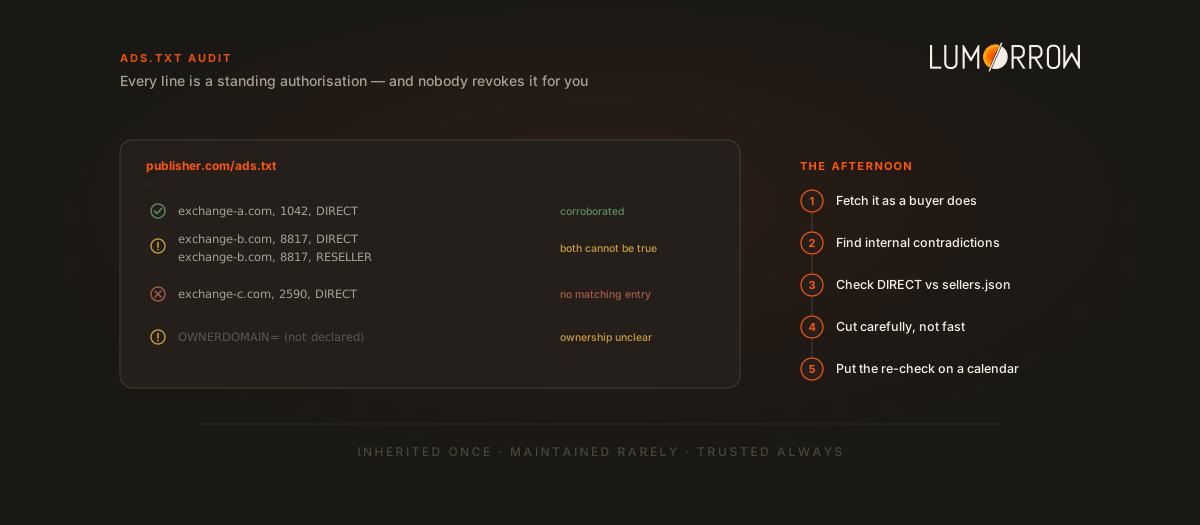
How to audit your ads.txt in an afternoon
Most ads.txt files were written once and inherited ever since. Here's a five-step audit any publisher can run today — find the contradictions, check every DIRECT claim against the other side, and cut what shouldn't be there.
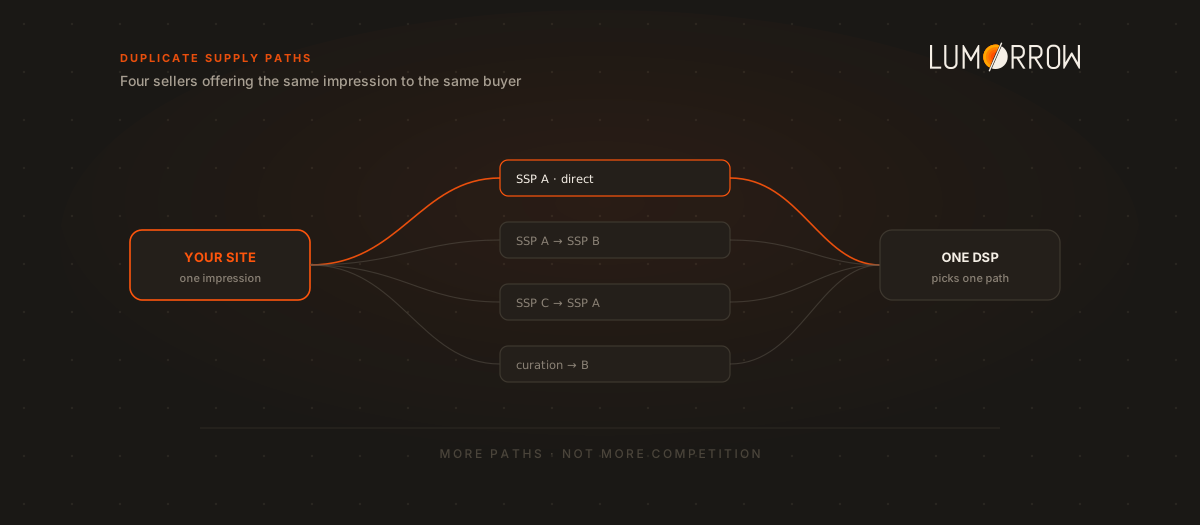
When your direct demand is bidding against your own resellers
The same impression can reach the same buyer down four different paths. When it does, you don't get more competition — you get the cheapest version of the same bid. Here's how duplicate paths form, and how to find yours.

Your first 30 days on a new exchange
A new demand partner rarely performs on day one, and judging it in week one is how good partners get cut early. Here's a 30-day ramp: what to check, what to ignore, and the one number that should decide it.
Start Here & Reference
New to ad tech? Begin with these. 2
The ad tech glossary: every term you'll actually encounter, explained
Ad tech runs on acronyms. This glossary defines the terms that matter — SSP, DSP, eCPM, VAST, SSAI, GRP, MFA, SDA and dozens more — in plain English, with links to a full guide on each.

Start here: a guided path through programmatic advertising
New to ad tech, or filling gaps? This is a structured reading path through the whole field — from what an SSP is, to auctions, supply quality, identity, channels, and measurement. Roughly a weekend's reading, in the right order.
For Publishers
Running the revenue side of a publishing business. 5 When your direct demand is bidding against your own resellers
The same impression can reach the same buyer down four different paths. When it does, you don't get more competition — you get the cheapest version of the same bid. Here's how duplicate paths form, and how to find yours.
Your first 30 days on a new exchange
A new demand partner rarely performs on day one, and judging it in week one is how good partners get cut early. Here's a 30-day ramp: what to check, what to ignore, and the one number that should decide it.

How to vet an SSP before you integrate
Adding a demand partner takes an afternoon. Removing one takes a quarter. Here are the questions worth asking first — about fees, position in the supply chain, payment risk, and what happens when something breaks.
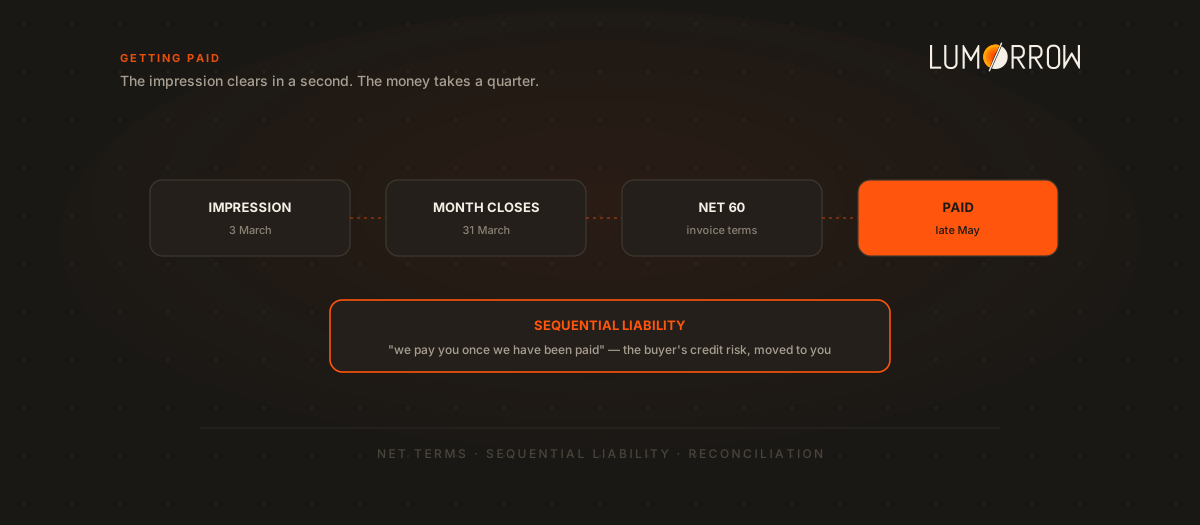
Getting paid: net terms, sequential liability, and the reconciliation gap
The auction is the interesting part. Getting the money is the part that decides whether a partnership works. Here's how publisher payment actually flows, and the three clauses that determine what you're owed and when.
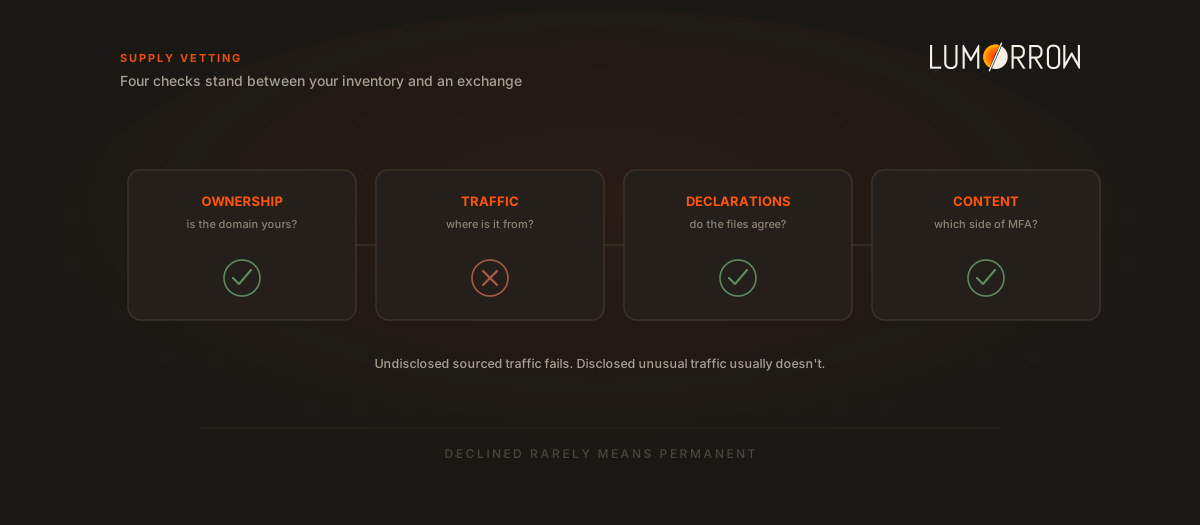
Why exchanges reject publishers — what supply vetting actually checks
Most publishers who get declined never find out why. Here's what an exchange checks before accepting your inventory — ownership, traffic provenance, declarations, and content — and what to fix before you reapply.
Industry & Trends
What's moving in ad tech right now. 7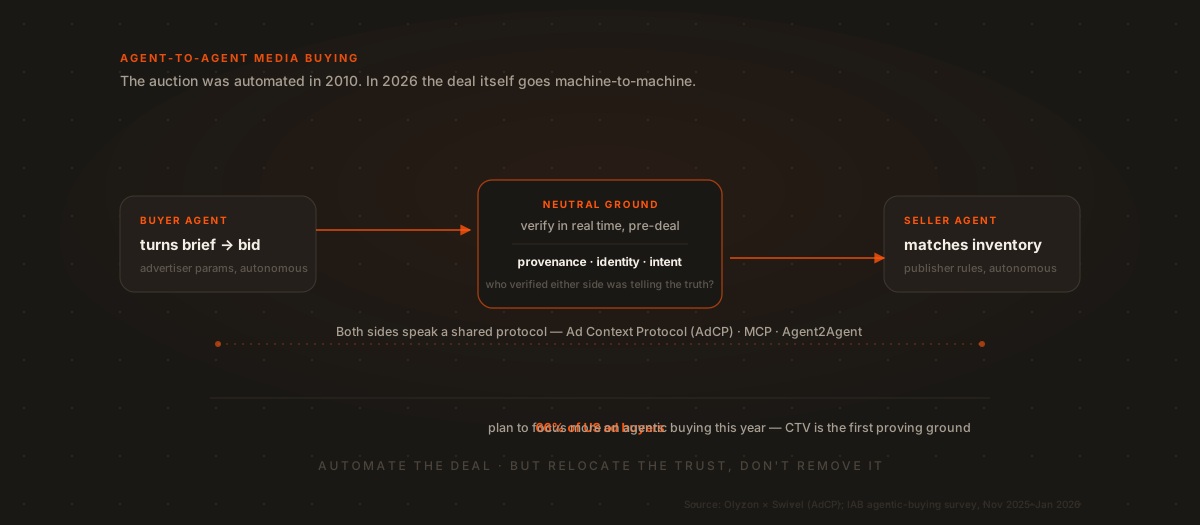
Agent-to-agent media buying is here — and it needs a protocol, not a pitch
For 15 years machines ran the auction while humans set up the deal. That's flipping. Buyer agents are now negotiating directly with seller agents — and the real story isn't the AI, it's the protocol layer forming underneath it. CTV is the first proving ground.
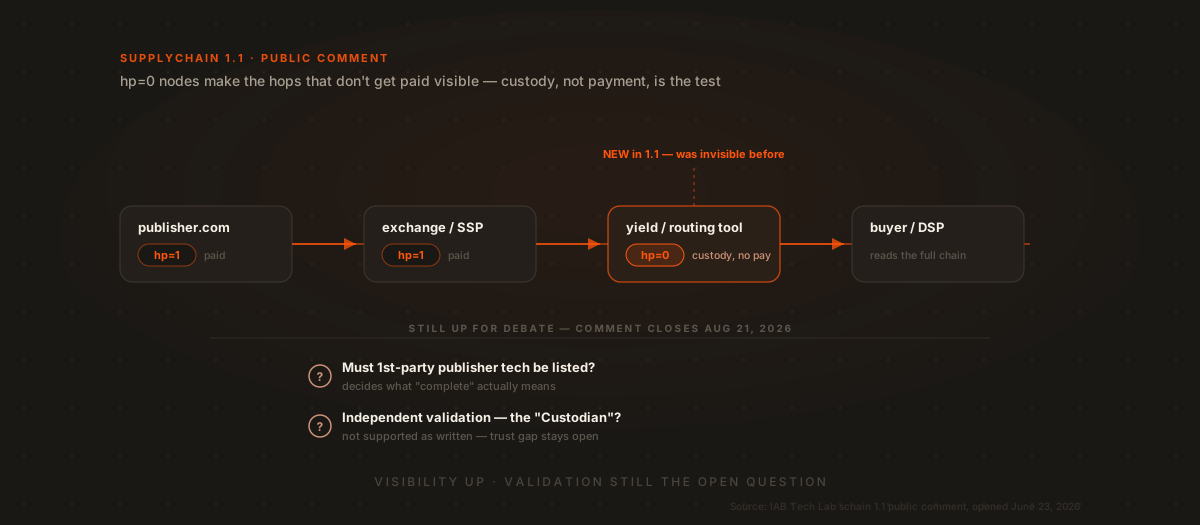
SupplyChain 1.1: the hops that don't get paid are about to become visible
IAB Tech Lab's schain 1.1 proposal is out for public comment. Its core move — formally adopting hp=0 nodes — closes a years-old blind spot: the intermediaries that touch your bid request but never handle the money. Here's what it changes, and the two fights that will decide how far it goes.
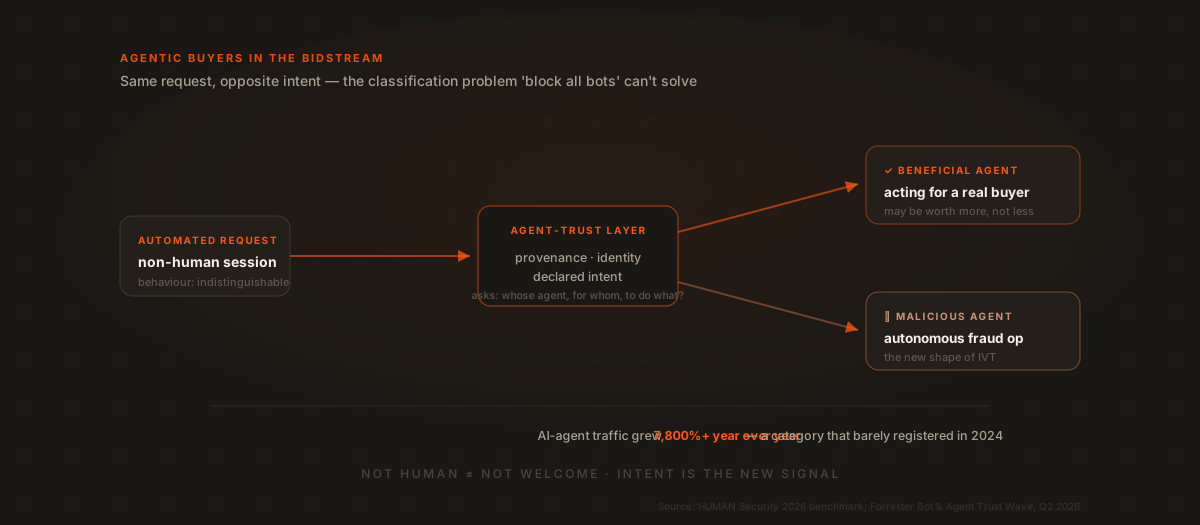
Agentic buyers are entering the bidstream — and 'block all bots' just broke
AI agents are starting to browse, shop, and transact on behalf of real people. For ad tech, that breaks the oldest rule in fraud defense: automation is no longer the same as fraud. The mid-2026 state of agentic traffic.
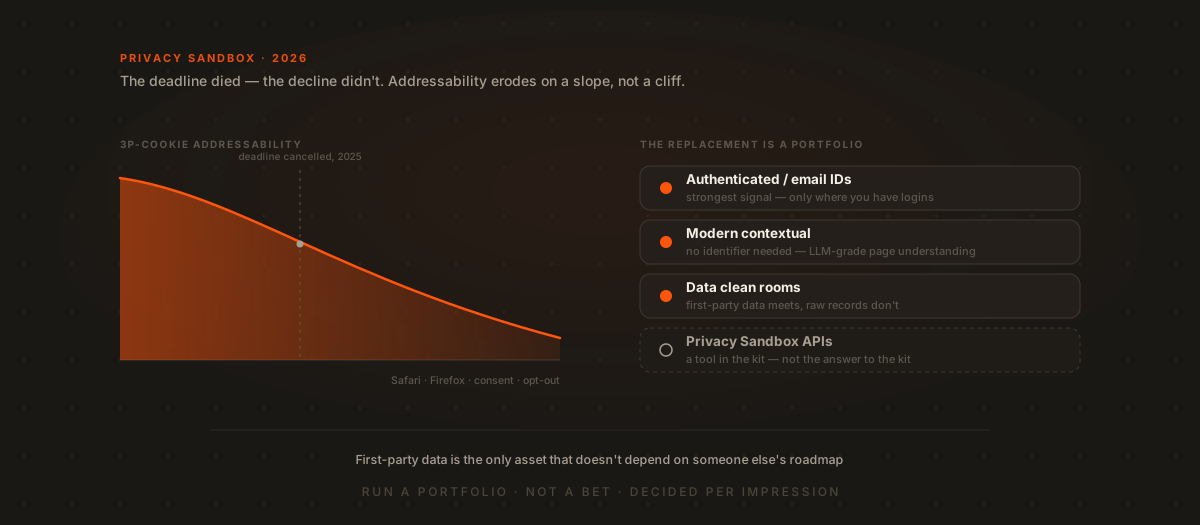
The cookieless deadline that never arrives: Privacy Sandbox, mid-2026
Google stopped trying to kill the third-party cookie — but the cookie is dying anyway, just unevenly. Where Privacy Sandbox, alternative IDs, and first-party data actually stand for publishers in mid-2026.
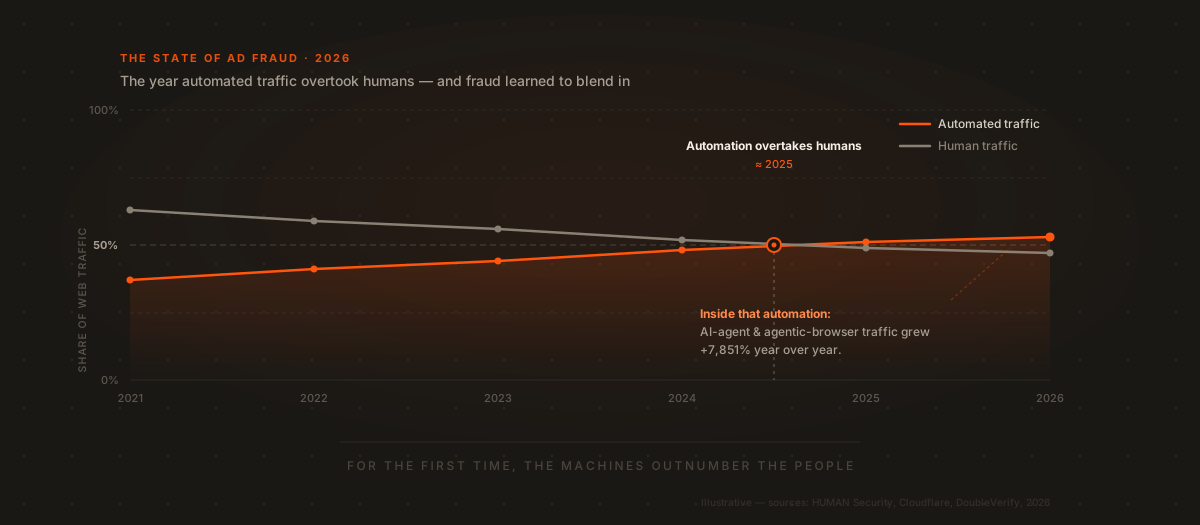
Ad fraud in 2026: the year the bots learned to act human
AI is arming both sides of the ad-fraud fight. CTV schemes are up 140%, automated traffic just passed humans, and 'is it a bot or an agent?' is the new detection problem. The June 2026 state of ad fraud.
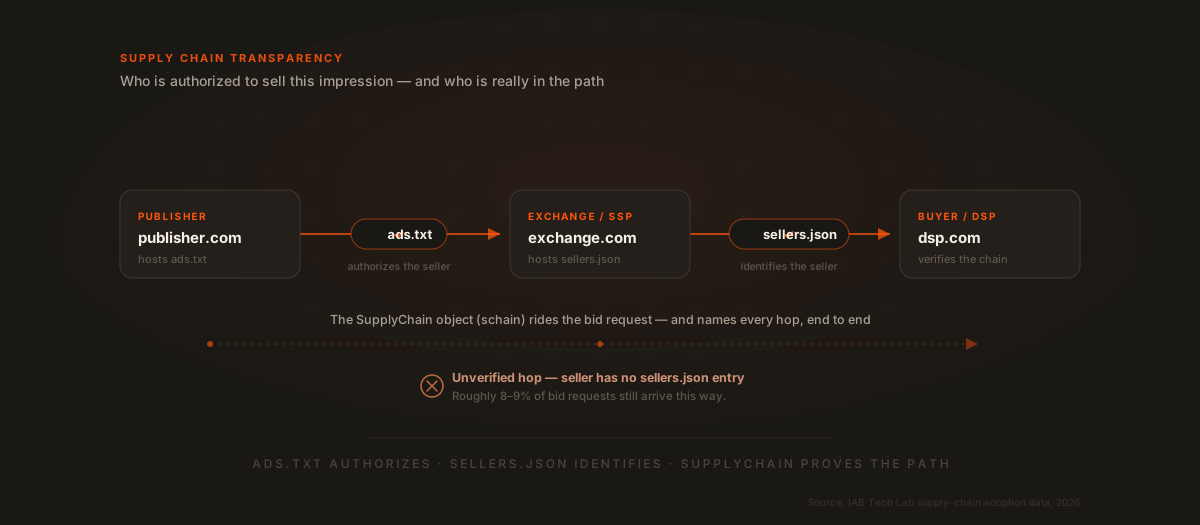
Who's really selling this impression? The 2026 state of supply-chain transparency
ads.txt and sellers.json made the programmatic supply chain legible. In 2026, a transaction-ID fracture, a curation fight, and a new IAB Tech Lab council are redrawing the map. Here's the state of play.
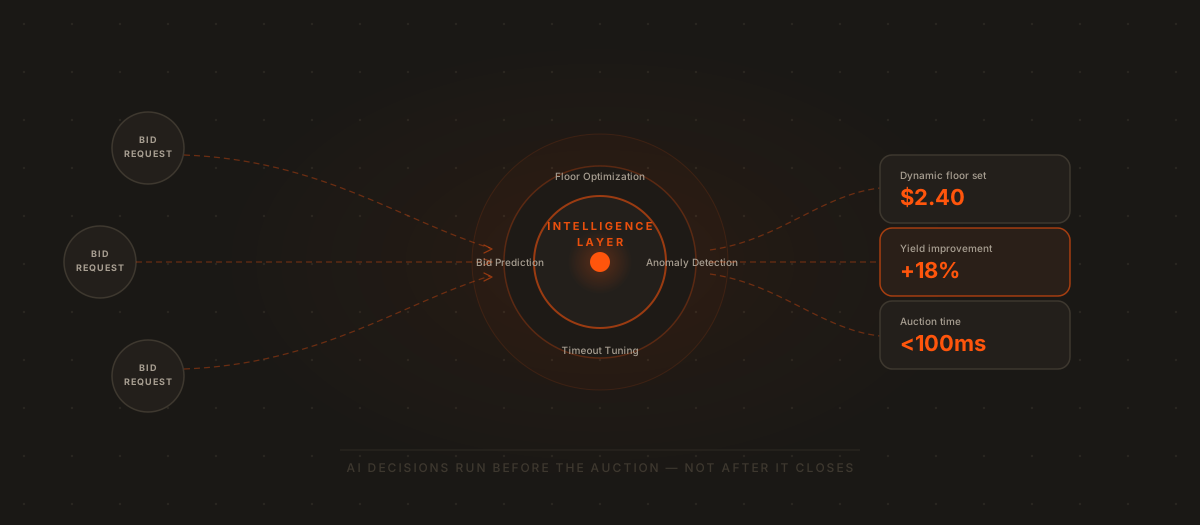
Why we built Lumorrow: the intelligence layer programmatic missed
Most ad exchanges optimize after the auction ends. We thought the interesting work happens before it begins.
Programmatic Foundations
How the pieces fit together. 10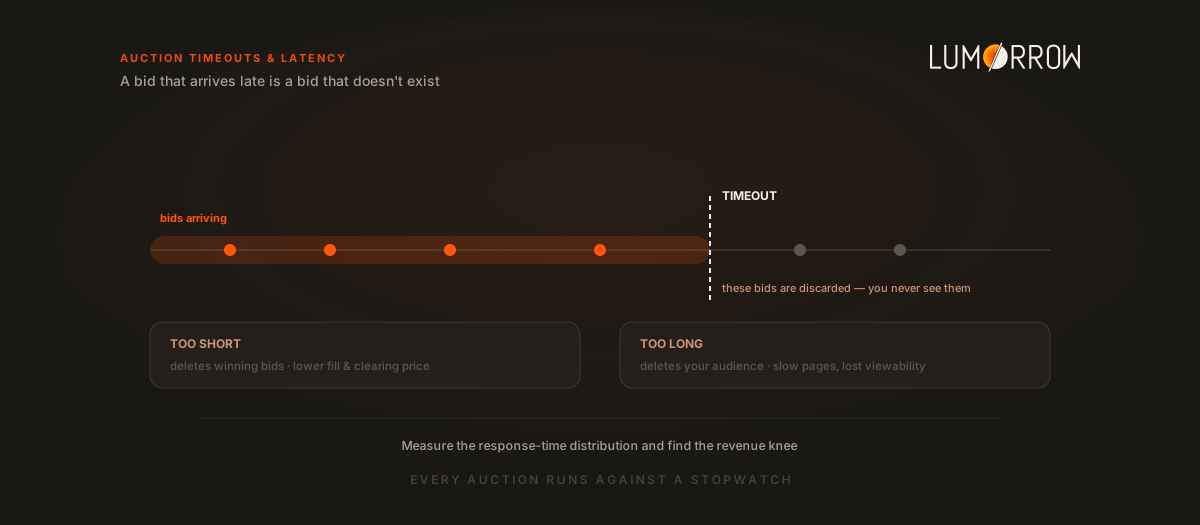
Auction timeouts and latency explained: the stopwatch every impression runs against
Every programmatic auction runs against a deadline. Set the timeout too short and you lose bids; too long and you lose the user. Here's how auction timeouts work, where latency comes from, and how to find the right setting.
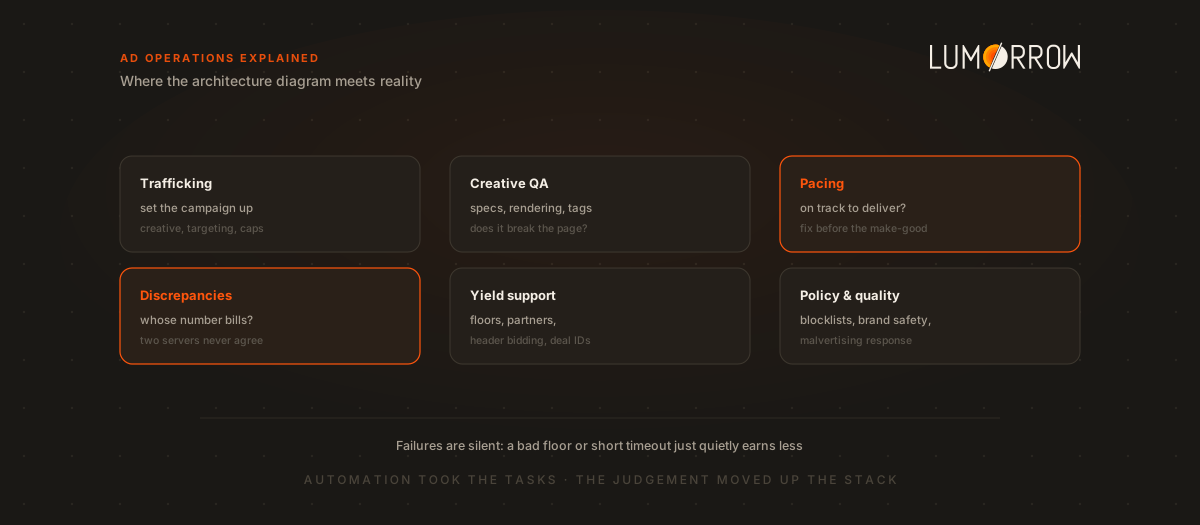
Ad operations explained: the people who make advertising actually run
Ad ops is the function that traffics campaigns, QAs creative, troubleshoots discrepancies, and keeps monetization running. Here's what ad ops actually does day to day, on both the sell side and the buy side, and how the role is changing.
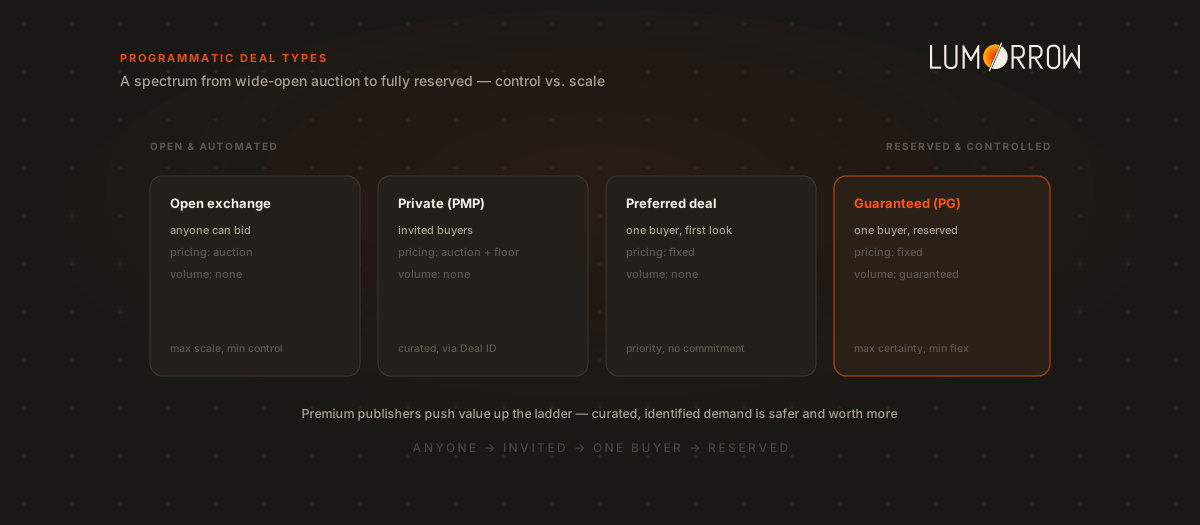
Programmatic deal types explained: open exchange, PMP, preferred, and guaranteed
Not all programmatic is an open auction. Private marketplaces, preferred deals, and programmatic guaranteed give buyers and publishers more control and premium inventory. Here's how the four deal types differ and when each is used.
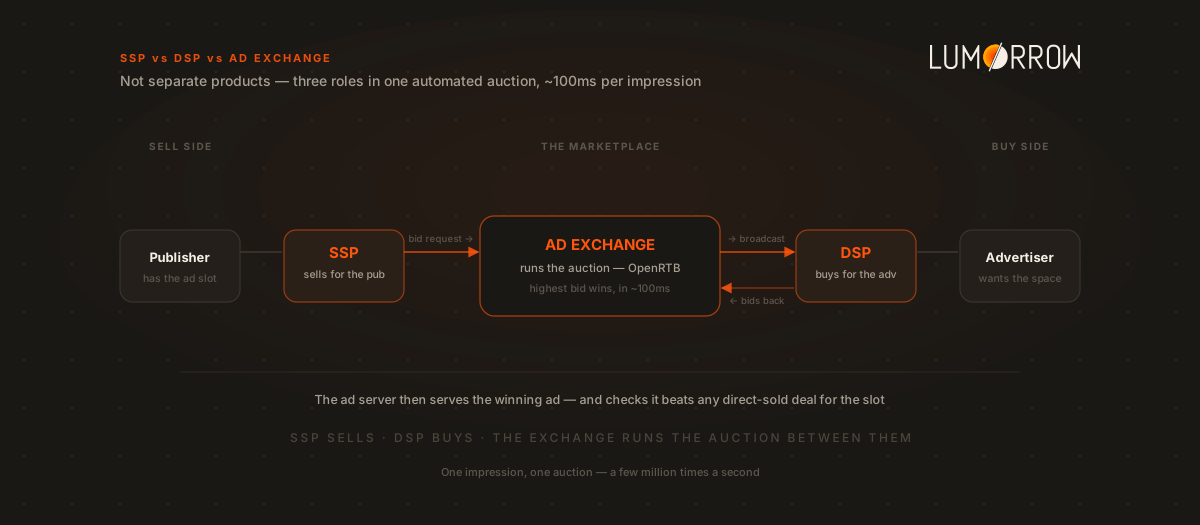
SSP vs DSP vs ad exchange: how the programmatic stack fits together
SSP, DSP, ad exchange, ad server — the programmatic acronyms describe who sits where in a single automated auction. Here's what each one does, how they connect, and how an impression travels from publisher to advertiser.
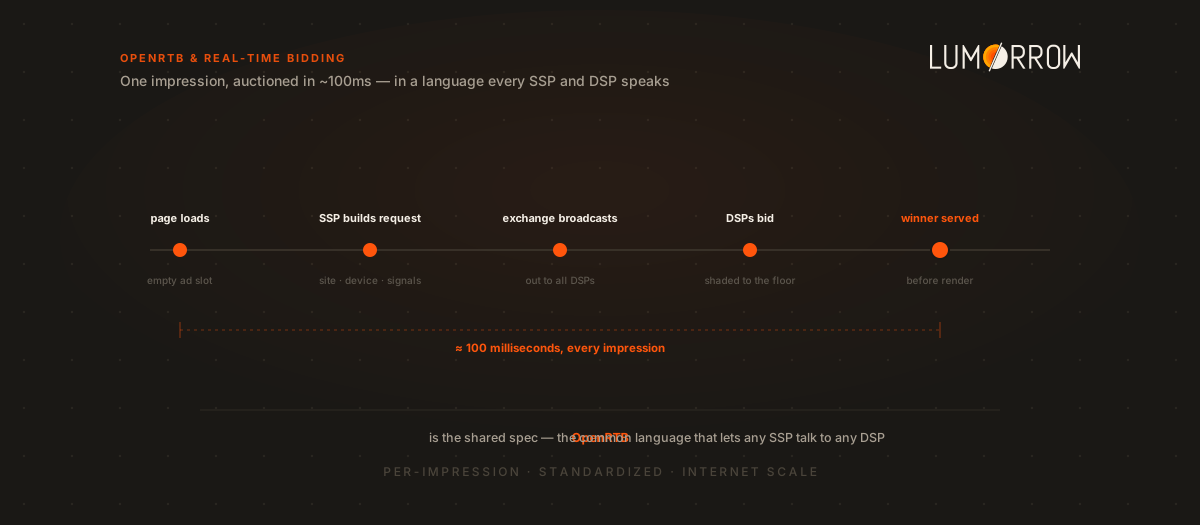
OpenRTB and real-time bidding explained: the auction behind every impression
Real-time bidding is how a single ad impression is auctioned in the ~100 milliseconds a page takes to load. OpenRTB is the shared language that makes it possible. Here's how RTB works, step by step, and why OpenRTB matters.

Header bidding explained: how it works, and what's changed by 2026
Header bidding lets publishers offer inventory to many demand sources at once, before the ad server decides. Here's how it actually works — client-side vs. server-side vs. hybrid — and where it's heading in 2026.
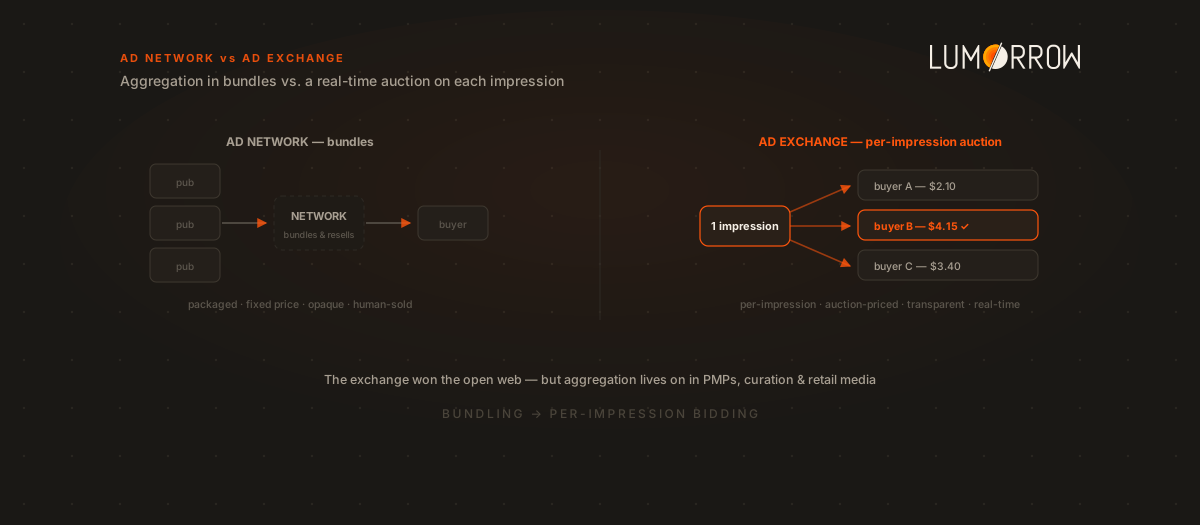
Ad networks vs ad exchanges explained: aggregation vs the open auction
Ad networks and ad exchanges both connect buyers and sellers, but they work differently. Networks aggregate and resell inventory in bundles; exchanges run a real-time auction on each impression. Here's the difference, the history, and where networks still fit.
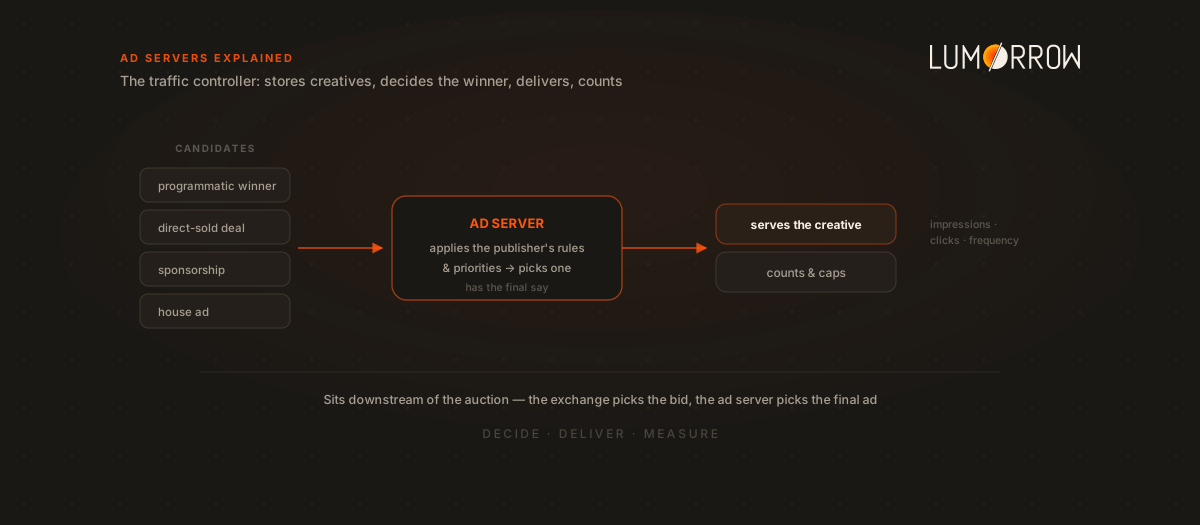
Ad servers explained: the system that decides which ad to show
An ad server stores creatives, decides which ad wins a given impression, delivers it, and counts the result. Here's what an ad server does, how first-party and third-party ad servers differ, and where it sits next to the programmatic auction.
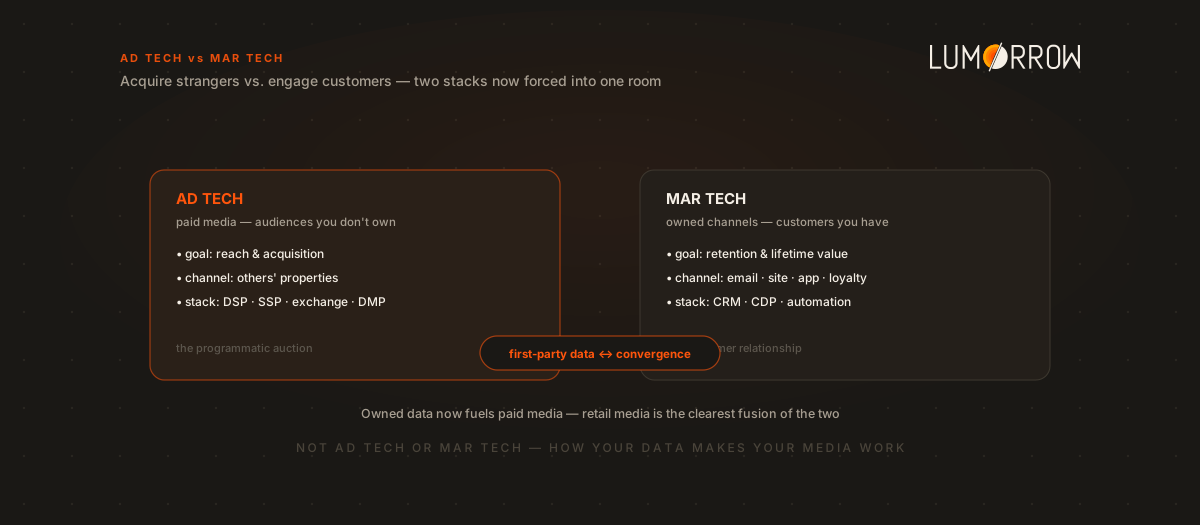
Ad tech vs mar tech explained: two stacks that keep converging
Ad tech powers paid media; mar tech powers owned channels and customer relationships. The line was once clear and is now blurring. Here's what each stack does, where they differ, and why first-party data is pulling them together.
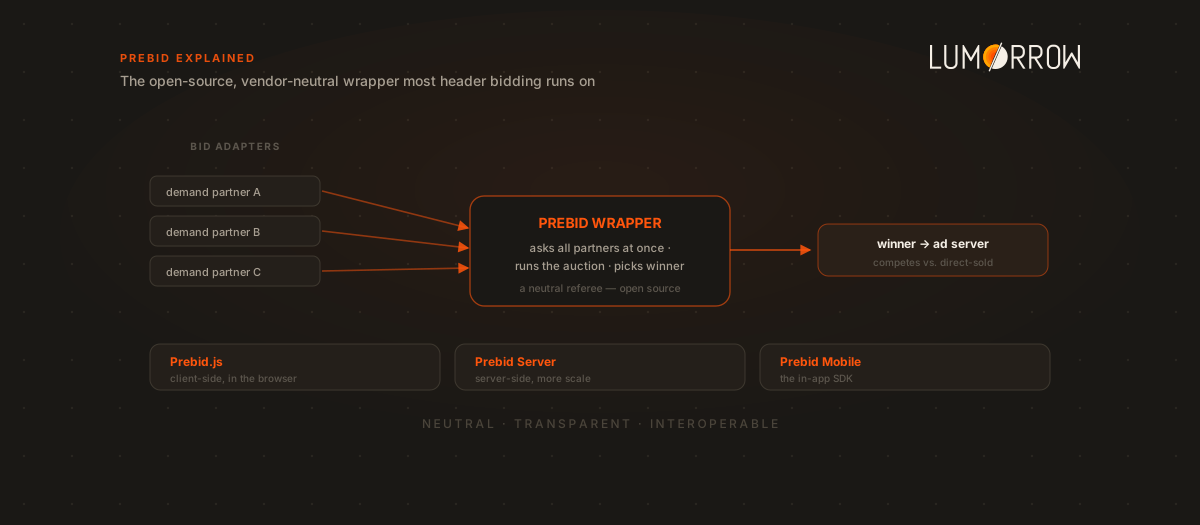
Prebid explained: the open-source backbone of header bidding
Prebid is the open-source framework that most header bidding runs on. Here's what Prebid.js, Prebid Server, and Prebid Mobile do, how the wrapper orchestrates the auction, and why an open standard came to dominate publisher monetization.
Auctions, Pricing & Yield
How an impression gets priced. 7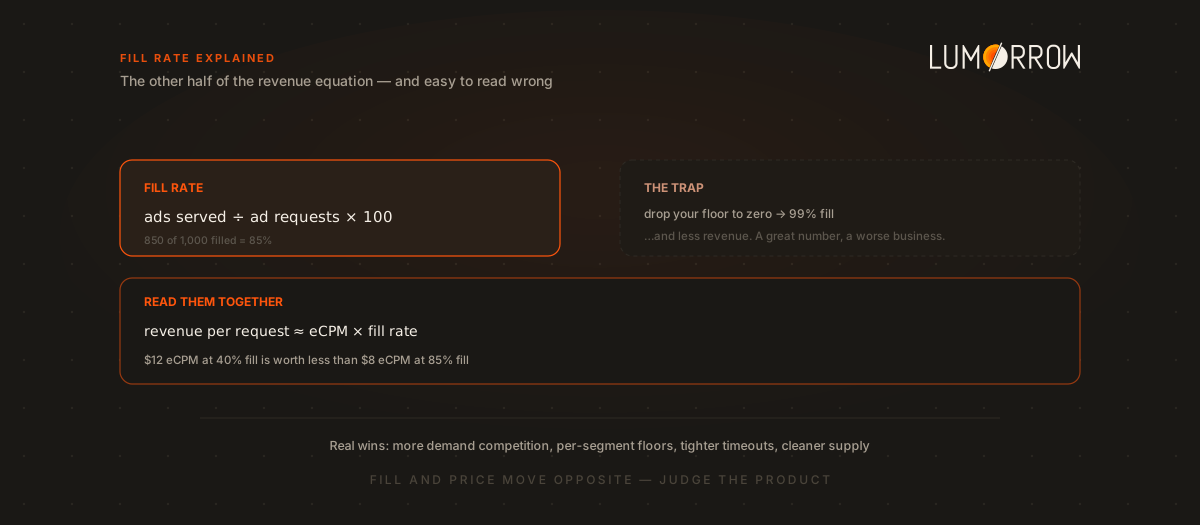
Fill rate explained: the other half of the revenue equation
Fill rate is the share of ad requests that actually returned a paid ad. It's simple to calculate and easy to misread — a high fill rate can mean you're underpricing. Here's how fill rate works and how to read it alongside eCPM.
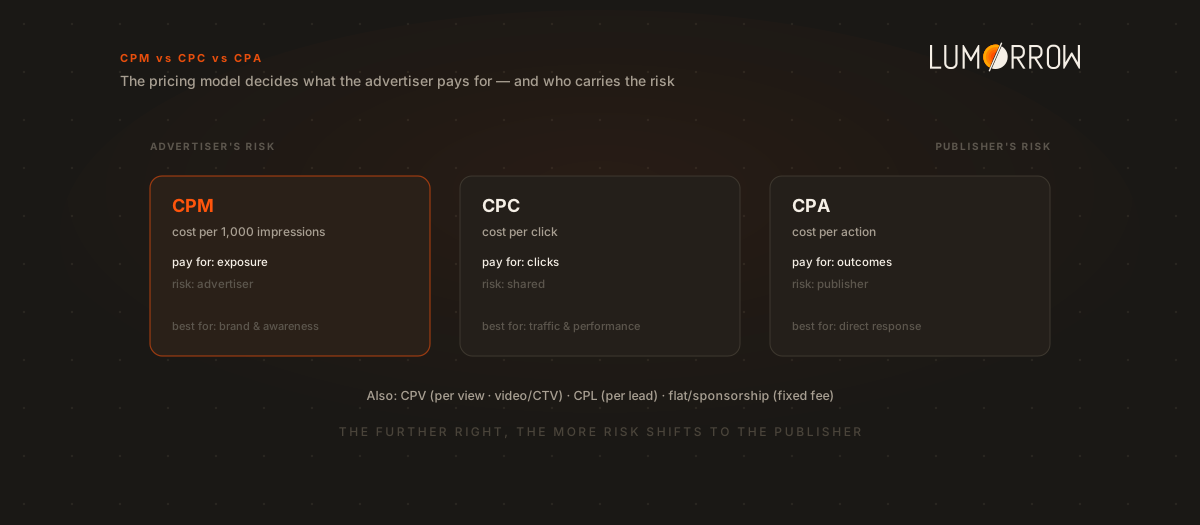
CPM vs CPC vs CPA: ad pricing models explained
CPM, CPC, CPA, CPV — digital ad pricing models decide who carries the risk between publisher and advertiser. Here's what each one means, how they differ, and when each is used.

Bid shading in 2026: the quiet tax first-price auctions put on your yield
When programmatic flipped to first-price auctions, buyers got a new job: never bid what they're actually willing to pay. Here's how bid shading works, what it costs publishers, and the one lever that fights back.
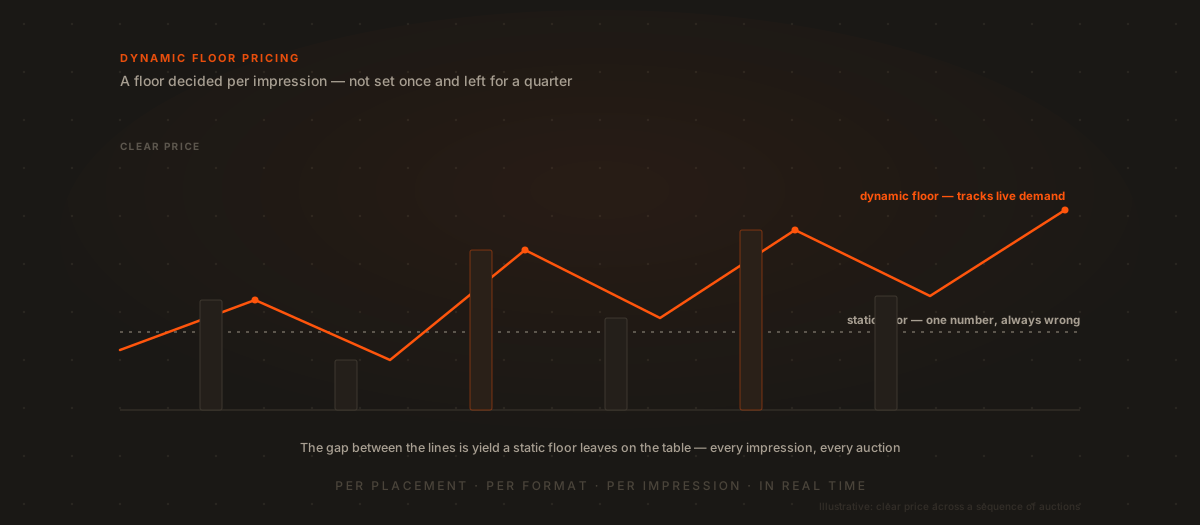
Dynamic floor pricing: the lever most publishers set once and forget
Your floor price is the single most direct control you have over yield — and most publishers touch it quarterly, if that. Here's why static floors leak money, and what a real floor strategy looks like.
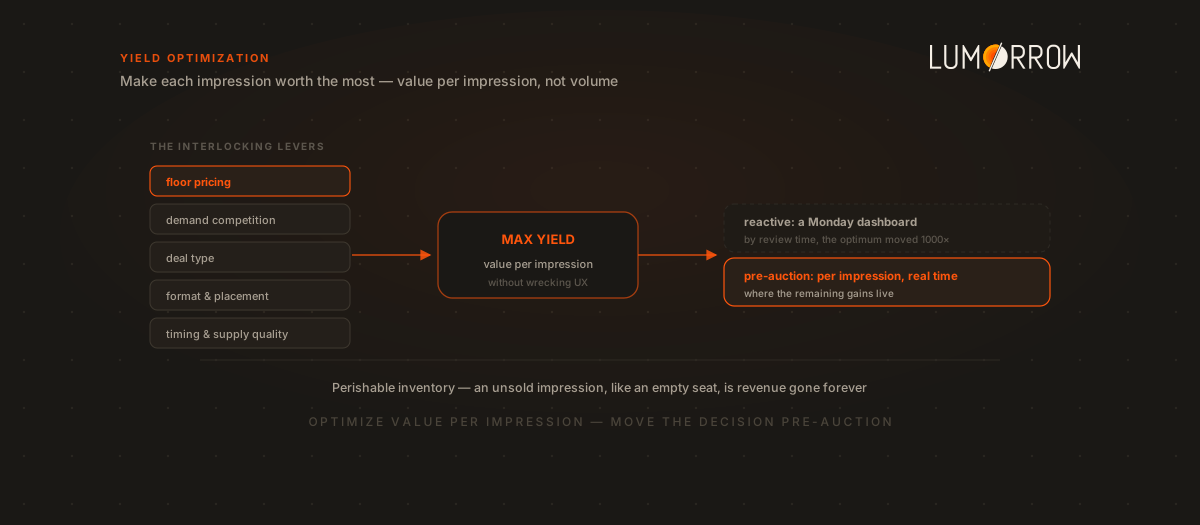
Yield optimization explained: getting the most from every impression
Yield optimization is the discipline of maximizing revenue from a publisher's inventory — through floors, demand mix, formats, and timing. Here's what yield management means, the levers that drive it, and why the real gains are moving pre-auction.
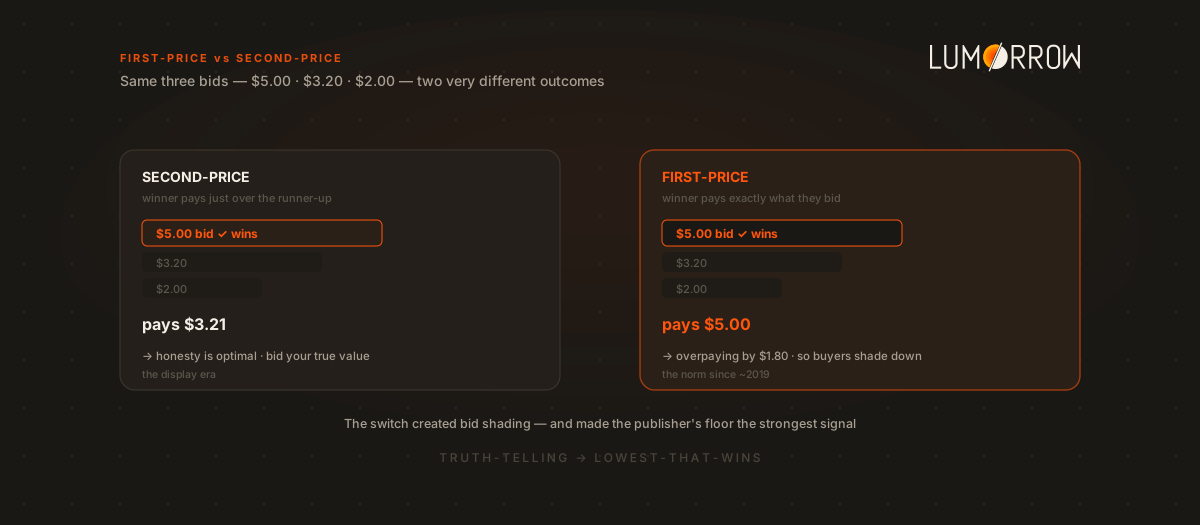
First-price vs second-price auctions explained: how programmatic prices an impression
Programmatic auctions decide what you pay for an impression. Second-price ruled the display era; first-price took over around 2019 and changed everything. Here's how each works, why the industry switched, and what it means for buyers and publishers.
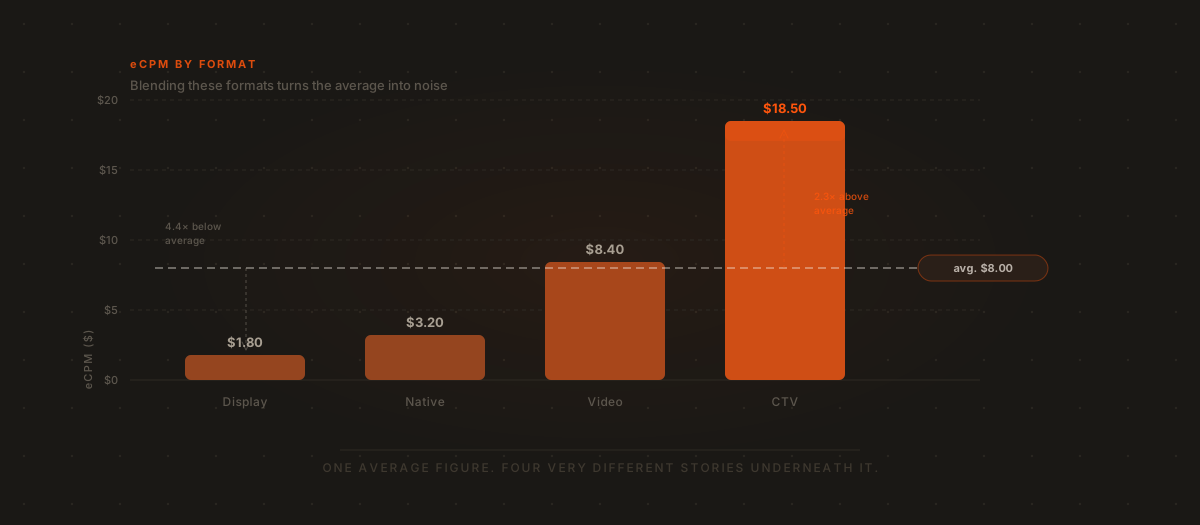
Understanding eCPM: why the number you're watching might be misleading you
eCPM is the most-watched metric in publisher monetization. It's also one of the most misunderstood. Here's what to look for instead.
Supply Chain, Quality & Fraud
Where the money — and the risk — hide. 11 How to audit your ads.txt in an afternoon
Most ads.txt files were written once and inherited ever since. Here's a five-step audit any publisher can run today — find the contradictions, check every DIRECT claim against the other side, and cut what shouldn't be there.

Your ads.txt says one thing. The exchange's sellers.json says another.
Publishers declare who may sell their inventory. Exchanges declare who their publishers are. Nobody checks whether the two agree — so we built something that does.
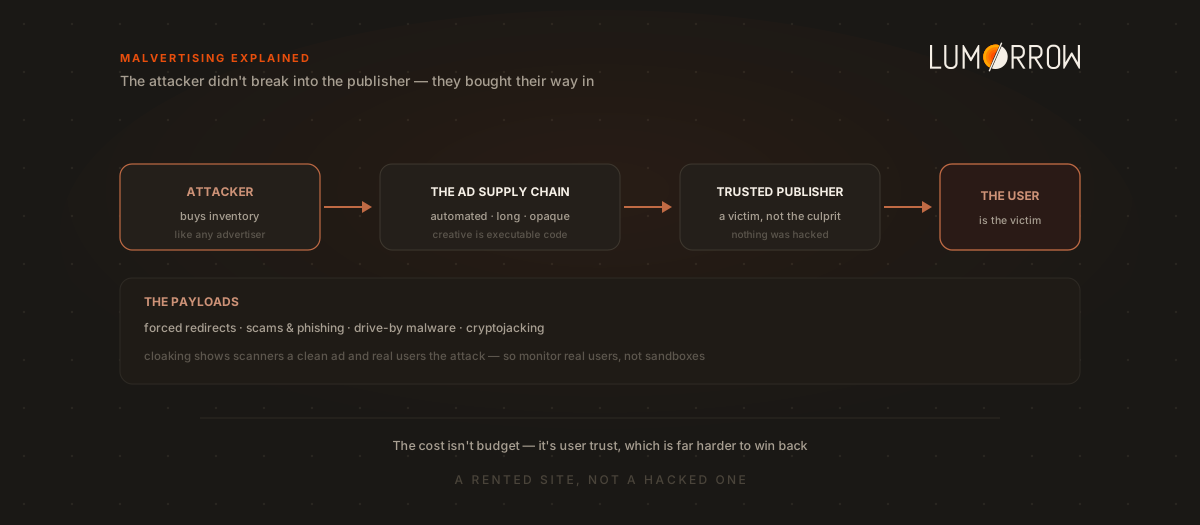
Malvertising explained: when the ad supply chain becomes an attack vector
Malvertising uses legitimate ad networks to deliver malware, scams, and forced redirects to real users on real sites. Here's how it works, why the supply chain makes it possible, and how publishers and buyers defend against it.
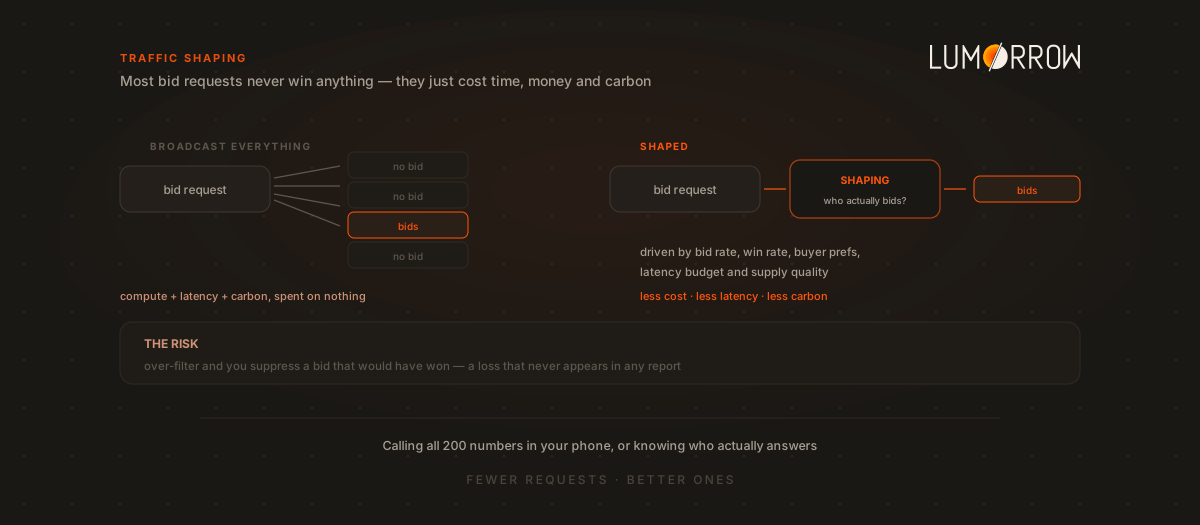
Traffic shaping explained: sending fewer bid requests, and better ones
Most bid requests never win anything — they just cost compute, latency, and carbon. Traffic shaping is how exchanges decide which requests are worth forwarding. Here's how it works and why it's become essential infrastructure.
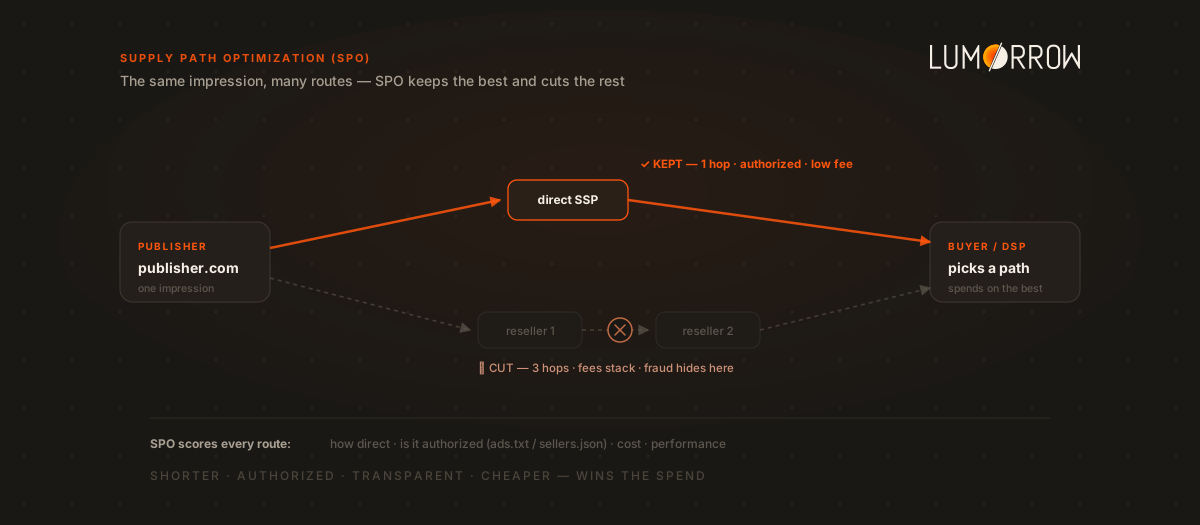
Supply path optimization (SPO) explained: fewer, cleaner paths to inventory
The same impression can reach a buyer through a dozen different routes — at a dozen different prices and quality levels. Supply path optimization is how buyers pick the best one. Here's how SPO works and why it matters more than ever.
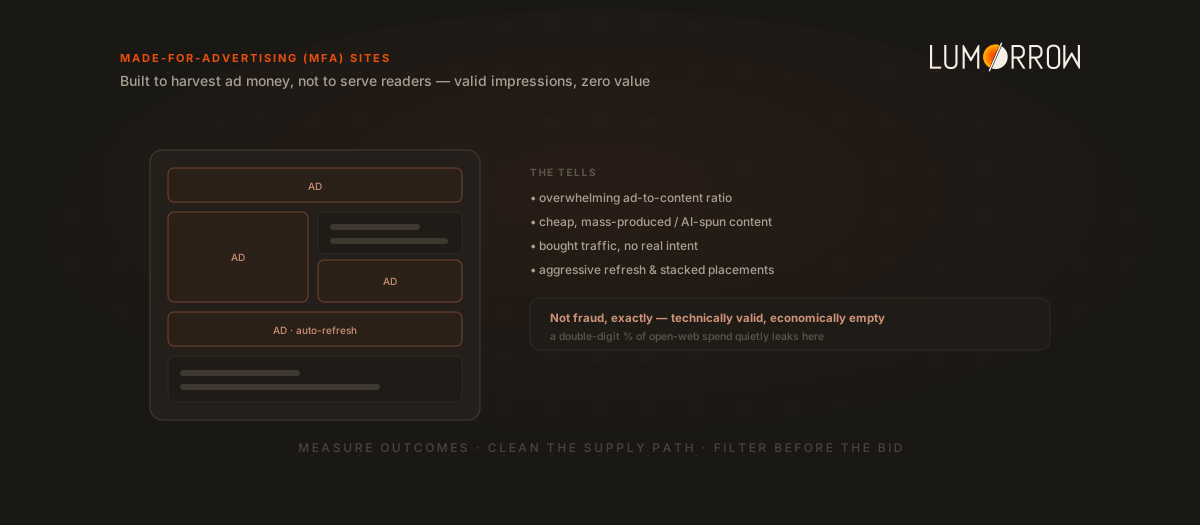
Made-for-advertising (MFA) sites explained: the junk draining ad budgets
Made-for-advertising sites exist to harvest ad revenue, not to serve readers — crammed with ads, cheap content, and bought traffic. Here's how to recognize MFA, why so much budget leaks into it, and how the industry is fighting back.

Brand safety and suitability explained: keeping ads away from the wrong content
Brand safety keeps ads off harmful content; brand suitability tailors that line to each advertiser. Here's the difference, how blocklists and category controls work, why over-blocking hurts publishers, and how the field is moving from crude keywords to context.

ads.txt and sellers.json explained: the files that authorize the supply chain
ads.txt, app-ads.txt, and sellers.json are plain-text files that let buyers verify who is authorized to sell a publisher's inventory. Here's what each file does, how they work together, and why they're the foundation of supply-chain transparency.

Sustainability in ad tech explained: the carbon cost of the ad supply chain
Every ad impression runs servers, and programmatic's convoluted supply chains burn energy at massive scale. Here's what ad tech's carbon footprint is, where the emissions come from, and why cleaning up the supply chain is both a green and an efficiency win.
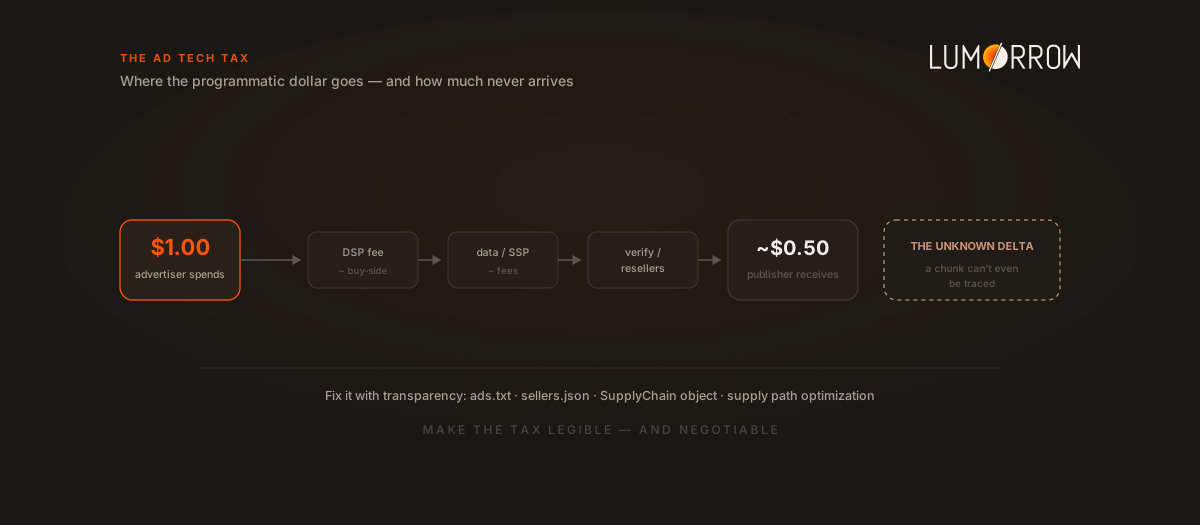
The ad tech tax explained: where the programmatic dollar actually goes
Of every dollar an advertiser spends programmatically, only a fraction reaches the publisher. The rest — the 'ad tech tax' — is taken by intermediaries. Here's where the money goes, why so much is unaccounted for, and how transparency fights back.
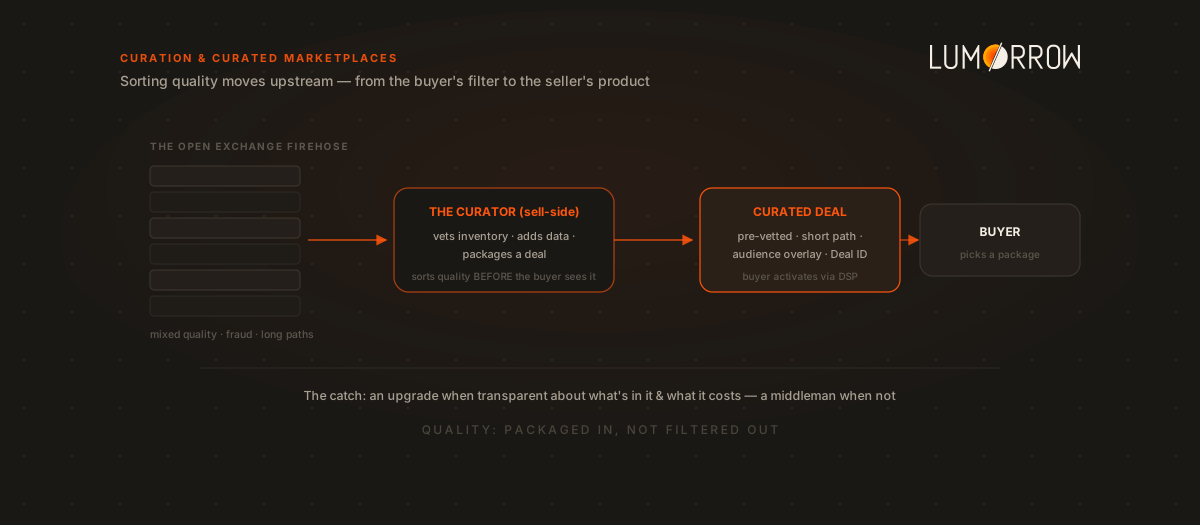
Curation explained: how curated marketplaces are reshaping programmatic
Curation packages quality, verified inventory and audiences into ready-to-buy deals on the sell side. Here's what a curated marketplace is, why curation moved from the buy side to the sell side, and why it's one of the biggest shifts in programmatic.
Identity, Data & Privacy
Life after the third-party cookie. 7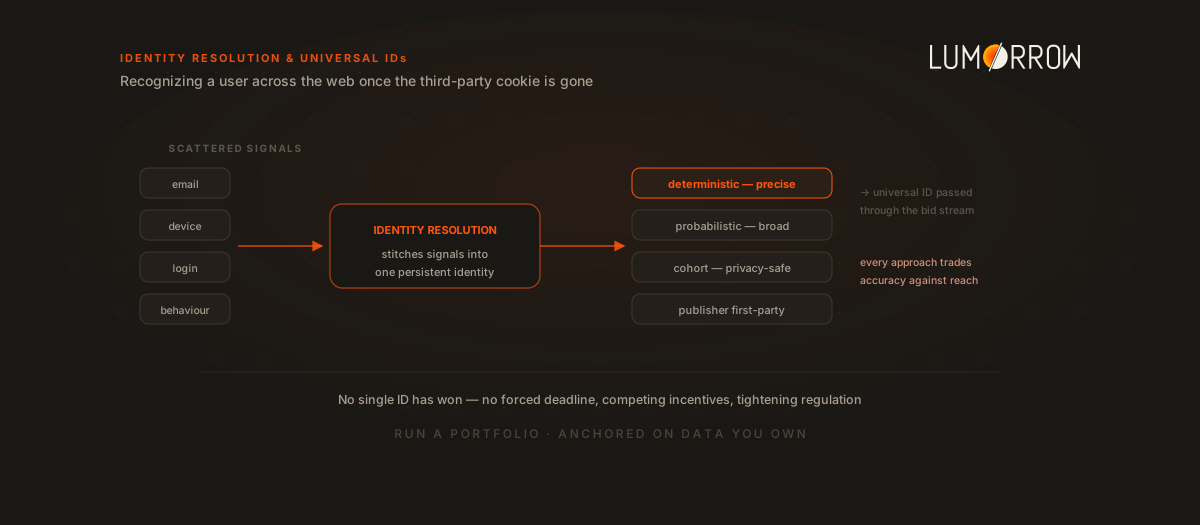
Identity resolution and universal IDs explained: advertising's cookie replacement
As third-party cookies fade, the industry needs a new way to recognize users across the web. Identity resolution and universal IDs are the answer — or answers, plural. Here's how they work, the main approaches, and why no single one has won.
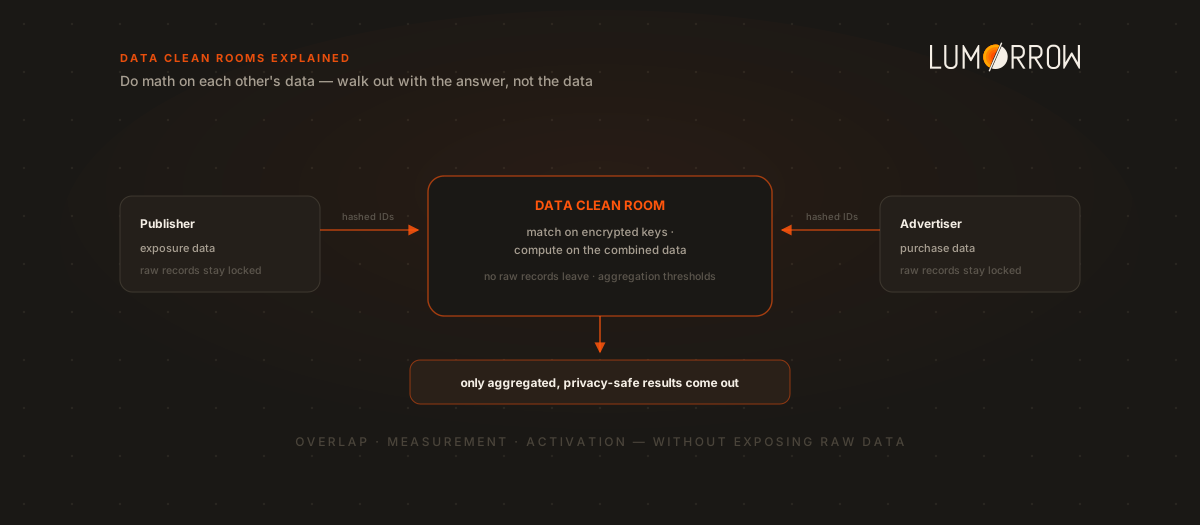
Data clean rooms explained: matching data without exposing it
A data clean room lets two parties combine their data to find overlap and measure results — without either side seeing the other's raw records. Here's how clean rooms work, what they're used for, and why they've become central to privacy-safe advertising.
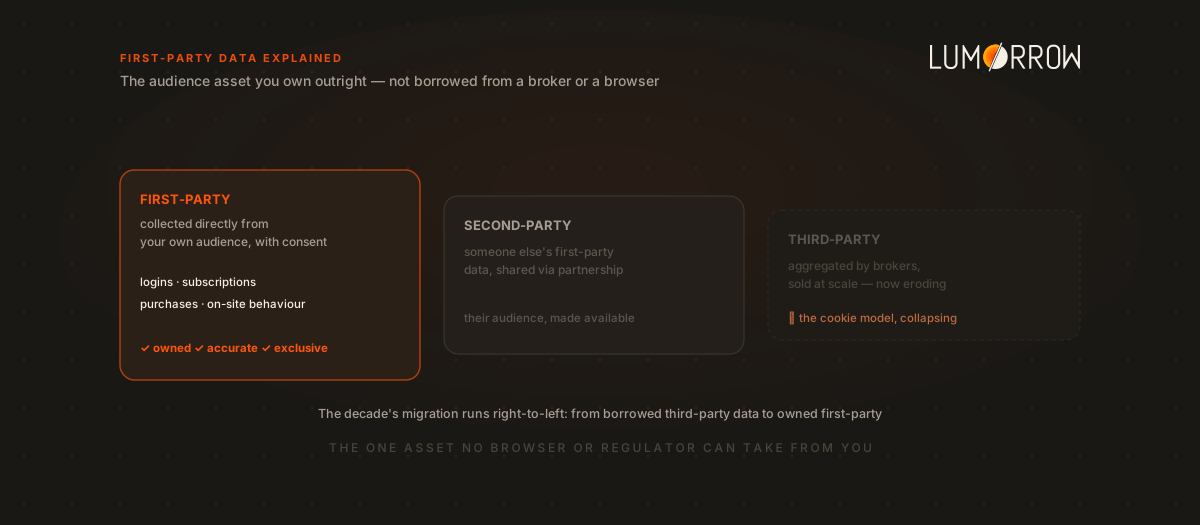
First-party data explained: the asset that outlasts the cookie
First-party data is the information you collect directly from your own audience, with consent. As third-party signals erode, it's become the most durable asset in advertising. Here's what it is, how it differs from second- and third-party data, and how to use it.
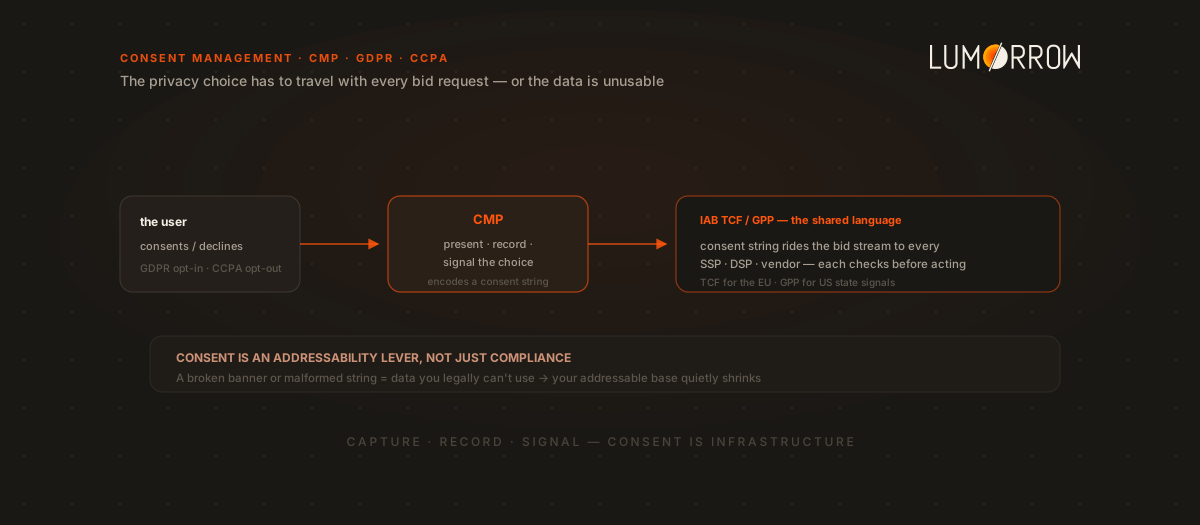
Consent management explained: CMPs, GDPR, CCPA, and the TCF
Privacy law made consent a precondition for most ad targeting. Consent management platforms capture and pass that consent through the ad stream. Here's how CMPs, the IAB TCF, GDPR, and CCPA fit together — and why sloppy consent shrinks your addressable audience.
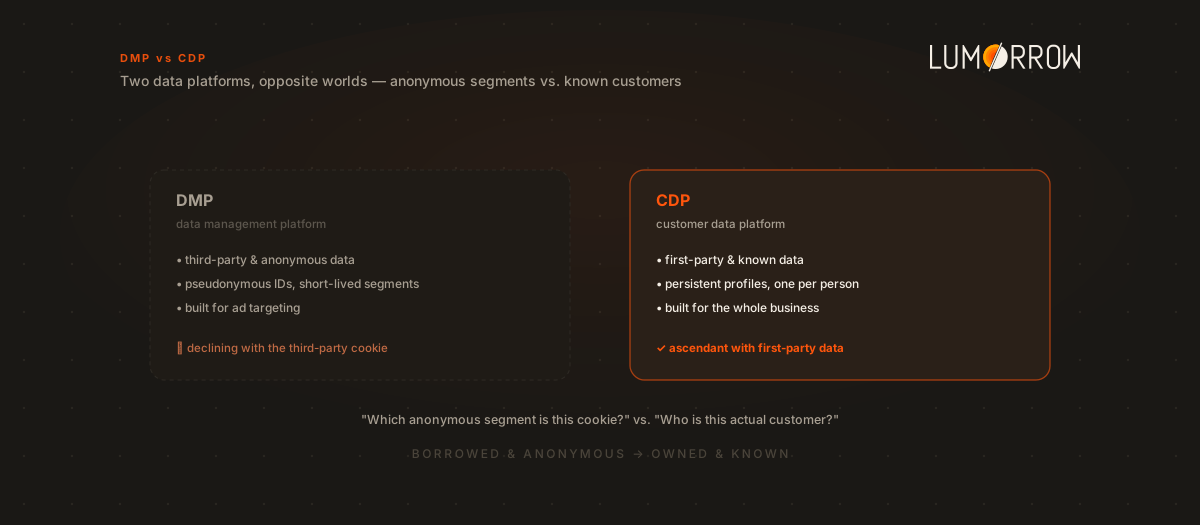
DMP vs CDP explained: two data platforms, two very different jobs
A DMP and a CDP both organize audience data, but for different purposes. DMPs powered anonymous third-party audience targeting; CDPs unify known, first-party customer data. Here's how they differ and why the CDP is ascendant.
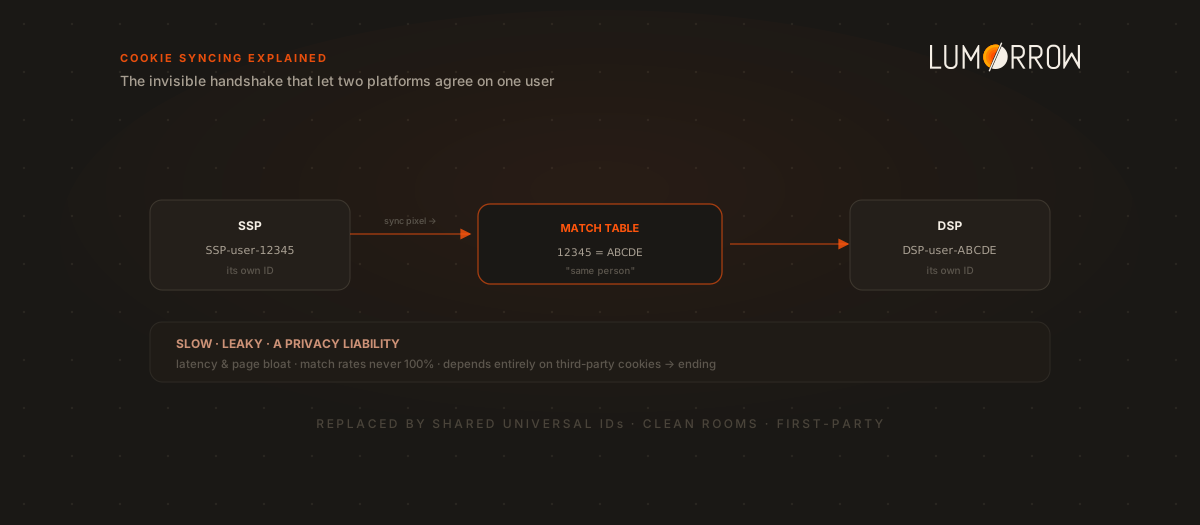
Cookie syncing explained: how ad tech platforms matched IDs (and why it's ending)
Cookie syncing let different ad tech platforms agree that their separate IDs referred to the same user. Here's how the ID-matching handshake worked, why it was slow and leaky, and what's replacing it as third-party cookies disappear.
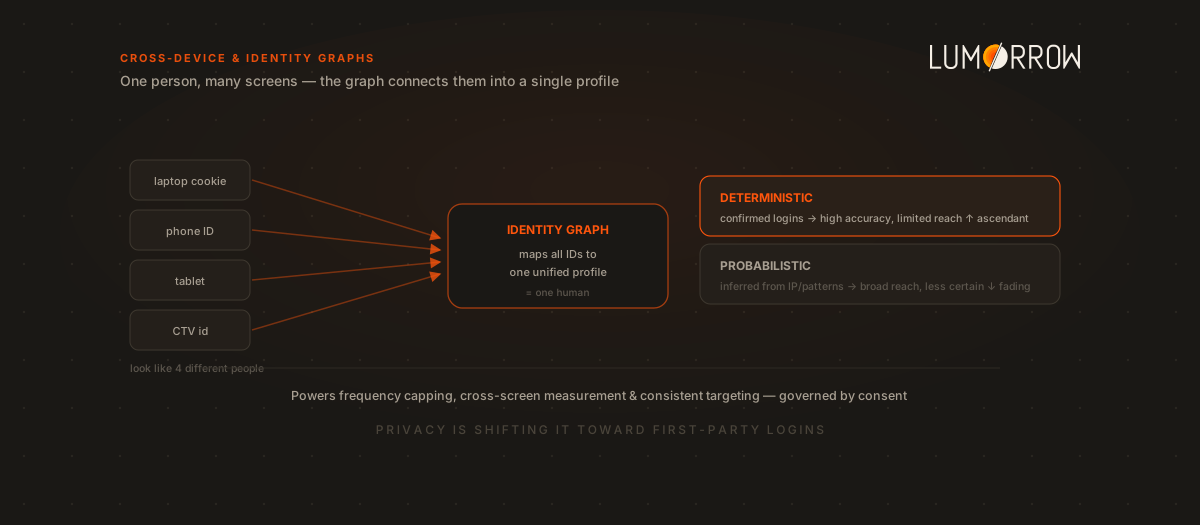
Cross-device tracking and identity graphs explained: one person, many screens
People use a phone, a laptop, a tablet, and a TV — and advertising needs to know they're all the same person. Cross-device identity graphs solve that. Here's how they work, deterministic vs. probabilistic matching, and why privacy is reshaping them.
Targeting & Creative
Reaching the right audience. 6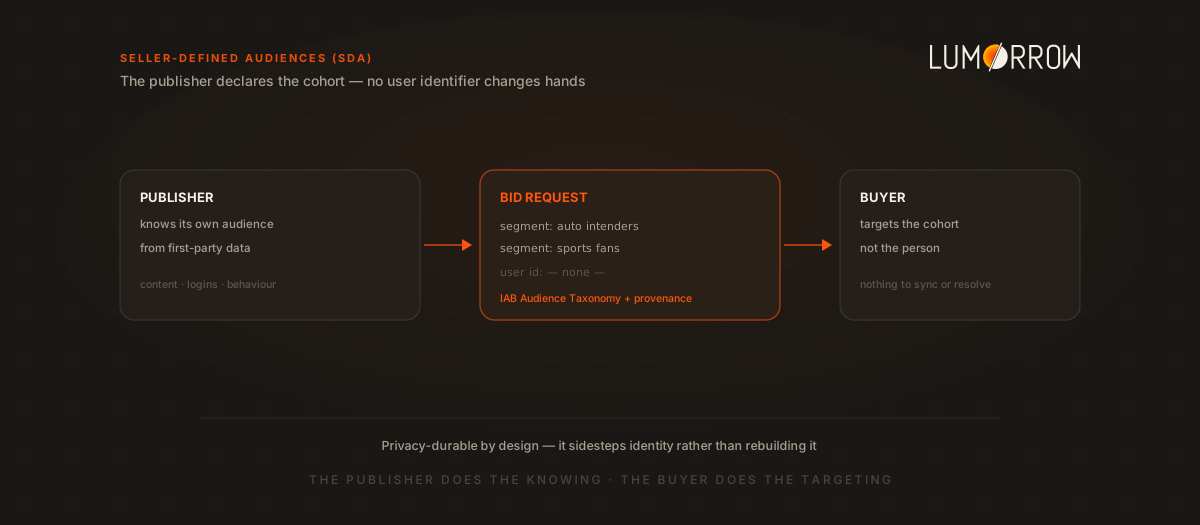
Seller-defined audiences (SDA) explained: publisher audiences without user IDs
Seller-defined audiences let publishers declare audience cohorts directly in the bid request — no user identifier required. Here's how SDA works, the IAB taxonomy behind it, and why it's one of the most promising cookieless targeting approaches.

Contextual advertising explained: targeting the page, not the person
Contextual advertising matches ads to the content of the page rather than the identity of the user. Written off as crude a decade ago, it's had a renaissance — because it needs no cookies and modern AI understands content far better. Here's how it works.
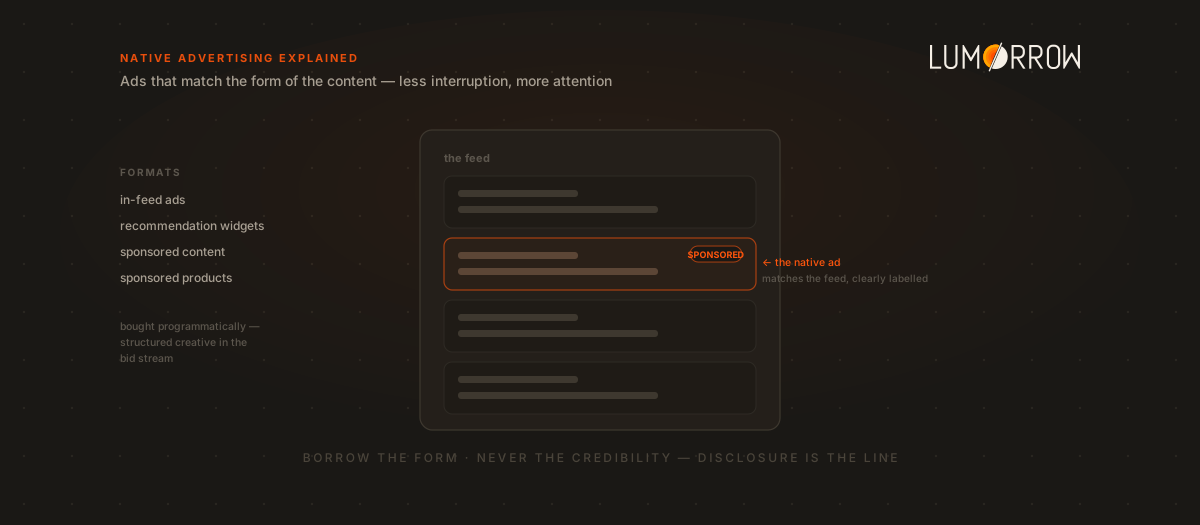
Native advertising explained: ads that match the form of the content
Native advertising is paid media designed to match the look, feel, and function of the content around it. Here's what native is, the main formats, how it's bought programmatically, and the disclosure line that separates it from deception.
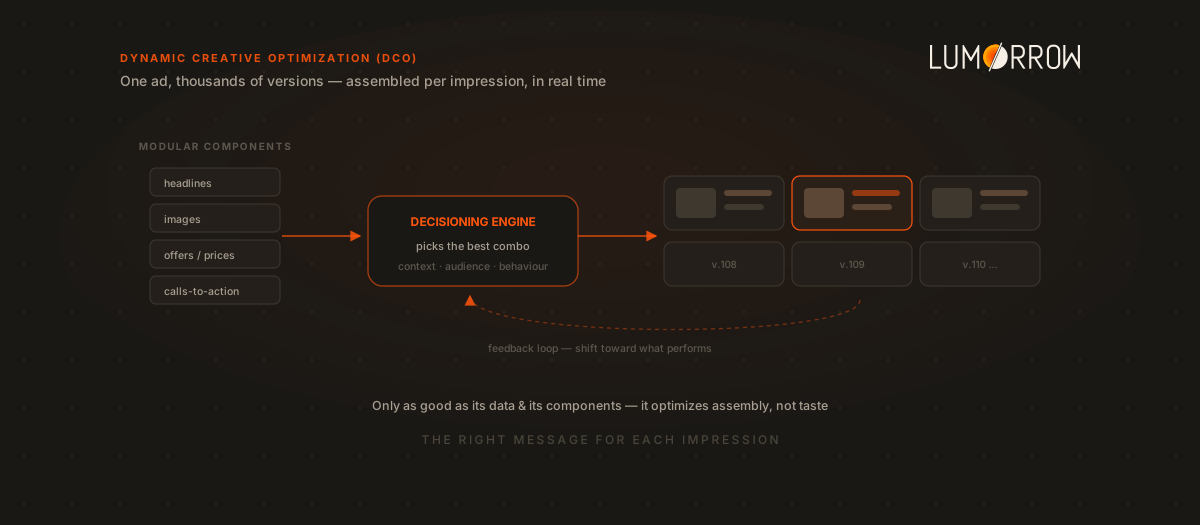
Dynamic creative optimization (DCO) explained: one ad, thousands of versions
DCO builds and tailors ad creative in real time, assembling the best combination of images, copy, and offers for each impression. Here's how dynamic creative optimization works, what it needs to run, and where it fits in programmatic.
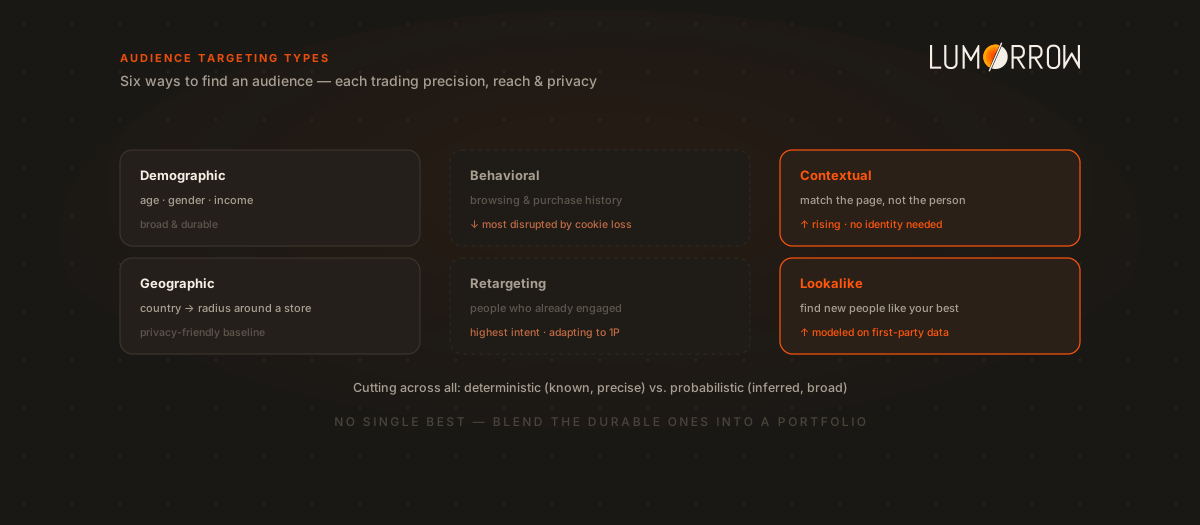
Audience targeting types explained: the main ways ads find their audience
Demographic, behavioral, contextual, geographic, retargeting, and lookalike — digital advertising targets audiences in several distinct ways. Here's what each targeting type means, how they differ, and how the cookieless shift is reshaping the mix.
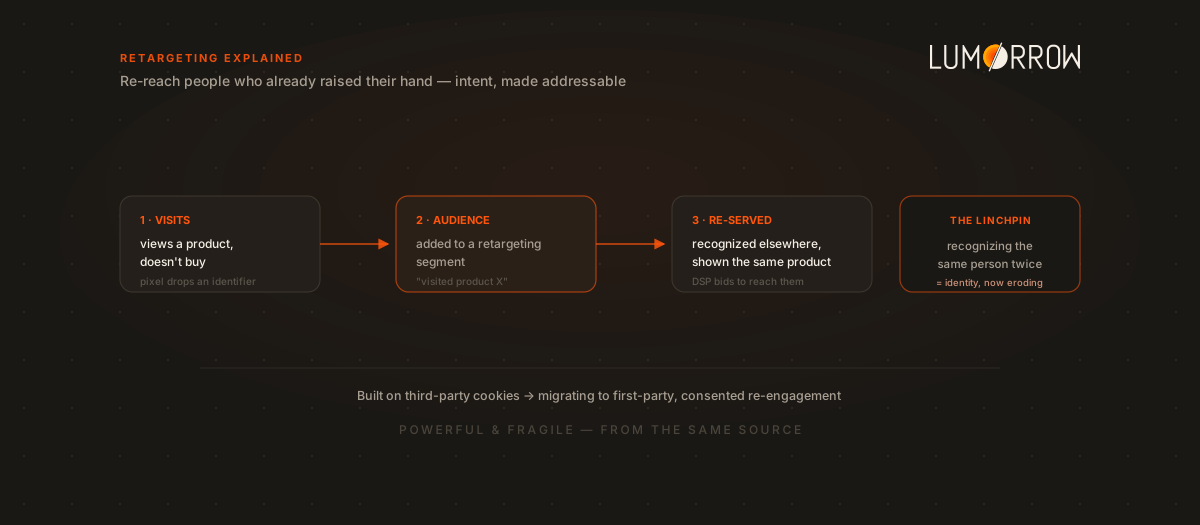
Retargeting explained: why the ad follows you after you leave
Retargeting shows ads to people who already visited a site or engaged with a brand. Here's how retargeting works, the difference between site and search retargeting, why it's so effective — and why signal loss is breaking it.
Channels & Formats
CTV, video, audio, retail, and more. 12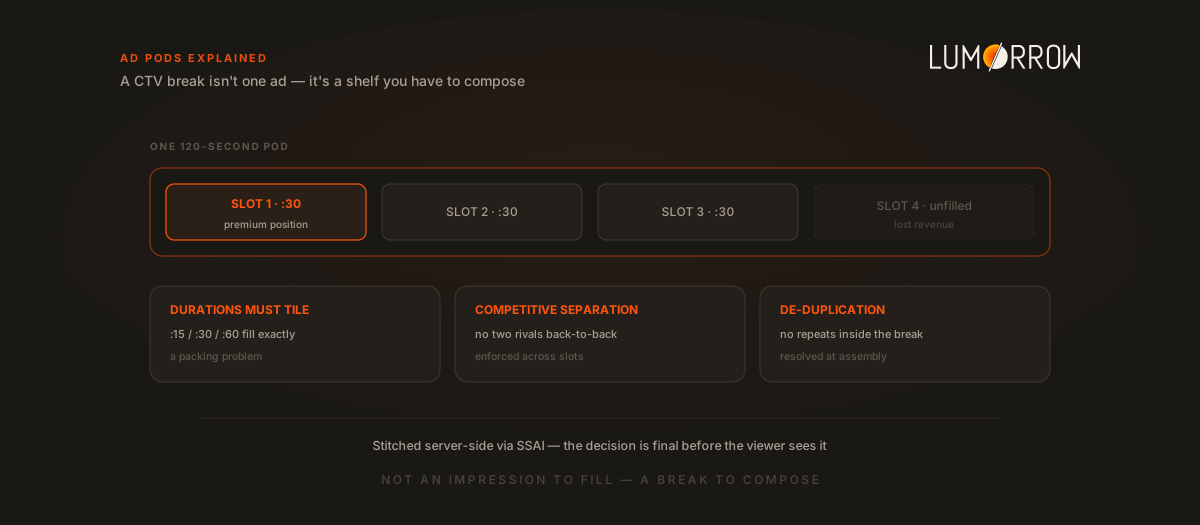
Ad pods explained: how CTV ad breaks are actually structured
A CTV ad break isn't one ad — it's a pod of several slots that must be filled, sequenced, and de-duplicated together. Here's how ad pods work, why competitive separation matters, and what makes filling them harder than display.
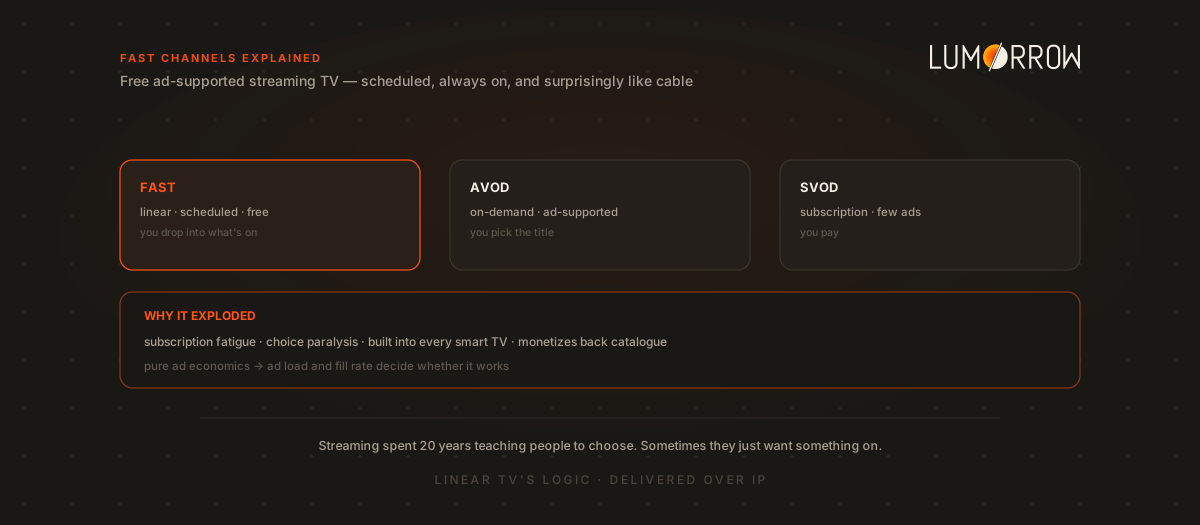
FAST channels explained: free, ad-supported, and surprisingly like old TV
FAST channels are free ad-supported streaming TV — linear-style channels delivered over the internet. Here's what FAST is, why it exploded, how the economics work, and how it differs from AVOD and subscription streaming.
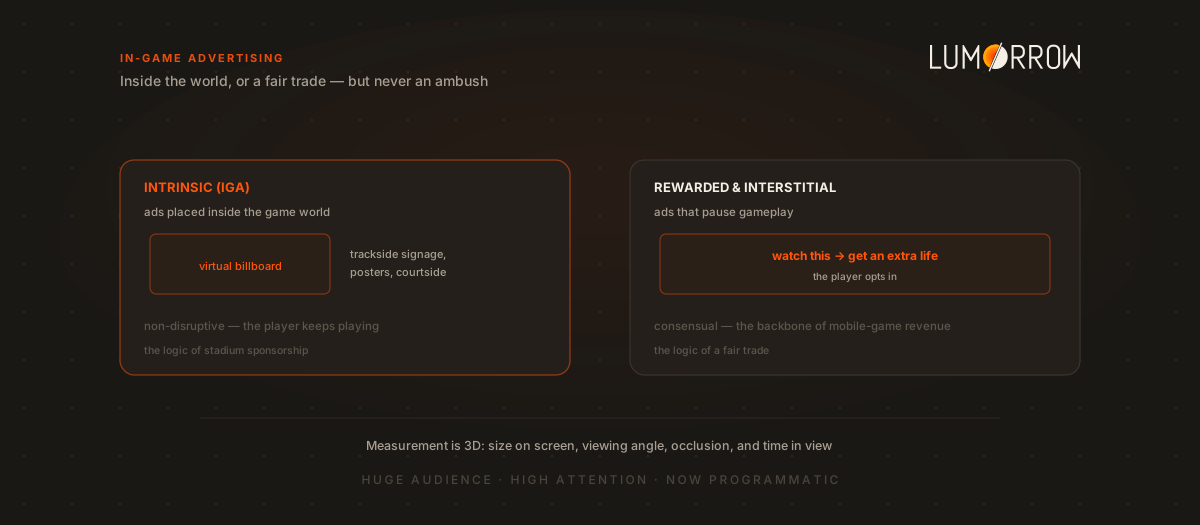
In-game advertising explained: ads inside the world, not around it
In-game advertising places ads inside gameplay environments — on virtual billboards, in rewarded video, and in branded items. Here's how intrinsic and interstitial in-game formats work, how they're measured, and why the channel is growing.
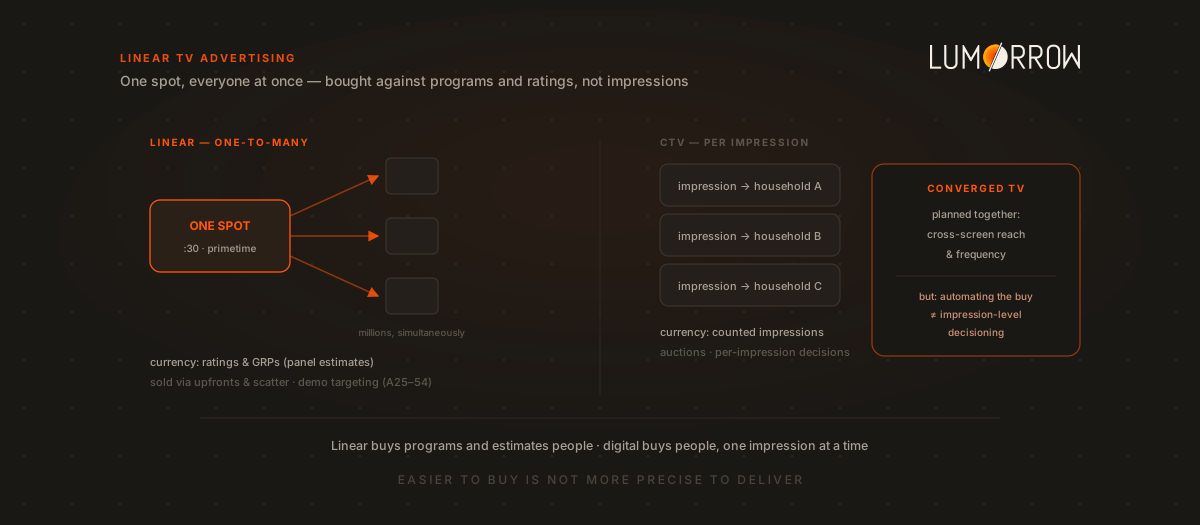
Linear TV advertising explained: how traditional TV buying works — and where it's converging with CTV
Linear TV is scheduled, one-to-many television — bought against programs and ratings, not impressions. Here's how traditional TV buying actually works (GRPs, upfronts, dayparts), how it differs from CTV, and what convergence really changes.
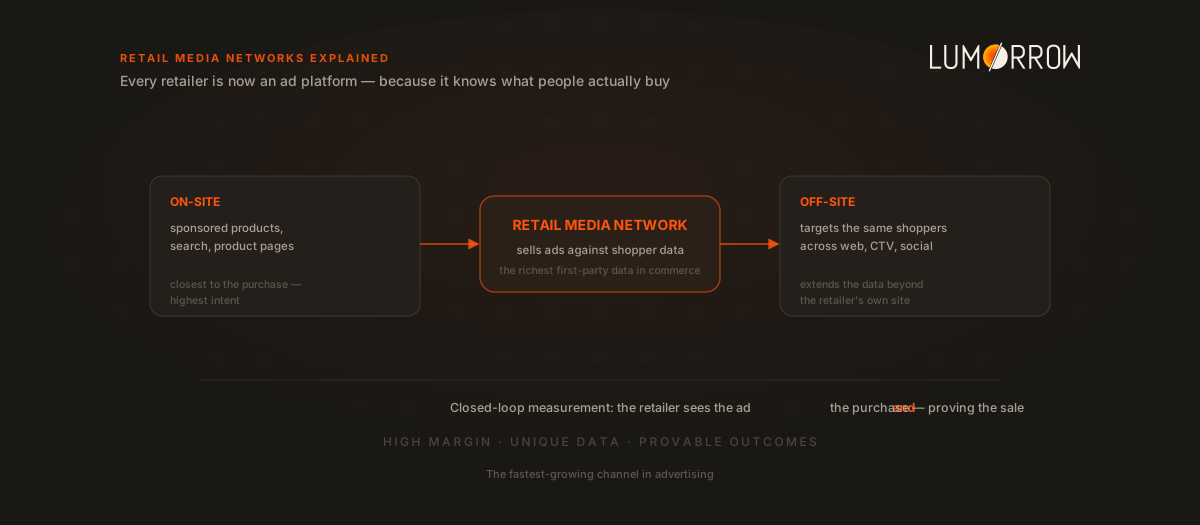
Retail media networks explained: why every retailer is now an ad platform
Retail media networks let retailers sell advertising against their own shopper data and inventory. It's the fastest-growing channel in advertising. Here's what an RMN is, why retailers are racing to build them, and how they work on and off the retailer's site.
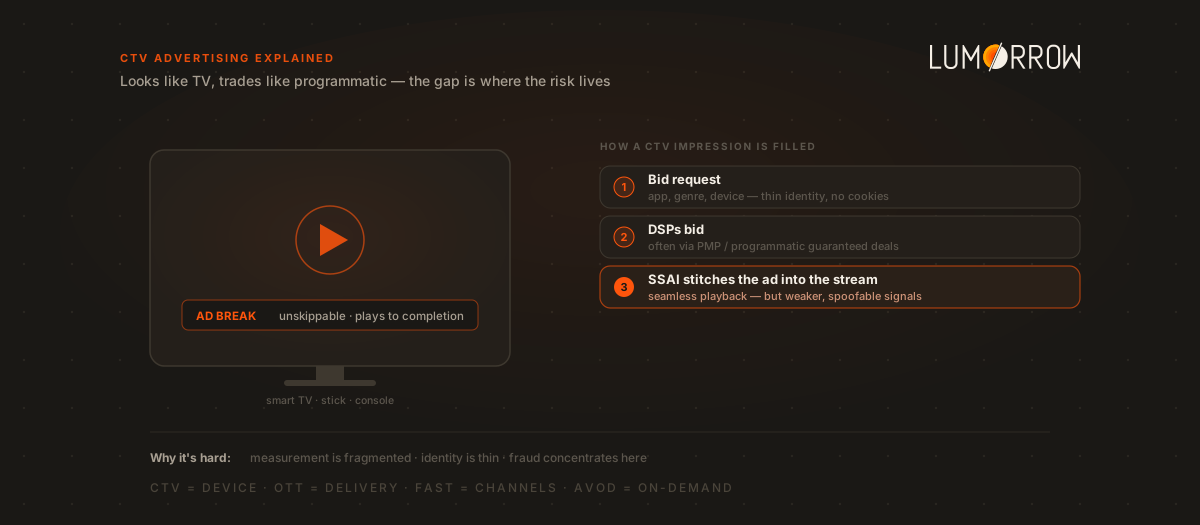
CTV advertising explained: how connected TV buying actually works
Connected TV is the fastest-growing corner of programmatic — and the most confusing. Here's how CTV advertising actually works: the supply chain, the formats, SSAI, and why measurement and fraud are harder here than anywhere else.

Digital out-of-home (DOOH) explained: programmatic comes to the billboard
Digital out-of-home is the digital screen in the physical world — billboards, transit, retail, elevators — and it's increasingly bought programmatically. Here's what DOOH and pDOOH are, how buying a one-to-many screen differs from web ads, and why it's growing.
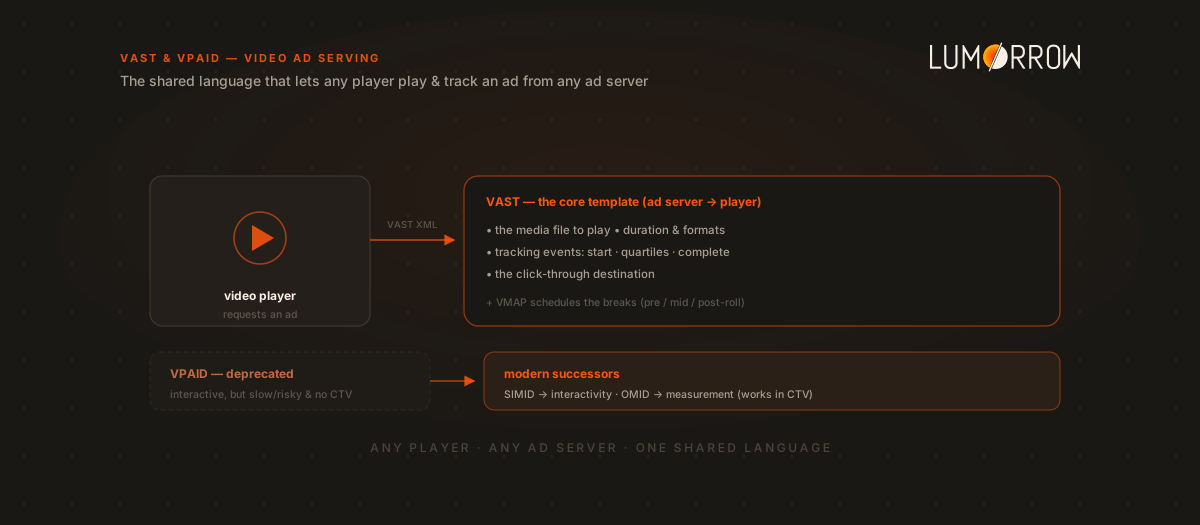
VAST and VPAID explained: how video ads actually get served
Video advertising runs on standards that let any player talk to any ad server. VAST is the core template; VPAID added interactivity (and problems); VMAP schedules breaks; SIMID and OMID are the modern successors. Here's how video ad serving works.

Walled gardens explained: closed platforms vs the open web
A walled garden is a platform that controls its own advertising end to end — inventory, data, and measurement — inside a closed ecosystem. Here's what walled gardens are, why advertisers both love and resent them, and how the open web competes.
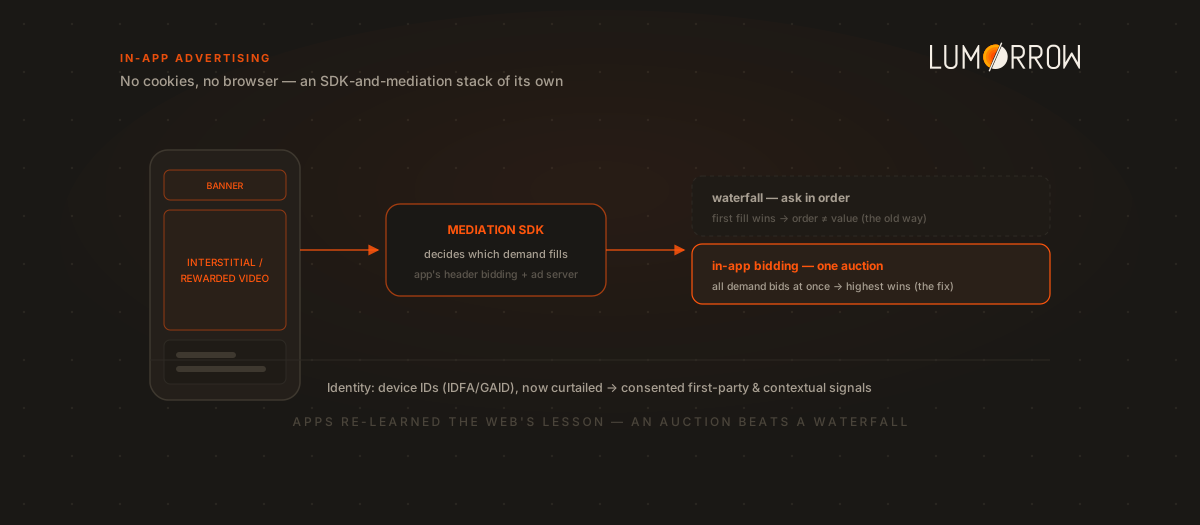
In-app advertising explained: how mobile app monetization works
In-app advertising monetizes mobile apps through an SDK-and-mediation stack that's distinct from the web. Here's how mobile ad formats, mediation, and waterfalls vs. in-app bidding work — and why app identity and measurement differ from the browser.
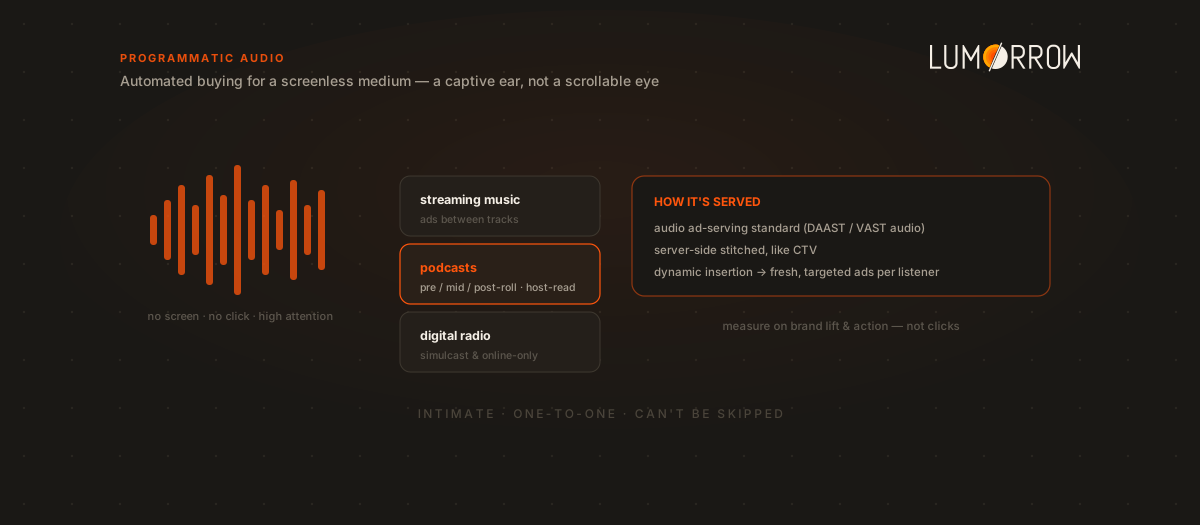
Programmatic audio advertising explained: ads for a screenless medium
Programmatic audio brings automated buying to streaming music, podcasts, and digital radio. Here's how audio ad serving works, why the screenless, one-listener environment is different, and what makes podcast advertising uniquely valuable.
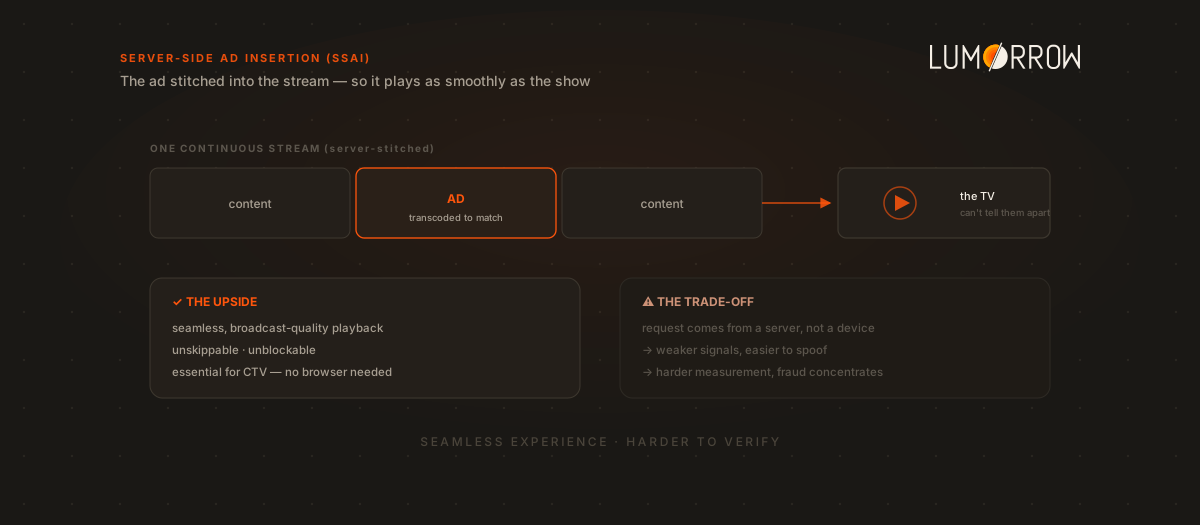
Server-side ad insertion (SSAI) explained: how streaming ads feel like TV
SSAI stitches ads directly into a video stream on the server, so they play seamlessly like broadcast TV. Here's how server-side ad insertion works, why it's essential for CTV, and the measurement and fraud trade-offs it creates.
Measurement & Metrics
Proving advertising actually works. 7
Video ad metrics explained: VCR, CPCV, quartiles and completion
Video advertising has its own measurement vocabulary — completion rate, quartile reporting, cost per completed view. Here's what each metric means, how they're captured, and why completion isn't the same as attention.
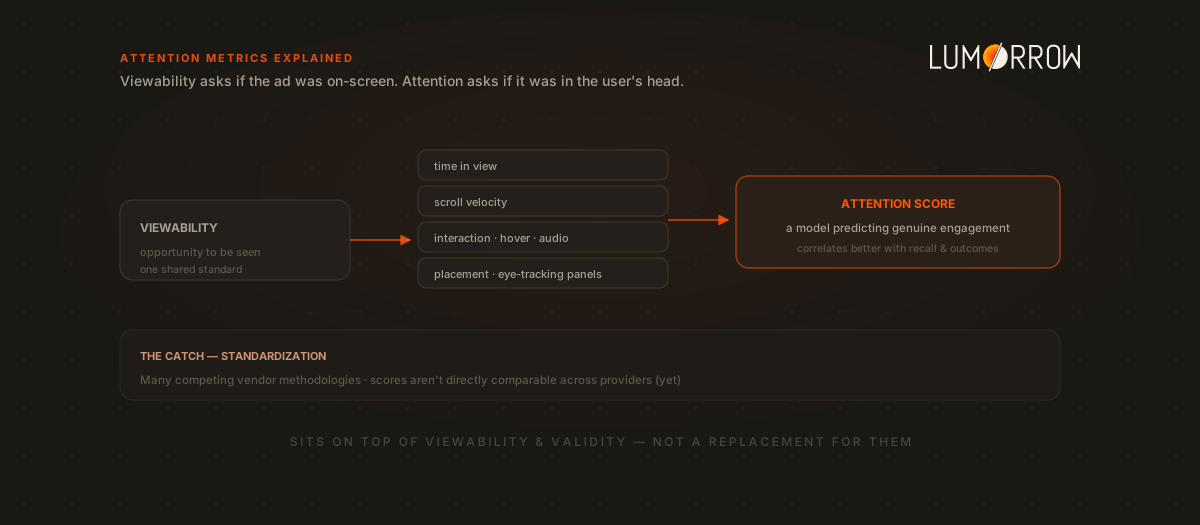
Attention metrics explained: measuring whether an ad was actually noticed
Viewability tells you an ad could have been seen. Attention metrics try to measure whether it actually was. Here's what attention metrics are, how they're captured, what they get right, and the standardization problem still holding them back.

Ad viewability explained: what counts as a seen ad, and why it's contested
An ad that serves isn't an ad that's seen. Viewability measures whether an impression actually had a chance to be viewed. Here's the standard, how it's measured, where it falls short, and why attention metrics are pushing past it.

Frequency capping explained: why the same ad follows you everywhere
Frequency capping limits how many times a person sees the same ad. When it works, it prevents waste and annoyance; when it breaks — as it increasingly does without cookies — you get the ad that stalks you 40 times. Here's how it works and why it's getting harder.
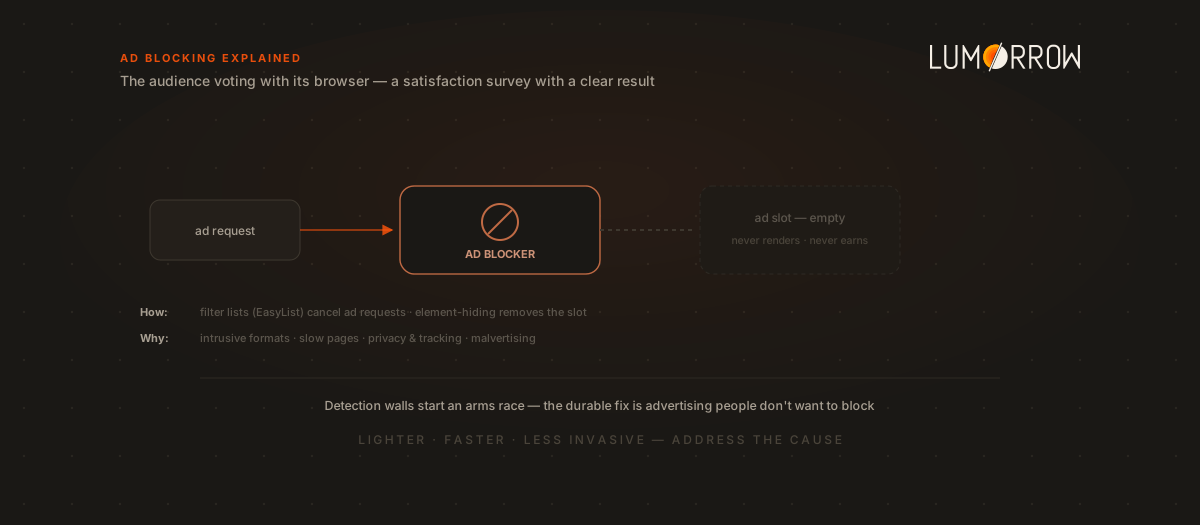
Ad blocking explained: why users block ads, and what it costs publishers
Ad blockers strip ads from web pages, costing publishers billions in lost revenue. Here's how ad blocking works, why users adopt it, the acceptable-ads and anti-blocking responses, and the real lesson for the industry.
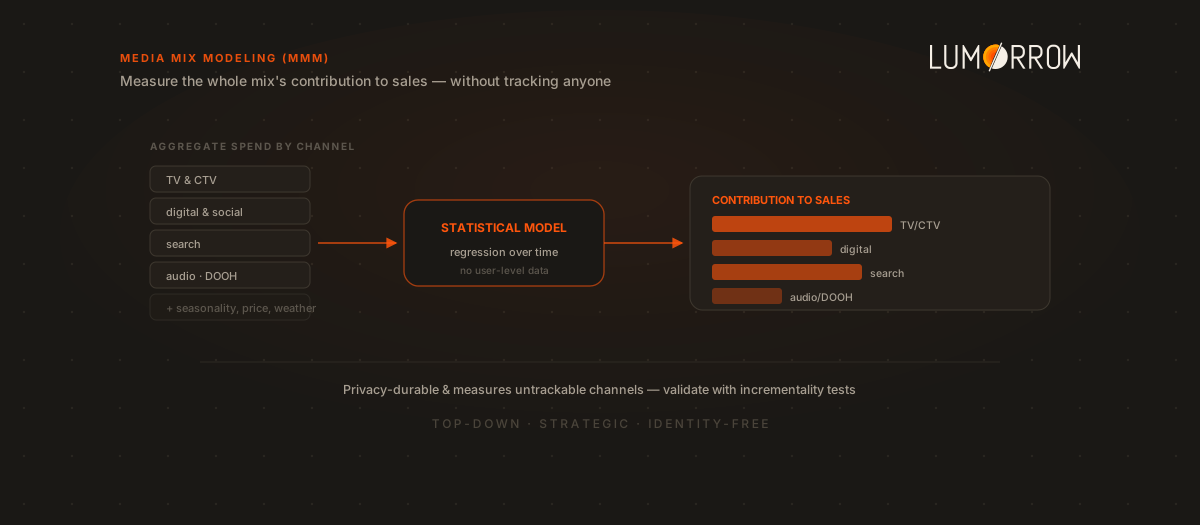
Media mix modeling (MMM) explained: measuring marketing without tracking people
Media mix modeling uses statistics to estimate how each channel contributes to sales — without tracking individuals. Here's how MMM works, how it differs from attribution, and why the privacy era brought this decades-old method back.
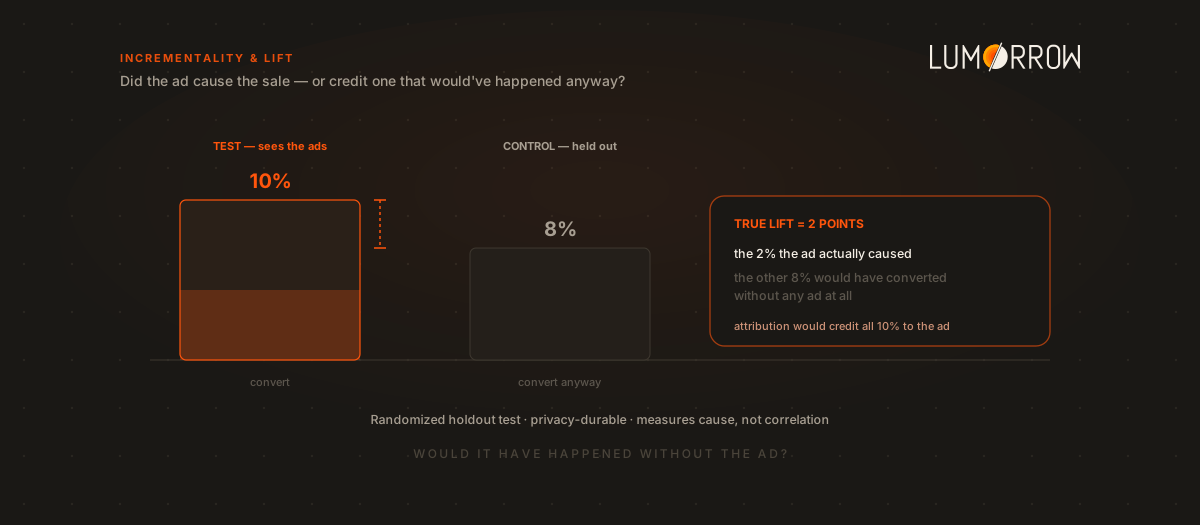
Incrementality explained: did the ad actually cause the sale?
Incrementality measures the conversions an ad genuinely caused — not the ones that would have happened anyway. Here's what incrementality and lift mean, how holdout tests work, and why it's the honest answer to attribution's biggest flaw.