
SSP vs DSP vs ad exchange: how the programmatic stack fits together
SSP, DSP, ad exchange, ad server — the programmatic acronyms describe who sits where in a single automated auction. Here's what each one does, how they connect, and how an impression travels from publisher to advertiser.
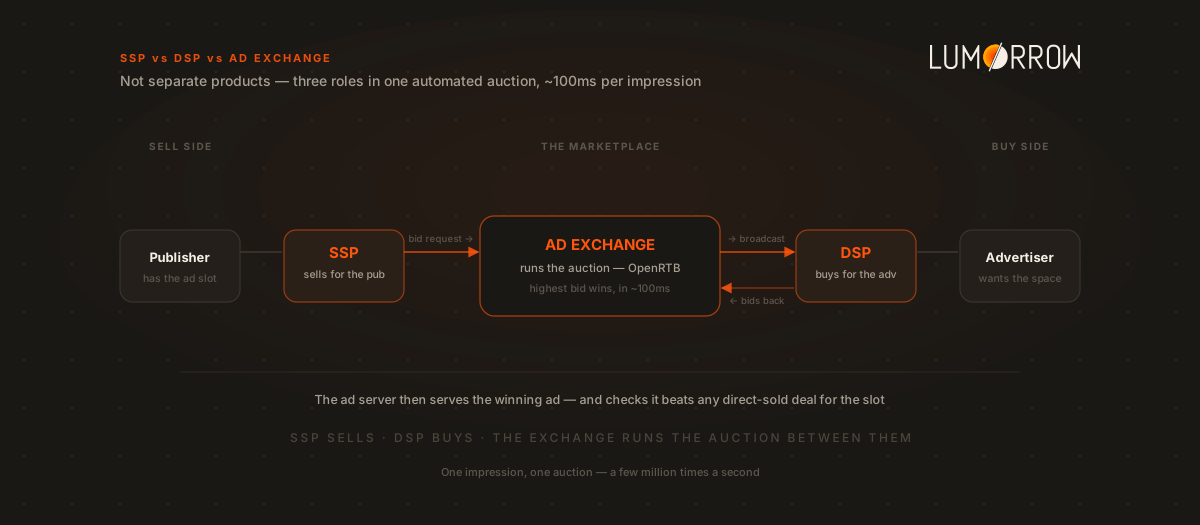
Ad tech runs on a wall of acronyms — SSP, DSP, ad exchange, ad server, RTB — and most explainers define them one at a time without showing how they connect. That’s backwards. These aren’t separate products you learn in isolation; they’re roles in a single automated auction that happens every time a page loads. Understand the flow and each acronym clicks into place.
Here’s the whole stack, and how an impression actually travels from a publisher’s page to an advertiser’s ad.
The one sentence version
A publisher has ad space to sell. An advertiser wants to buy it. Between them sits an automated marketplace that matches the two in real time:
- The SSP represents the seller (the publisher).
- The DSP represents the buyer (the advertiser).
- The ad exchange is the auction floor where they meet.
Everything else is detail on top of that. Sell-side tools, buy-side tools, and the marketplace connecting them.
The sell side: SSP
A supply-side platform (SSP) is the publisher’s technology. Its job is to sell the publisher’s impressions for as much as possible, automatically.
When someone loads a page, the SSP packages the available ad slot into a bid request — describing the impression (placement, format, page context, device, geo, whatever user signals are available) — and offers it to buyers through the exchange. It also enforces the publisher’s rules: floor prices (the minimum acceptable bid — see dynamic floor pricing), which advertisers are blocked, and which demand sources to call.
Think of the SSP as the publisher’s automated sales team, negotiating every single impression in milliseconds.
The buy side: DSP
A demand-side platform (DSP) is the mirror image on the advertiser’s side. Its job is to buy the right impressions for advertisers at the best price.
The DSP receives bid requests, evaluates each one against the advertiser’s campaign — targeting, budget, and how much this particular impression is worth to them — and decides whether to bid and how much. Because auctions are now first-price, the DSP also runs bid shading: predicting the lowest bid that still wins, so the advertiser doesn’t overpay.
Think of the DSP as the advertiser’s automated buyer, sizing up millions of impressions a second and bidding only on the ones that fit.
The marketplace: ad exchange
The ad exchange is where the SSP and DSP actually meet. It’s the auction house: it takes the impression the SSP is selling, runs the request out to connected DSPs, collects their bids, and awards the impression to the winner — all in the ~100 milliseconds before the page finishes loading.
The exchange is what makes it programmatic. Instead of humans negotiating deals one publisher and advertiser at a time, the exchange runs a live auction on every impression, at scale. The protocol most of this speaks is OpenRTB (real-time bidding), the shared bid-request standard that lets any SSP talk to any DSP.
SSP = the seller’s tech. DSP = the buyer’s tech. Ad exchange = the auction where they meet. Three roles, one auction, ~100 milliseconds.
Where the ad server fits
One more piece often confuses people: the ad server. It’s the system that actually stores and delivers the winning ad, and — on the publisher side — decides whether the programmatic winner beats other options (like a directly-sold sponsorship) for that slot. The exchange decides who wins the auction; the publisher’s ad server decides whether that auction winner beats everything else competing for the impression. Then it serves the creative.
Putting it together: one impression’s journey
Here’s the whole flow in order, start to finish:
- A user loads a page. The publisher has an empty ad slot.
- The SSP builds a bid request describing the impression and sends it to the ad exchange.
- The exchange broadcasts it to connected DSPs via OpenRTB.
- Each DSP evaluates and bids on behalf of its advertisers — bidding what the impression is worth, shaded to the lowest winning price.
- The exchange runs the auction and picks the highest bid.
- The publisher’s ad server confirms the auction winner beats any direct-sold competition.
- The winning ad is served to the user.
All of it, every time, in about the time it takes to blink.
Where the lines blur in 2026
The clean sell-side / buy-side split is a good mental model, but the modern reality is messier — and knowing that keeps you from being confused later:
- The roles overlap. Many companies operate both an SSP and a DSP, and inventory is often resold between exchanges — which is exactly why supply path optimization and supply-chain transparency matter. The “path” from SSP to DSP is frequently not a straight line.
- Header bidding lets a publisher offer the same impression to multiple SSPs/exchanges at once, before the ad server decides — more competition, more complexity.
- The intelligence is moving pre-auction. The old model reported on auctions after they closed. The value now is in decisioning before the bid request goes out — which is the whole idea behind an AI-native exchange.
The takeaway
Don’t memorize the acronyms in isolation — remember the roles. The SSP sells, the DSP buys, the ad exchange runs the auction between them, and the ad server delivers the result. Every programmatic impression is that same short story, told a few million times a second. Once the flow is clear, every other ad-tech concept — floors, bid shading, header bidding, supply paths — is just a detail hanging off one of those roles.
Lumorrow is an AI-native exchange that adds real-time, pre-auction intelligence to the moment the SSP and DSP meet — evaluating supply quality and setting floors before the impression is ever billed. See how the platform works → or explore it for publishers and demand partners.