
Why we built Lumorrow: the intelligence layer programmatic missed
Most ad exchanges optimize after the auction ends. We thought the interesting work happens before it begins.
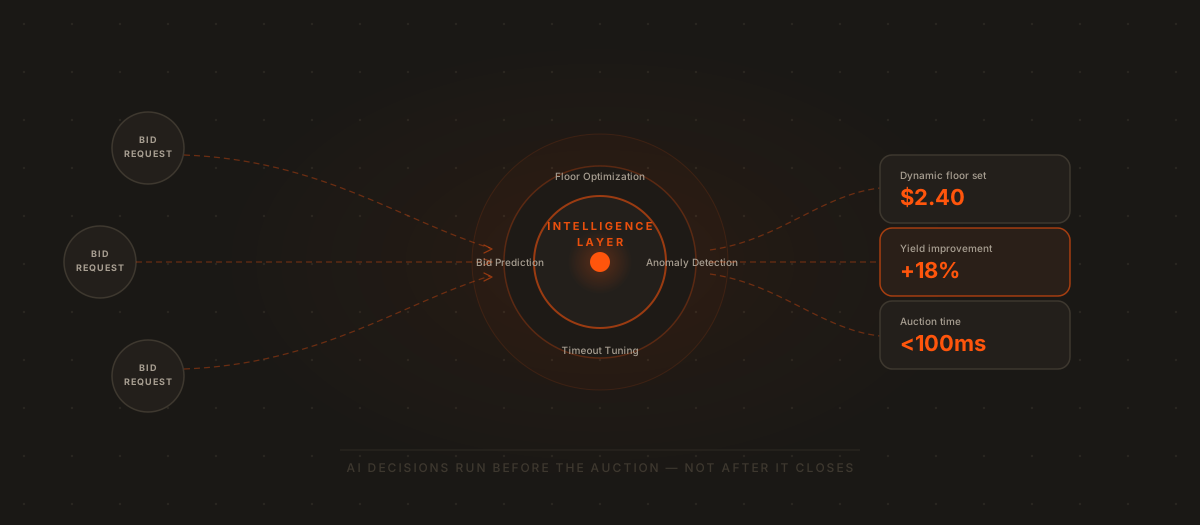
The programmatic ecosystem is mature. Publisher intelligence isn’t.
For fifteen years, the industry built infrastructure to move impressions faster. Bigger pipes, lower latency, more demand sources. The plumbing got excellent. The decisioning stayed primitive.
The problem with post-hoc optimization
Most SSPs report on auctions after they close. You get a dashboard showing what happened. eCPM by placement, fill rate by geo, revenue by day. Useful for understanding the past. Useless for improving the next bid.
The assumption baked into this model is that optimization is something you do periodically — set floors quarterly, adjust timeouts after you notice latency issues, review demand sources when a partner complains.
We thought that assumption was wrong.
What happens before the auction matters more
The clearing price of any given impression is determined by a small set of factors: who’s bidding, what they’re willing to pay, and whether the auction structure gave them a reason to show their hand.
Floor prices directly affect which buyers participate. Set them too low and you leave yield on the table. Set them too high and you kill fill rate. The optimal floor price for any impression is a function of time, device, geography, content category, and dozens of other signals — and it changes continuously.
No human sets floors fast enough. No static rule captures this complexity.
The Lumorrow thesis
We built Lumorrow around one idea: auction intelligence should live inside the auction, not next to it.
Every bid request that flows through Lumorrow passes through an intelligence layer before it ever reaches a buyer. That layer:
- Predicts expected clearing price based on historical auction data
- Calculates an optimized floor price for this specific impression
- Tunes bidder timeout based on user network conditions
- Monitors for anomalies in real time
The result is a feedback loop that closes in milliseconds, not quarters.
What this means for publishers
Publishers using Lumorrow don’t need to become data scientists. The intelligence layer runs automatically within the guardrails they set. They see the results in the reporting layer — yield improvement, fill stability, fewer anomalous dips.
The goal isn’t to replace human judgment. It’s to make human judgment more valuable by handling the decisions that move too fast for humans to make well.
Lumorrow is currently in onboarding. If you’re a publisher or demand partner interested in early access, get in touch.