
Supply path optimization (SPO) explained: fewer, cleaner paths to inventory
The same impression can reach a buyer through a dozen different routes — at a dozen different prices and quality levels. Supply path optimization is how buyers pick the best one. Here's how SPO works and why it matters more than ever.
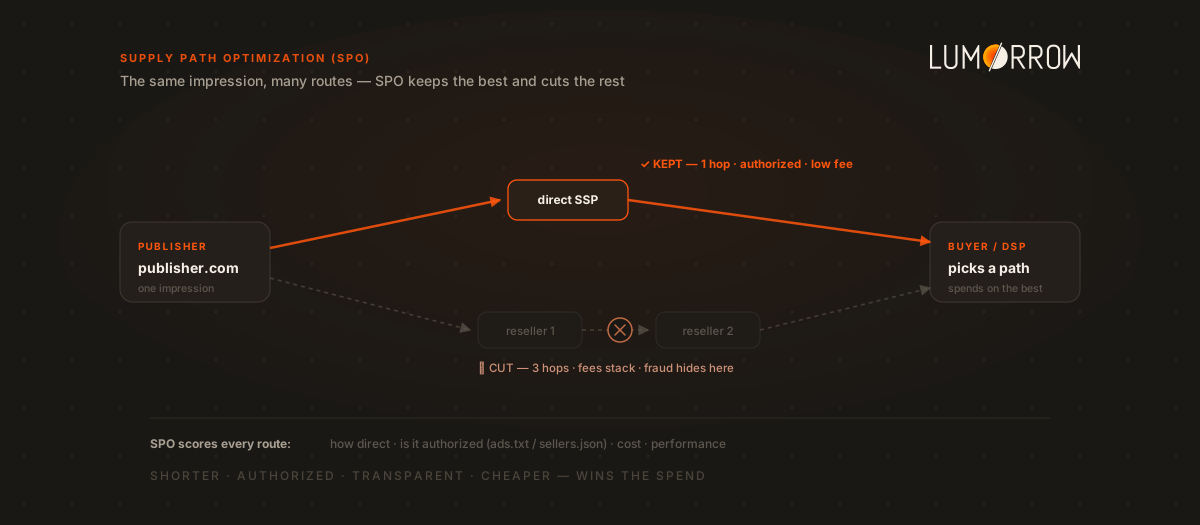
Here’s a fact about programmatic that surprises people new to it: the same impression, from the same publisher, can reach a buyer through many different routes at once — each through a different set of exchanges and resellers, each at a different price, each with a different level of transparency and quality.
Supply path optimization (SPO) is the discipline of choosing the best of those routes and cutting the rest. It’s one of the highest-leverage things a buyer can do, and one of the most important things a publisher can make easy. Here’s how it works.
Why the same impression has many paths
In an ideal world, an impression would travel one clean path: publisher → exchange → buyer. In the real world, publishers plug into many SSPs and exchanges, and those exchanges resell to each other. The result is path duplication — the identical impression showing up in a buyer’s DSP multiple times, offered by different intermediaries.
Those duplicate paths aren’t equivalent:
- One path might be direct and short — the publisher’s own SSP, one hop, fully authorized.
- Another might be long and resold — passing through two or three intermediaries, each taking a fee, some possibly unauthorized.
- The prices differ because the fees differ. The quality differs because the transparency differs.
For the buyer, this is noise and risk. They’re paying different amounts for the same impression depending on which door it came through — and some of those doors are where fraud and misrepresentation hide.
What SPO actually does
Supply path optimization is the buyer’s answer: systematically evaluate the available routes to a publisher’s inventory and concentrate spend on the best paths — the ones that are shortest, cleanest, most transparent, and most cost-efficient — while pruning the redundant, opaque, or low-quality ones.
Concretely, SPO means a buyer asks, for every route:
- How direct is it? Fewer hops mean fewer fees and fewer places for something to go wrong.
- Is it authorized? Does the path check out against
ads.txt/app-ads.txtandsellers.json, and does theSupplyChainobject name every hop? - What does it cost? The same impression at a lower total take rate is simply a better buy.
- How does it perform? Win rates, viewability, and fraud rates vary by path, not just by publisher.
The buyer then routes budget through the winners and drops the rest. Done well, SPO lowers costs, reduces fraud exposure, and makes spend legible — you actually know what you’re buying and through whom.
The same impression through a shorter, authorized path is cheaper and safer. SPO is just the discipline of always taking that path instead of the long, murky one.
Why it matters more in 2026
SPO isn’t new, but three forces have made it central rather than optional.
Transparency tooling finally makes it possible. ads.txt, sellers.json, and the SupplyChain object turned the supply chain from a black box into something a buyer can actually read and score. And the standard keeps evolving — schain 1.1 is now working to make even the non-payment hops visible, which is more raw material for SPO.
Fraud rides in on long paths. As we covered in the 2026 state of ad fraud, most invalid traffic arrives through long, unverifiable supply chains. Pruning those paths isn’t just a cost play — it’s one of the most effective fraud controls a buyer has.
Curation and the sell side got involved. SPO used to be purely a buyer’s game. Increasingly, publishers and SSPs are proactively shaping cleaner paths and curated deals so buyers choose them — making supply-path quality a competitive advantage for sellers, not just a filter buyers apply.
SPO for publishers: the other side of the coin
If you’re a publisher, SPO happening on the buy side is a signal you should act on. Buyers are consolidating spend onto the cleanest paths — and if your inventory is mostly reaching them through long, resold, hard-to-verify routes, you’re the one getting pruned.
The defensive move is to make your own path the obvious best one: keep ads.txt and sellers.json clean and current, minimize unnecessary reseller hops, and ensure your SupplyChain object is complete and readable. When a buyer runs SPO, you want to be the short, authorized, transparent route they keep — not the murky one they cut.
The takeaway
Supply path optimization comes down to a simple truth: not all routes to the same impression are equal, and the differences — in cost, transparency, and fraud risk — are big enough to be worth managing deliberately. Buyers use SPO to spend smarter and safer; publishers earn from it by being the cleanest path in the room. Either way, the underlying question is the one worth internalizing: do you actually know which route this impression took, and whether it was the right one?
Lumorrow evaluates supply-path quality and authorization on every bid request in real time, pre-auction — so the cleanest path is the one that wins. See how the platform works → or explore it for demand partners →.