
First-party data explained: the asset that outlasts the cookie
First-party data is the information you collect directly from your own audience, with consent. As third-party signals erode, it's become the most durable asset in advertising. Here's what it is, how it differs from second- and third-party data, and how to use it.
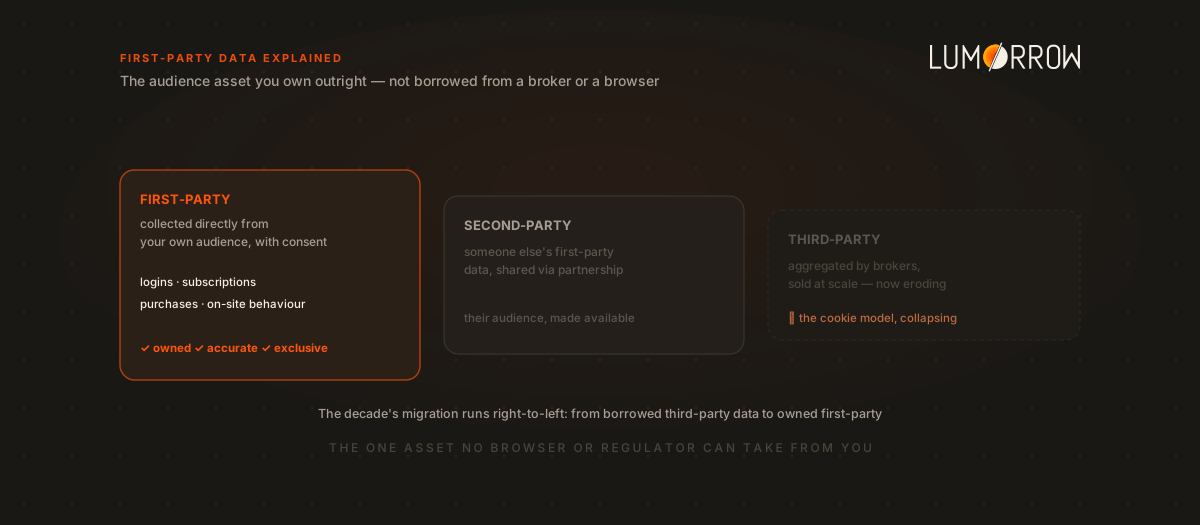
For years, advertising ran on data that belonged to someone else — third-party cookies tracking users across the web, sold and resold by data brokers. That model is unwinding. And the asset left standing is the one you own outright: first-party data.
Here’s what first-party data actually is, how it differs from the alternatives, and why it’s become the most durable thing you can build a media business on.
The three kinds of data
The cleanest way to understand first-party data is by contrast:
- First-party data is information you collect directly from your own audience, on your own properties, with consent — logins, subscriptions, purchases, on-site behavior, email signups. You own the relationship.
- Second-party data is simply someone else’s first-party data, shared with you directly through a partnership. It’s their audience, made available to you.
- Third-party data is aggregated by companies with no direct relationship to the user, compiled from many sources and sold at scale. This is the cookie-tracking model that’s now collapsing.
The trend of the decade is a migration down that list — from third-party, to second-party partnerships, to owned first-party data. As we covered in the cookieless state of play, the third-party signal is eroding across browsers and regulation regardless of any single deadline.
First-party data is the only audience asset that doesn’t depend on another company’s roadmap, a browser default, or a regulator’s next move. You own it.
Why it’s the durable asset
First-party data has three properties nothing else does:
- You own it. No vendor can deprecate it, no browser can block it, no regulator can pull it out from under you — provided you collected it with proper consent.
- It’s accurate. It comes straight from the source — the actual behavior of your actual audience — not modeled or inferred from fragments.
- It’s exclusive. Your competitors don’t have it. That scarcity is exactly what makes it valuable to buyers who can’t reach that audience anywhere else.
How publishers build and use it
First-party data isn’t something you buy — it’s something you accumulate, deliberately, over time:
- Create reasons to authenticate. Logins, newsletters, registrations, and subscriptions turn anonymous visits into known, consented relationships. Every authenticated user is a durable data point.
- Capture behavioral signal on your own properties. What content someone reads, how often they return, what they engage with — all first-party, all yours.
- Treat consent as infrastructure. First-party data is only usable if it’s collected with clean, honored consent. Sloppy consent quietly shrinks your addressable base.
- Activate it in privacy-safe ways. Increasingly this happens in data clean rooms, where your first-party data meets an advertiser’s without either side exposing raw records.
The catch
First-party data is powerful, but it has a natural ceiling: it only covers the audience you have a direct relationship with. On the authenticated part of your traffic it’s the strongest signal available; on the anonymous long tail, it doesn’t exist. That’s why the durable 2026 strategy is a portfolio — first-party data where you have logins, contextual targeting everywhere else, and partnerships to extend reach.
The takeaway
First-party data is the information you collect directly from your own audience, with consent — and in a world where borrowed signals are disappearing, it’s the one asset that’s genuinely yours. Publishers who spent the cookie-countdown years building authenticated relationships and consented data are positioned regardless of which identity approach wins. The ones who waited are still waiting, with a thinner asset base than when they started. Start accumulating now; you can’t buy back the years.
Lumorrow helps publishers put first-party and contextual signals to work in real time, pre-auction, so the right buyer values each impression correctly. See how the platform works → or explore it as a publisher →.