
Understanding eCPM: why the number you're watching might be misleading you
eCPM is the most-watched metric in publisher monetization. It's also one of the most misunderstood. Here's what to look for instead.
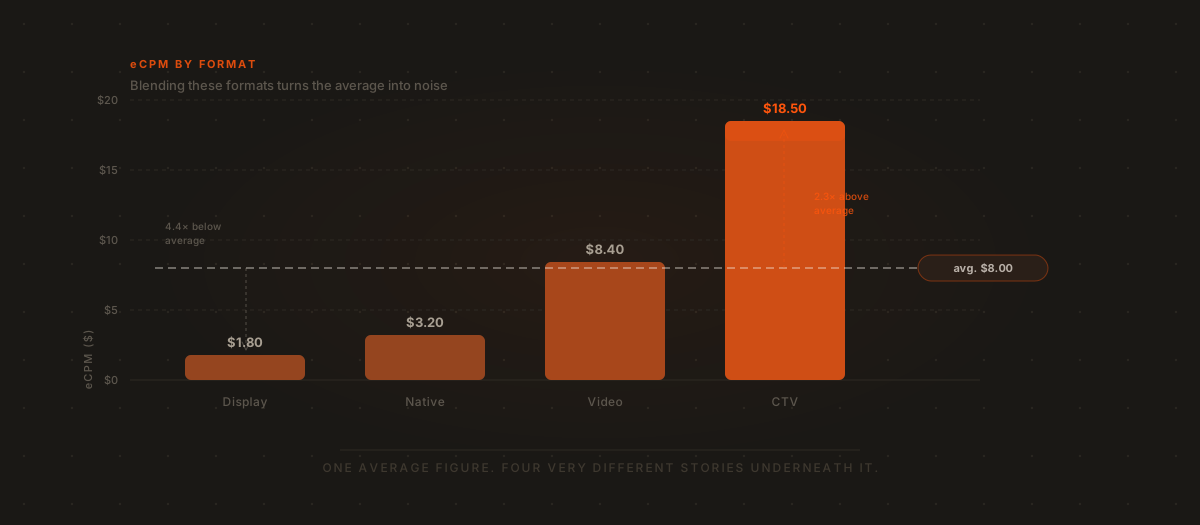
eCPM — effective cost per thousand impressions — is the headline metric for most publisher monetization teams. Higher eCPM means more money per impression. Simple enough.
Except it isn’t.
Why average eCPM lies
Average eCPM aggregates across all your inventory, all your demand sources, all your formats. A high average can mask terrible performance in specific placements. A low average can hide excellent performance in high-value slots buried under a mass of low-value traffic.
Consider this: a publisher with 90% low-fill inventory and 10% premium CTV inventory will show an average eCPM that accurately represents neither segment.
What you should watch instead
eCPM by placement. Your header placement and your sticky footer have fundamentally different values to buyers. Reporting them together is noise.
eCPM by format. CTV eCPMs are typically 5–10x display eCPMs. Video is 3–5x. Blending these together makes the display performance invisible.
eCPM by demand source. Different DSPs and buyers see different value in your inventory. Understanding which demand sources bid highest on which placement types is where real yield optimization lives.
eCPM by time of day and day of week. Auction dynamics shift significantly. Tuesday morning and Friday afternoon clear at very different prices for most publishers.
The floor pricing connection
eCPM and floor pricing are directly linked. Your floor price sets the minimum bid required to win an impression. Set it too low and buyers bid less than they would have. Set it too high and the impression goes unfilled.
The optimal floor for any impression isn’t a single number — it’s a function of all the dimensions above plus dozens more. This is why static floors set quarterly leave yield on the table: by the time you review them, the optimal floor has changed dozens of times.
Practical steps for better eCPM analysis
-
Break down your reporting. Most publishers report on 3–5 dimensions maximum. Start adding placement, format, and demand source to every report you pull.
-
Track fill-adjusted eCPM. An eCPM figure without a fill rate figure is incomplete. A $12 eCPM at 40% fill is worth less than an $8 eCPM at 85% fill.
-
Watch the distribution, not just the average. If your average eCPM is $4.50 but the median is $1.80, you have a small number of high-value impressions masking widespread underperformance.
-
Set segment-level floors. Even without ML-based optimization, moving from one global floor to per-format or per-placement floors typically lifts yield 8–15%.
Lumorrow’s reporting layer surfaces eCPM breakdowns by placement, format, geo, and demand source by default. See how it works →