
Walled gardens explained: closed platforms vs the open web
A walled garden is a platform that controls its own advertising end to end — inventory, data, and measurement — inside a closed ecosystem. Here's what walled gardens are, why advertisers both love and resent them, and how the open web competes.
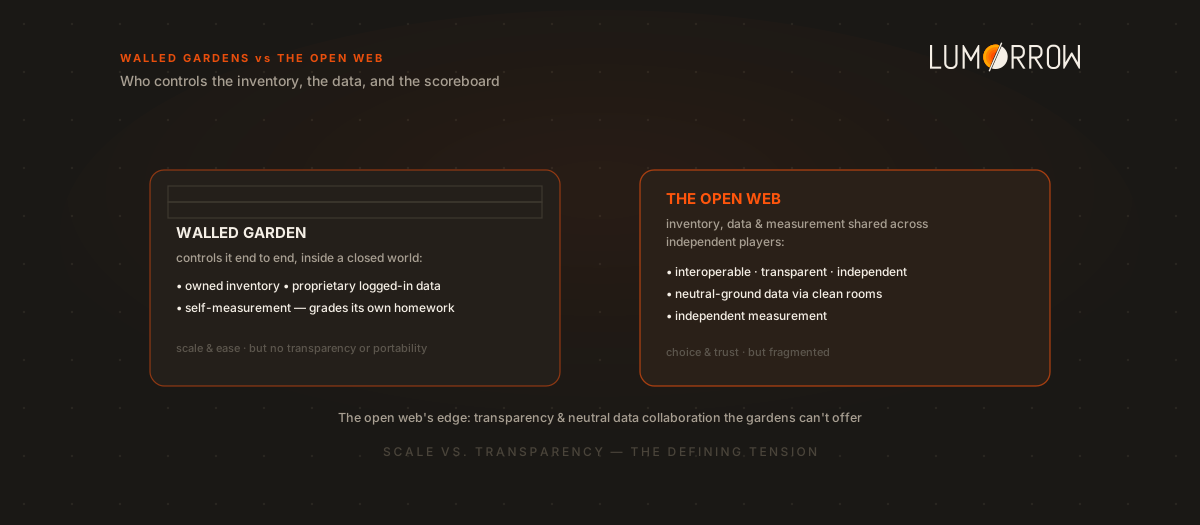
Digital advertising is split into two worlds: the giant closed platforms — the walled gardens — and the open web that everything else runs on. The tension between them shapes budgets, data strategy, and the entire case for supply-chain transparency. Understanding walled gardens is understanding one half of how the industry is structured.
Here’s what they are and why they’re so contested.
What a walled garden is
A walled garden is a large platform that controls its advertising ecosystem end to end — the inventory, the user data, and the measurement — inside a closed environment. Advertisers buy through the platform’s own tools, target using the platform’s own logged-in data, and measure results using the platform’s own reporting. Little of that data or inventory is accessible from outside.
The defining traits:
- Owned inventory — you’re buying the platform’s own properties, not the open web.
- Proprietary data — targeting runs on the platform’s vast logged-in, first-party user data, which never leaves.
- Self-measurement — the platform largely grades its own homework, reporting on its own performance.
The open web, by contrast
The open web is everything outside those closed platforms — independent publishers, apps, and sites monetized through the programmatic supply chain: DSPs, SSPs, exchanges, and independent measurement. It’s interoperable and open by design, which is its strength (choice, transparency, competition) and its weakness (fragmentation, and the fraud and transparency problems that come with an open system).
A walled garden owns the inventory, the data, and the scoreboard. The open web shares all three across independent players. That difference — who controls the data and the measurement — is the whole debate.
Why advertisers love them — and resent them
Walled gardens command enormous budgets for real reasons:
- Scale and logged-in data. Huge, authenticated audiences with rich first-party identity — exactly what’s durable in a cookieless world.
- Ease. Self-serve tools, closed-loop attribution, and simple execution.
- Performance. The data density often drives strong measured results.
And they resent them for equally real reasons:
- The “grading your own homework” problem. When the platform sells the ads and measures them, advertisers can’t fully trust the report — the conflict of interest independent measurement exists to solve.
- No transparency or portability. You can’t see the underlying data, can’t easily take your audiences elsewhere, and can’t compare like-for-like across gardens.
- Lock-in. The more you invest in one garden’s data and tools, the harder it is to leave.
How the open web competes
The open web’s counter-pitch is exactly what walled gardens lack: transparency, independence, and interoperability. Supply-chain transparency, first-party data collaboration via clean rooms, independent measurement, and curated, verifiable supply are how the open web offers scale without handing one platform control of the data and the scoreboard. As first-party data becomes central, the open web’s ability to let publishers and advertisers combine data on neutral ground — rather than inside someone’s garden — is its strongest hand.
The takeaway
A walled garden is a closed platform that controls its own advertising inventory, data, and measurement end to end — offering advertisers scale, rich logged-in data, and easy execution, at the cost of transparency, portability, and trustworthy independent measurement. The open web offers the opposite trade: openness and independence, with the fragmentation and quality challenges that come with it. The industry’s future is largely a contest between these models — and the open web’s best weapon is exactly the transparency and neutral-ground data collaboration the gardens can’t offer.
Lumorrow is built for the open web — real-time, pre-auction intelligence that brings transparency and quality to independent supply, so it can compete with the gardens on trust, not just scale. See how the platform works →.