
Ad tech vs mar tech explained: two stacks that keep converging
Ad tech powers paid media; mar tech powers owned channels and customer relationships. The line was once clear and is now blurring. Here's what each stack does, where they differ, and why first-party data is pulling them together.
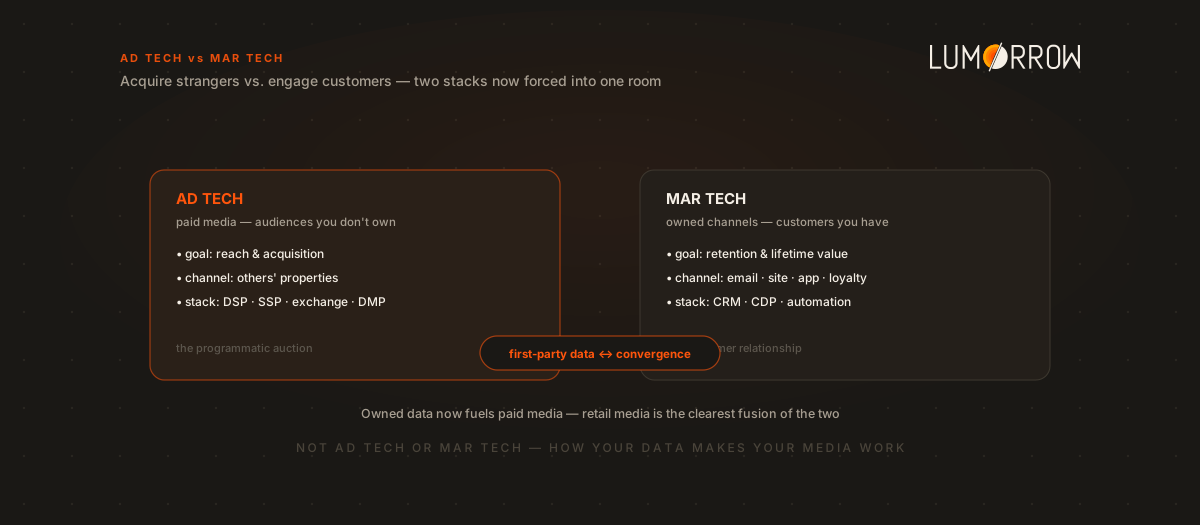
“Ad tech” and “mar tech” get used interchangeably, but they describe two different stacks that grew up solving different problems. The distinction used to be clean; it’s now blurring — and understanding both the difference and the convergence explains a lot about where the industry is heading.
Here’s what separates ad tech from mar tech, and why they keep merging.
The core distinction
The simplest cut is paid media vs. owned relationships:
- Ad tech (advertising technology) is the stack for buying, selling, and delivering paid media — reaching audiences you don’t own on other people’s properties. This is the world of DSPs, SSPs, exchanges, ad servers, and DMPs: the machinery of the programmatic auction.
- Mar tech (marketing technology) is the stack for managing owned channels and customer relationships — email, CRM, marketing automation, personalization, analytics, and the CDP. It’s about nurturing people you already have a relationship with.
Put crudely: ad tech acquires audiences you don’t have; mar tech engages the customers you do.
Where they differ
- Audience: ad tech → anonymous or third-party audiences at scale. Mar tech → known, identified customers.
- Channel: ad tech → paid, on others’ properties. Mar tech → owned (email, site, app, loyalty).
- Goal: ad tech → reach and acquisition. Mar tech → retention, relationship, lifetime value.
- Data: ad tech → historically third-party. Mar tech → first-party by nature.
- Signature platforms: ad tech → DSP/SSP/DMP. Mar tech → CRM/CDP/email/automation.
Why the line is blurring
The clean split is dissolving, driven by one force above all: the shift to first-party data.
When ad tech ran on abundant third-party data, it barely needed the customer relationships mar tech managed. But as third-party signals erode, the owned, consented data that lives in mar tech (in the CDP) becomes the fuel that ad tech needs to target and measure. The two stacks now have to talk to each other:
- Owned data powers paid media. First-party audiences from the mar-tech side are activated for advertising — increasingly through data clean rooms for privacy safety.
- Retail media is the fusion. A retailer’s customer data (mar tech) becomes the targeting and measurement layer for an advertising business (ad tech) — the clearest example of convergence.
- Measurement demands both. Proving an ad drove a real outcome requires connecting paid exposure (ad tech) to owned customer data (mar tech).
Ad tech used to acquire strangers and mar tech nurtured customers, and they rarely met. First-party data forced them into the same room — because the owned relationships are now what make the paid media work.
The takeaway
Ad tech is the stack for paid media — reaching audiences you don’t own — while mar tech manages owned channels and the customers you do. The line was once clear: acquisition vs. engagement, anonymous vs. known, third-party vs. first-party. But the collapse of third-party data has made owned, consented customer data the essential fuel for advertising, pulling the two stacks together — with retail media as the clearest fusion. For anyone building a modern strategy, the useful mindset isn’t ad tech or mar tech; it’s how your owned data makes your paid media work.
Lumorrow sits on the ad-tech side — the real-time, pre-auction exchange layer — valuing each impression on the signals it carries, including the first-party data that now bridges both stacks. See how the platform works →.