
Ad servers explained: the system that decides which ad to show
An ad server stores creatives, decides which ad wins a given impression, delivers it, and counts the result. Here's what an ad server does, how first-party and third-party ad servers differ, and where it sits next to the programmatic auction.
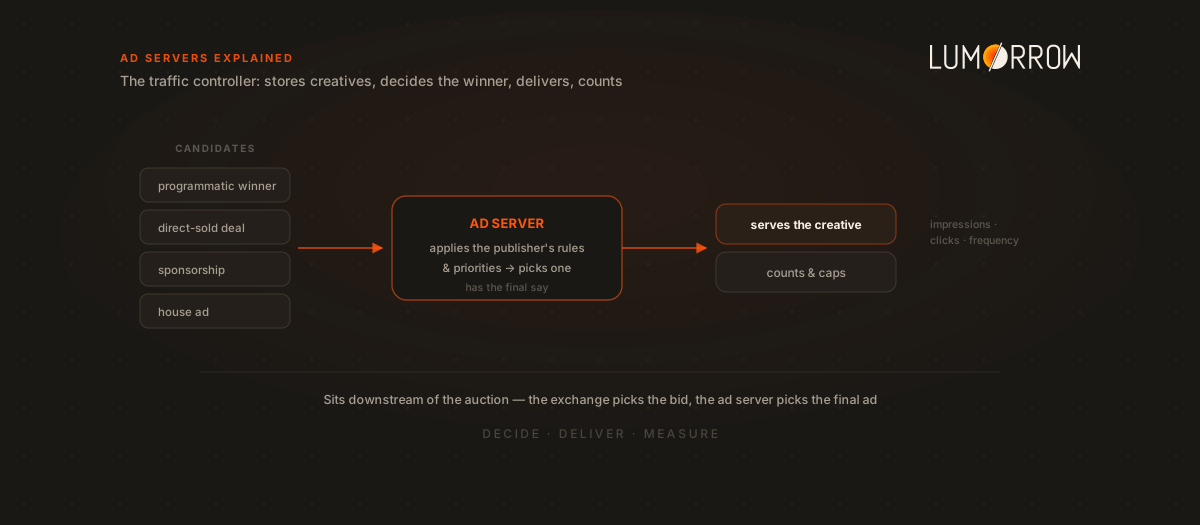
The ad server is one of the most important pieces of ad tech and one of the least understood, partly because it does an unglamorous job: it decides which ad to show in a given slot, delivers it, and counts what happened. No auction drama, just the quiet machinery that makes sure the right creative lands in the right place and gets measured.
Here’s what an ad server actually does and how it fits with everything else.
What an ad server does
An ad server is the technology that stores ad creatives and makes the real-time decision about which one to serve in a given placement — then delivers it and records the result. Its core jobs:
- Store creatives — hold the actual ad files (images, video, HTML) ready to serve.
- Decide — for each impression, determine which eligible ad should win, based on the publisher’s rules and priorities.
- Deliver — send the winning creative to the page or app to render.
- Measure — count impressions, clicks, and conversions, and enforce pacing and frequency caps.
Think of it as the traffic controller for advertising: everything that could fill a slot passes through it, and it decides what actually does.
First-party vs. third-party ad servers
There are two sides, mirroring the buy and sell sides of the market:
- Publisher (first-party) ad server. The publisher’s own system for managing its inventory — trafficking direct-sold campaigns, setting priorities, and deciding how programmatic demand competes against directly-sold deals. This is where the publisher’s business rules live.
- Advertiser (third-party) ad server. The advertiser’s system for managing their creatives across all the publishers they run on — hosting the ad, tracking delivery independently, and providing a neutral count the advertiser trusts more than each publisher’s own numbers.
Both sides run an ad server because each wants its own record of what happened. Independent measurement is the whole point of the third-party ad server.
The exchange decides who wins the auction. The publisher’s ad server decides whether that auction winner beats everything else competing for the slot — including direct-sold deals — and then serves it.
Where it sits next to the auction
This is the part that confuses people. The programmatic auction and the ad server are different layers that work together:
- The SSP and exchange run the real-time auction and produce a winning programmatic bid with a price.
- That programmatic winner is passed to the publisher’s ad server as one candidate among others.
- The ad server compares it against directly-sold campaigns, sponsorships, and house ads — using the publisher’s priority rules — and picks the final winner.
- The ad server delivers that creative and logs the impression.
So an impression can be won in the auction and still lose in the ad server if a higher-priority direct deal was eligible. The ad server has the final say on what actually renders.
Why it still matters
In an era obsessed with the auction, the ad server can feel like plumbing — but it’s where a publisher’s monetization strategy is actually enforced. It decides how programmatic competes against direct, enforces frequency and pacing, and produces the counts that everyone gets paid on. Discrepancies between a publisher’s and an advertiser’s ad-server numbers are a routine (and consequential) part of the business.
The takeaway
An ad server stores creatives, decides which ad wins a placement, delivers it, and counts the result. Publishers run one to manage their inventory and enforce their rules; advertisers run one to track and verify their campaigns independently. It sits downstream of the programmatic auction — taking the auction’s winner and deciding whether it beats everything else competing for the slot. Unglamorous, essential, and the final authority on what actually gets shown.
Lumorrow adds real-time, pre-auction intelligence upstream of the ad server — evaluating quality and setting floors before the impression is ever decided. See how the platform works →.