
DMP vs CDP explained: two data platforms, two very different jobs
A DMP and a CDP both organize audience data, but for different purposes. DMPs powered anonymous third-party audience targeting; CDPs unify known, first-party customer data. Here's how they differ and why the CDP is ascendant.
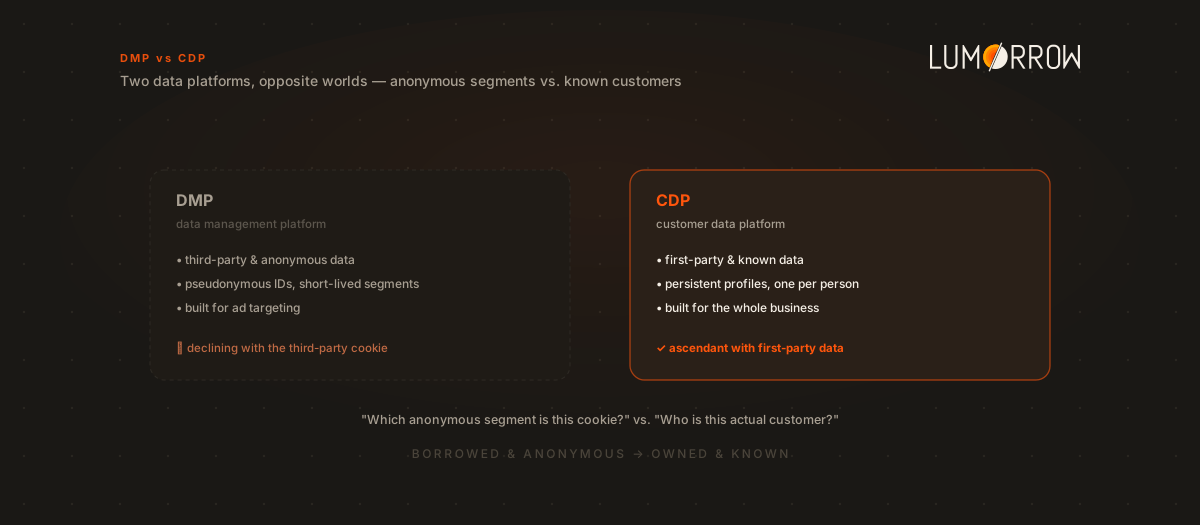
DMP and CDP sound interchangeable — both are platforms that collect and organize audience data — and marketers routinely confuse them. But they were built for opposite worlds: one for anonymous, third-party audience targeting, the other for known, first-party customer relationships. As advertising shifts from the first world to the second, understanding the difference matters more than ever.
Here’s what each one is and why the CDP is ascendant.
DMP: the data management platform
A DMP (data management platform) collects and organizes audience data — heavily third-party and anonymous — to build segments for ad targeting. Its classic job was to take cookie-based signals from many sources, bundle users into audiences (“in-market for a car,” “sports enthusiasts”), and push those segments to a DSP for campaign targeting.
Key traits:
- Anonymous by design — works with pseudonymous IDs (historically third-party cookies), not named individuals.
- Short data retention — segments are transient, refreshed constantly.
- Built for advertising — its output is audiences to target in media.
The DMP was the engine of third-party audience targeting. And that’s exactly why it’s under pressure: as third-party cookies erode, the anonymous data DMPs depend on is drying up.
CDP: the customer data platform
A CDP (customer data platform) unifies known, first-party customer data into a single, persistent profile per individual. Instead of anonymous segments, it stitches together everything a business knows about an actual named customer — purchases, emails, app activity, support history — into one durable record.
Key traits:
- Known individuals — built around identified, consented customers, not anonymous IDs.
- Persistent profiles — a lasting, unified view of each customer over time.
- Built for the whole business — powers marketing, personalization, analytics, and increasingly advertising activation.
The CDP is the natural home for first-party data — the asset that’s becoming central as borrowed signals disappear.
A DMP asks “which anonymous segment does this cookie belong to?” A CDP asks “who is this actual customer, and what do we know about them?” One is built on borrowed, anonymous data; the other on owned, known data.
The key differences at a glance
- Data type: DMP → mostly third-party, anonymous. CDP → first-party, known.
- Identity: DMP → pseudonymous IDs. CDP → persistent individual profiles.
- Retention: DMP → short-lived segments. CDP → durable, long-term records.
- Primary use: DMP → ad targeting. CDP → unified customer view across the business.
- Trajectory: DMP → declining with the cookie. CDP → ascendant with first-party data.
Why the CDP is winning
The shift is a direct consequence of the cookieless transition. When anonymous third-party data was abundant, the DMP’s model made sense. As that data disappears and value moves to owned first-party relationships, the CDP — designed around exactly that — becomes the strategic platform. Many DMP capabilities are being folded into CDPs or paired with data clean rooms for privacy-safe activation. The DMP isn’t gone, but the center of gravity has clearly moved.
The takeaway
A DMP organizes anonymous, third-party data into segments for ad targeting; a CDP unifies known, first-party data into persistent profiles for the whole business. They solved different problems for different eras — and as advertising migrates from borrowed anonymous data to owned known data, the CDP has become the more strategic of the two. If you’re deciding where to invest, follow the data that’s actually durable: your own.
Lumorrow focuses on the real-time, pre-auction layer — valuing each impression on the signals it carries — complementing the first-party data a CDP unifies. See how the platform works →.