
Digital out-of-home (DOOH) explained: programmatic comes to the billboard
Digital out-of-home is the digital screen in the physical world — billboards, transit, retail, elevators — and it's increasingly bought programmatically. Here's what DOOH and pDOOH are, how buying a one-to-many screen differs from web ads, and why it's growing.
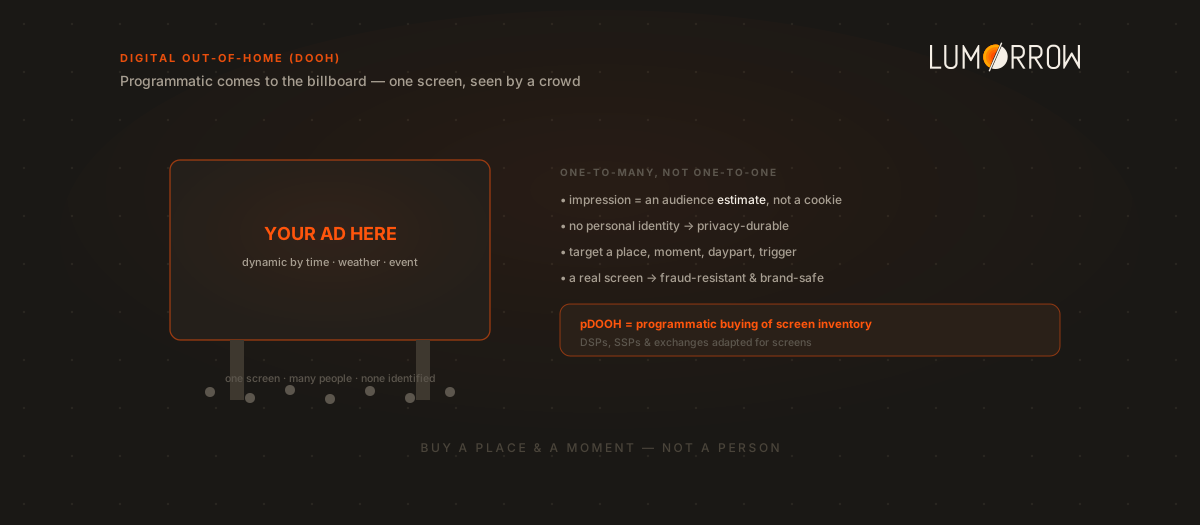
Out-of-home advertising — billboards, posters, transit ads — is the oldest medium there is. Its digital version, DOOH, is one of the fastest-modernizing: those screens are now increasingly bought through the same programmatic machinery as web and CTV. But buying a billboard that thousands of people pass is fundamentally different from buying a personal web impression, and that difference is the whole story.
Here’s what DOOH is and how programmatic DOOH works.
What DOOH is
Digital out-of-home (DOOH) is advertising on digital screens in physical, public spaces: roadside billboards, transit stations and vehicles, airports, shopping malls, retail interiors, elevators, gyms, and gas-station pumps. It’s the digital evolution of classic out-of-home — the screen replaces the printed poster, which means the content can change dynamically, by time of day, weather, or audience.
Programmatic DOOH (pDOOH) is the buying of that inventory through automated, programmatic pipes — DSPs, SSPs, and exchanges adapted for screens — rather than the traditional months-long manual booking of a billboard.
The fundamental difference: one-to-many
Web and mobile advertising is one-to-one — a single impression served to a single identified device. DOOH is one-to-many — a single screen seen by many people at once, none of them individually identified. That single fact reshapes everything:
- The “impression” is different. A DOOH impression isn’t one cookie — it’s an estimate of how many people were likely to see the screen during the ad’s play, derived from audience-measurement data (foot traffic, transit patterns, mobile-location aggregates).
- There’s no personal identity. No cookies, no device ID for the viewer — DOOH is inherently privacy-friendly because it targets places and moments, not individuals.
- Targeting is contextual and environmental. You buy a location, a time, an audience type, and conditions (a coffee ad on a cold morning, a matchday ad near the stadium) rather than a specific person. It’s contextual targeting in the physical world.
A web impression is one screen, one person. A DOOH impression is one screen, a crowd. You’re not buying a user — you’re buying a place and a moment, priced by how many people pass through it.
How programmatic DOOH works
pDOOH adapts the programmatic model to screens:
- Screen inventory is made available through an SSP, described by location, screen type, audience estimates, and available play slots.
- Buyers use a DSP to target by location, audience, daypart, and triggers (weather, events, data feeds).
- An automated auction awards the play, and the creative is served to the screen for its slot — often as part of a rotating loop shared with other advertisers.
- Delivery is measured against audience impression estimates rather than individual views, increasingly reconciled with mobile-location data to gauge reach and even downstream visits.
This automation is what lets DOOH be bought flexibly and in real time — dynamic creative, quick campaigns, and data triggers that static billboards never allowed.
Why it’s growing
DOOH sits at a useful intersection: it’s brand-safe and fraud-resistant (a real screen in a real place is hard to spoof — a sharp contrast to the MFA and IVT problems of the open web), it’s privacy-durable (no personal identity needed, so the cookieless shift barely touches it), and programmatic buying makes it flexible and measurable in ways traditional OOH never was. Those strengths are exactly what advertisers want more of in 2026.
The takeaway
Digital out-of-home is the digital screen in the physical world, and programmatic DOOH brings automated, data-driven buying to it. The key difference from web advertising is one-to-many: you’re buying a screen seen by a crowd, priced on audience estimates for a place and moment, not a single identified user. That makes DOOH privacy-durable, fraud-resistant, and brand-safe by nature — which is why it’s one of the fastest-growing corners of programmatic.
Lumorrow’s real-time, pre-auction intelligence extends across programmatic channels — evaluating quality and value wherever inventory trades. See how the platform works →.