
CPM vs CPC vs CPA: ad pricing models explained
CPM, CPC, CPA, CPV — digital ad pricing models decide who carries the risk between publisher and advertiser. Here's what each one means, how they differ, and when each is used.
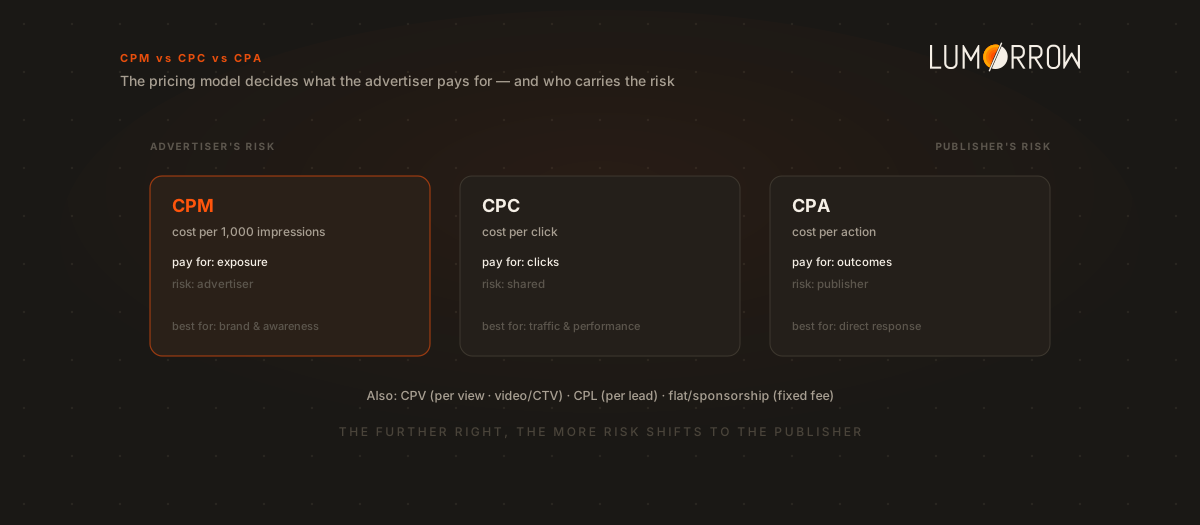
Every digital ad buy comes down to one question: what, exactly, is the advertiser paying for? An impression? A click? A sale? The answer is the pricing model, and it’s more than accounting — it decides who carries the risk between the publisher and the advertiser. Understanding the models is understanding where the incentives sit.
Here’s what the main pricing models mean and when each is used.
CPM — cost per mille (per thousand impressions)
CPM means cost per thousand impressions (“mille” is Latin for thousand). The advertiser pays a fixed amount for every 1,000 times the ad is served, regardless of whether anyone clicks.
- Who carries the risk: the advertiser. They pay for exposure and hope it performs.
- Best for: brand and awareness campaigns, where the goal is reach and visibility rather than an immediate action.
- Note: CPM is also the backbone of programmatic pricing — and its cousin eCPM (effective CPM) lets publishers compare earnings across any pricing model on a common per-thousand basis.
CPC — cost per click
CPC means the advertiser pays only when someone actually clicks the ad. Impressions are free; clicks cost.
- Who carries the risk: shared, tilting toward the publisher. The publisher only earns if the ad is compelling enough to be clicked.
- Best for: performance and traffic-driving campaigns — search ads are the classic example.
- Note: CPC rewards clickable creative, which can pull toward attention-grabbing over brand-appropriate.
CPA — cost per action (or acquisition)
CPA means the advertiser pays only when a specific action is completed — a purchase, a signup, a lead. Impressions and clicks are free; only the conversion costs.
- Who carries the risk: mostly the publisher. They deliver audience and get paid only if that audience converts on the advertiser’s site — much of which is outside the publisher’s control.
- Best for: direct-response and affiliate campaigns focused on measurable outcomes.
- Note: lowest risk for the advertiser, highest for the publisher, so publishers price it accordingly.
The other models you’ll see
- CPV — cost per view: used in video, the advertiser pays per view (often defined as watching to a threshold). Common in CTV and online video.
- CPL — cost per lead: a CPA variant specific to lead generation.
- Flat / sponsorship: a fixed fee for a placement over a period, regardless of impressions or actions — common in direct deals.
The risk ladder
The models form a ladder of who bears performance risk:
CPM → advertiser pays for exposure (advertiser’s risk). CPC → advertiser pays for clicks (shared). CPA → advertiser pays only for outcomes (publisher’s risk). The further down you go, the more the advertiser offloads risk onto the publisher — and prices to reflect it.
This is why premium publishers with proven audiences prefer CPM: they’d rather be paid for delivering quality exposure than gamble on whether an advertiser’s landing page converts. It also ties directly to floor pricing and yield — a publisher’s job is to convert every impression into the most revenue at the least risk.
The takeaway
Ad pricing models decide what the advertiser pays for and, with it, who carries the risk. CPM charges for impressions (advertiser’s risk, good for branding), CPC for clicks (shared, good for traffic), and CPA for outcomes (publisher’s risk, good for direct response). There’s no “best” model — only the right fit for a campaign’s goal and each side’s appetite for risk. Read the model and you can read the incentives behind any deal.
Lumorrow’s reporting and real-time intelligence help publishers see true, fill-adjusted value across every pricing model — and set floors that protect it. See how the platform works → or read the eCPM guide →.