
Dynamic creative optimization (DCO) explained: one ad, thousands of versions
DCO builds and tailors ad creative in real time, assembling the best combination of images, copy, and offers for each impression. Here's how dynamic creative optimization works, what it needs to run, and where it fits in programmatic.
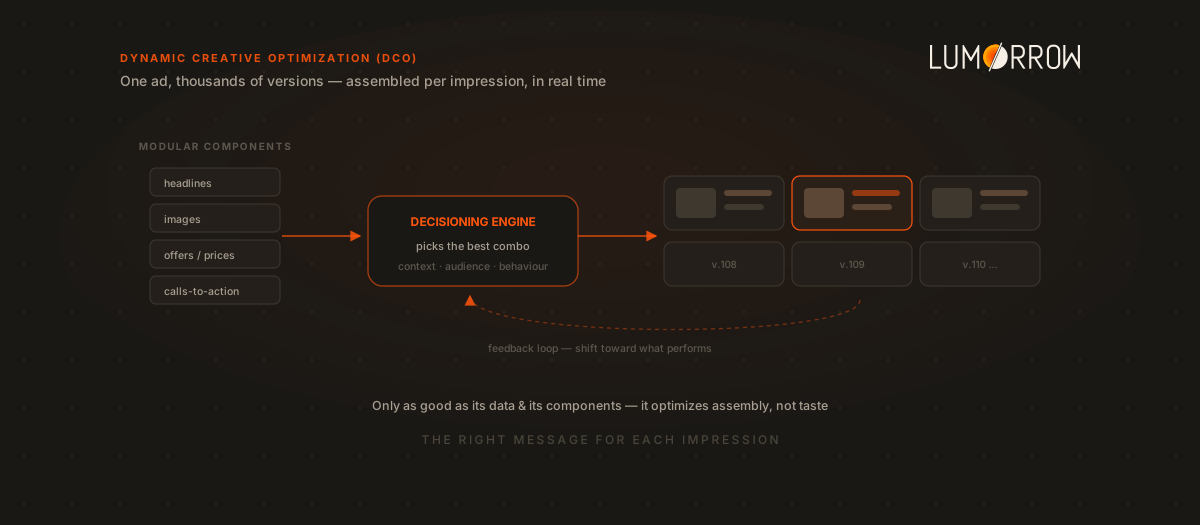
Programmatic spends enormous effort deciding which impression to buy — but the creative shown was often a single static ad served to everyone. Dynamic creative optimization (DCO) closes that gap: it tailors the ad itself, in real time, to each impression. It’s the difference between one message for millions and the right message for each.
Here’s how DCO works and where it fits.
What DCO is
Dynamic creative optimization (DCO) is technology that assembles and optimizes ad creative in real time, choosing the best combination of creative elements for each individual impression. Instead of designing one finished ad, a team designs the components — headlines, images, product shots, calls-to-action, background colors, offers — and DCO assembles them on the fly into the version most likely to work for the person and context in front of it.
A single DCO campaign can generate thousands of creative permutations from a modest set of building blocks, each matched to signals like location, weather, time of day, audience segment, or where the user is in the funnel.
How it works
DCO has three ingredients:
- A creative template with modular components. The ad is built as interchangeable parts rather than one fixed layout — this is the design work that makes everything else possible.
- A decisioning engine. In real time, it selects which combination of components to show, based on data signals about the impression and on what’s performing best.
- A feedback loop. DCO tracks how each variation performs and shifts toward the winners — continuous optimization rather than a one-time A/B test.
The data driving those decisions can be contextual (the page or app, weather, location), audience-based (first-party data or segments), or behavioral (retargeting a specific product someone viewed).
Static creative asks the media to do all the work. DCO makes the creative adapt too — assembling the right message, image, and offer for each impression instead of one version for everyone.
Where DCO fits in programmatic
DCO sits on the creative side of the programmatic auction, usually operated through a DSP or a specialist creative platform. Once the DSP wins an impression, DCO decides what to actually show in the space it just bought. It’s especially powerful for:
- Retargeting and commerce — showing the exact product a user viewed, with live pricing or availability, the engine behind much of retail media creative.
- Localized campaigns — swapping in the nearest store, local language, or regional offer automatically.
- Contextual moments — a cold-weather product on a cold day, a matchday message near a stadium.
The catch: it depends on data and design
DCO’s power scales with the quality of two inputs. It needs good data signals to decide well — and as identity signals erode, personalized DCO leans more on contextual and first-party data. And it needs well-designed modular creative — a DCO system fed lazy components just produces thousands of mediocre ads faster. The technology optimizes assembly; it doesn’t invent good creative. Measurement matters too: without connecting variations to real outcomes (attention, conversions), DCO can optimize toward the wrong signal.
The takeaway
Dynamic creative optimization assembles and tailors ad creative in real time, choosing the best combination of modular components for each impression rather than serving one static ad to everyone. It runs on a creative template, a decisioning engine, and a performance feedback loop — powered by contextual, audience, and behavioral data. Done well, it makes the creative as adaptive as the media buying; done lazily, it just mass-produces mediocre ads. The winning formula is good modular design plus good data plus honest outcome measurement.
Lumorrow’s real-time, pre-auction intelligence values the impression correctly before the creative is ever chosen — so DCO optimizes on inventory worth showing an ad on. See how the platform works →.