
Agentic buyers are entering the bidstream — and 'block all bots' just broke
AI agents are starting to browse, shop, and transact on behalf of real people. For ad tech, that breaks the oldest rule in fraud defense: automation is no longer the same as fraud. The mid-2026 state of agentic traffic.
For two decades, ad fraud defense rested on one assumption clean enough to build an industry on: automated traffic is bad traffic. A human visits a page; a bot fakes one. Tell them apart, block the bots, protect the budget.
In the 2026 state of ad fraud, we flagged the question that quietly dismantles that assumption — is it a bot, or an agent? This is the piece on what happens next, because the agents stopped being hypothetical. AI agents are now browsing product pages, comparing prices, managing accounts, and completing checkouts on behalf of actual people. They are automation. They are also, increasingly, your customers.
That collision — legitimate automation arriving through the same pipes as fraudulent automation — is the defining ad-tech problem of mid-2026. Here’s where it actually stands.
The traffic that didn’t exist two years ago
The numbers are moving faster than almost any trend the open web has seen. AI-agent and agentic-browser traffic grew by more than 7,800% year over year per HUMAN Security’s 2026 benchmark — a category that barely registered in 2024. Agentic browsers from the major AI labs now ship to consumers by default, and a meaningful and growing share of “sessions” on commerce and content sites are an assistant acting for a person, not the person directly.
This is not the bot traffic publishers learned to fear. It’s automation a real human asked for, doing something that human wanted done. And it lands on inventory through exactly the same request a fraud bot would generate.
The old heuristic — automation equals fraud — was a workable lie. In 2026 it’s just a lie, because a fast-growing slice of automated traffic is legitimate and even desirable.
Why this breaks ad tech specifically
Display, video, and CTV monetization all assume an impression is worth something because a person might see it and act. An agent scrambles every link in that chain:
- Viewability becomes ambiguous. An agent rendering a page to extract a price didn’t “view” the ad in any sense an advertiser is paying for — but it generated a perfectly valid impression.
- Attribution breaks. If an agent completes the purchase, which touchpoint gets credit? The ad the agent never consciously processed, or the instruction from the human hours earlier?
- Invalid-traffic filtering loses its binary. IVT vendors built their world on human-or-not. An agent is not human and not fraud — a third category the existing taxonomy has no clean slot for.
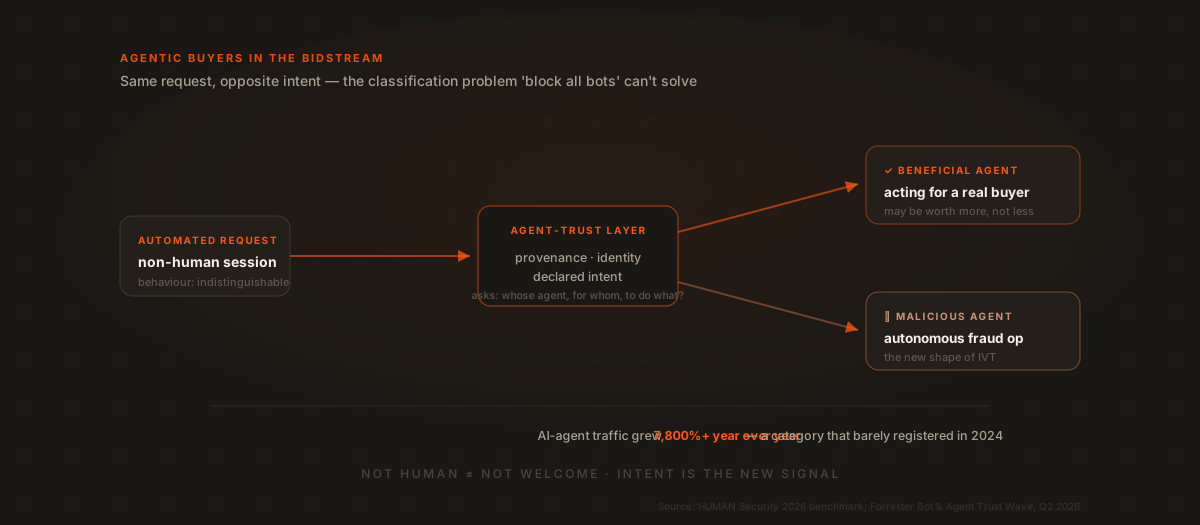
The uncomfortable part: the behavior of a beneficial agent and a malicious one can be identical. An AI agent logging in and buying something could be serving a real customer or executing an autonomous fraud operation. As we put it in the fraud piece — only the intent differs. Detection models trained to spot machines now flag traffic you’d be foolish to block.
From bot mitigation to agent trust
The industry’s response is a genuine reframing, not a patch. The goal is shifting from bot mitigation — keep machines out — to an agent-trust layer: distinguish beneficial agents from malicious ones, verify which is which, and govern what each is allowed to do.
The category names are already moving. HUMAN Security was named a Leader in Forrester’s first Bot and Agent Trust Management Wave in Q2 2026 — the renaming is the tell. Standards bodies and the major AI labs are converging on agent-identity primitives — signed agent credentials, declared intent, provenance that travels with the request — so that a publisher or exchange can ask not just “is this a machine?” but “whose agent is this, acting for whom, and to do what?”
None of it is settled. But the direction is unmistakable: trust is becoming something an agent carries and proves, not something inferred from how human its mouse movements look.
What this means for the bid request
For programmatic, the action moves into the bid request itself. A future-proof exchange has to reason about three things the old IVT checkbox never asked:
- Provenance — where did this request actually originate, and through what path? (The same supply-chain hygiene we covered in supply-chain transparency is now also agent-provenance infrastructure.)
- Identity — is there a declared, verifiable agent behind this, or is it anonymous automation hiding from detection?
- Intent — is this agent doing something a buyer would value, or strip-mining the page?
A request that answers those well may be worth more than an anonymous human session, not less. One that dodges them is the new shape of fraud.
What to actually do in 2026
The labs and standards bodies will take a year or two to settle agent identity. The publishers and buyers who’ll be ahead are the ones preparing now.
-
Stop treating “automation” as a single bucket. Start measuring which automation touches your inventory and why. A blanket “block all bots” rule will, increasingly, block your best customers’ assistants.
-
Build a view of agent traffic before you have to price it. You can’t monetize — or defend against — a category you can’t see. Segment agentic sessions in your own logs today.
-
Demand provenance, not just verification tags. A tag that fires after the auction can’t tell a good agent from a bad one. The question has to be answered in the request, before the impression is billed.
-
Watch the standards. Agent-identity and declared-intent specs are the ads.txt of the next five years. Early adopters set the defaults.
-
Assume the binary is gone for good. Any defense premised on “human = good, machine = bad” is already deprecated. The durable question is trust and intent, not human-or-not.
The auction is where intent gets decided
Every trend here points the same direction the fraud story did: the meaningful decision has moved upstream, into the bid request, before anything is bought. You cannot sort beneficial agents from malicious ones with a tag that fires after the auction clears — by then you’ve already transacted on traffic you didn’t understand.
That’s the conviction Lumorrow is built on. As the line between customer and bot dissolves into a question of intent and provenance, the exchange itself has to be the place that reasons about it — evaluating every request, in real time, before it becomes a billed impression. In a world where your best customer might arrive as a bot, the auction has to be smart enough to tell the difference.
Lumorrow is an AI-native exchange that evaluates provenance, identity, and traffic validity in real time, pre-auction, across web, CTV, and OTT. See how the platform works → or explore it for demand partners →.