
Native advertising explained: ads that match the form of the content
Native advertising is paid media designed to match the look, feel, and function of the content around it. Here's what native is, the main formats, how it's bought programmatically, and the disclosure line that separates it from deception.
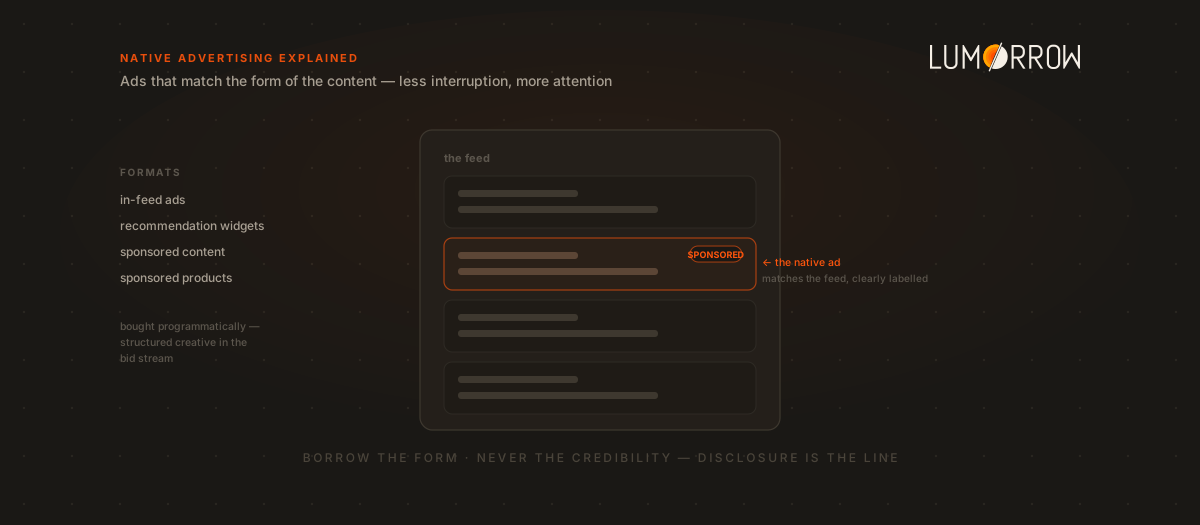
Native advertising is everywhere and, by design, easy to miss — that’s the point. Instead of interrupting the content with an obvious banner, native ads match the content: the same layout, the same style, the same feel. Done right, that makes them more engaging. Done wrong, it shades into deception. Understanding the difference is the whole game.
Here’s what native advertising is, its main formats, and how it works.
What native advertising is
Native advertising is paid media designed to match the form and function of the surrounding content and user experience. A native ad in a news feed looks like an article in that feed; a native unit in a product listing looks like a listing. The ad adopts the native format of its environment rather than announcing itself as a separate block.
The goal is less interruption, more relevance. Because native ads fit the experience instead of breaking it, they tend to earn more attention than traditional display — which is exactly why they’re valuable, and exactly why disclosure matters.
The main native formats
Native comes in a few recognizable shapes:
- In-feed ads — units inside a content or social feed, styled like the organic posts around them. The most common form.
- Content recommendation widgets — the “recommended for you” / “around the web” modules, usually at the end of articles, promoting sponsored content.
- Sponsored content / advertorials — full articles or videos paid for by a brand, published in the publisher’s own style.
- In-ad native — standard placements that pull in contextual elements to feel more integrated.
- Sponsored product listings — the native format that powers much of retail media, where sponsored products sit among organic search results.
How native is bought
Native started as a hand-sold, publisher-by-publisher business, but it’s now heavily programmatic. Standards let native creative components — headline, image, body, call-to-action — be passed through the OpenRTB bid stream as structured fields, so the publisher can assemble them into its own native template on the fly. That means native can be bought at scale through the same SSP/DSP/exchange plumbing as everything else, while still rendering in each publisher’s native style.
A native ad borrows the form of the content but must never borrow its credibility dishonestly. The line between “fits the experience” and “fools the reader” is disclosure.
The disclosure line
Native’s strength — blending in — is also its ethical and regulatory risk. If a reader can’t tell an ad from editorial, native crosses from persuasion into deception, which regulators treat as a consumer-protection issue. That’s why proper native carries clear labeling: “Sponsored,” “Promoted,” “Ad,” or “Paid partnership.” Good native is transparent about being an ad and well-matched to its environment — those aren’t in tension. The labeling is what keeps native honest, and it’s a brand-safety and trust issue as much as a legal one.
The takeaway
Native advertising is paid media built to match the form and function of the content around it — in-feed units, recommendation widgets, sponsored content, and sponsored product listings. It’s engaging because it fits the experience rather than interrupting it, and it’s now bought programmatically at scale through structured creative in the bid stream. The one non-negotiable is disclosure: native works when it’s clearly labeled as advertising, and undermines trust the moment it isn’t.
Lumorrow evaluates supply quality and context in real time, pre-auction — so native and every other format transacts on inventory that’s actually what it claims to be. See how the platform works →.