
Ad operations explained: the people who make advertising actually run
Ad ops is the function that traffics campaigns, QAs creative, troubleshoots discrepancies, and keeps monetization running. Here's what ad ops actually does day to day, on both the sell side and the buy side, and how the role is changing.
Every article about ad tech describes systems — exchanges, auctions, ad servers. Almost none describe the people who make those systems actually work. Ad operations is that function: the unglamorous, indispensable discipline that turns a signed deal into a running campaign and keeps revenue flowing when something breaks. If you work anywhere near digital advertising, understanding ad ops explains a great deal about why things do — and don’t — happen.
Here’s what ad ops actually is.
What ad ops does
Ad operations (ad ops) is the function responsible for executing, delivering, and troubleshooting advertising campaigns. It sits between the commercial teams who sell or buy and the technology that serves the ads.
The core responsibilities:
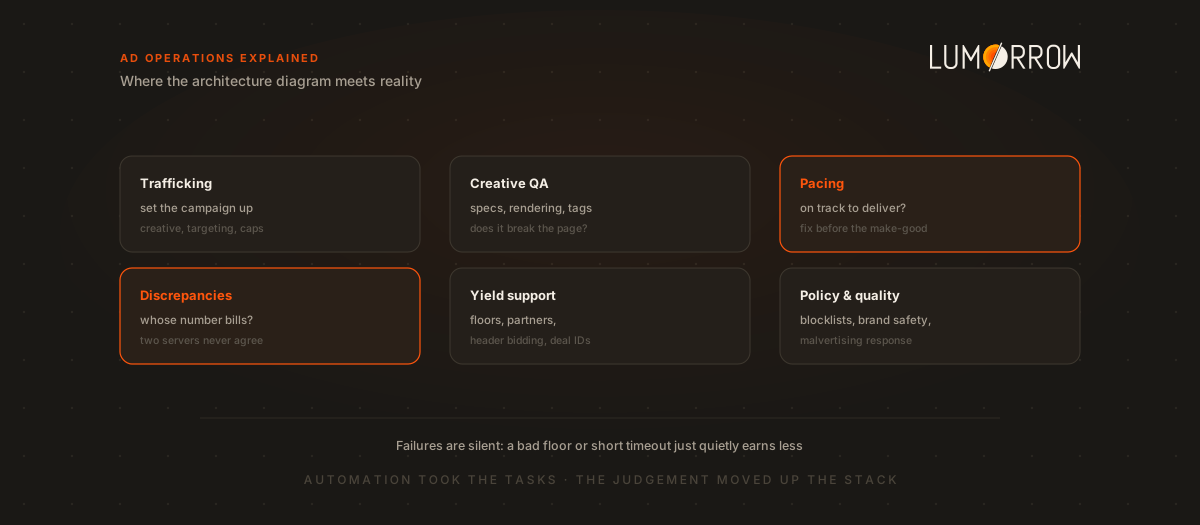
- Trafficking. Setting a campaign up in the ad server — loading creative, configuring targeting, flight dates, priorities, and frequency caps — so it delivers as sold.
- Creative QA. Checking that creative meets specs, renders correctly across devices, fires its tracking properly, and doesn’t break the page.
- Delivery management (pacing). Monitoring whether campaigns are on track to deliver their booked volume — and fixing under- or over-delivery before it becomes a make-good or a refund.
- Troubleshooting and discrepancy resolution. Working out why the publisher’s numbers and the advertiser’s numbers disagree, why a tag isn’t firing, or why fill dropped overnight.
- Yield and inventory support. On the sell side, helping configure floors, demand partners, header bidding setups, and deal IDs.
- Policy and quality enforcement. Blocking unwanted advertisers, enforcing brand safety rules, and responding to malvertising incidents.
Sell side vs. buy side
The title means different things depending on which side you sit:
- Publisher-side ad ops focuses on inventory and revenue: managing ad slots, keeping the header bidding and ad server setup healthy, maximizing fill and yield, and ensuring direct-sold campaigns deliver.
- Agency/advertiser-side ad ops (often “campaign management”) focuses on execution and performance: trafficking into the DSP, managing creative and tracking, pacing budgets, and reporting.
Both spend a surprising amount of time on the same thing: discrepancies. Two ad servers counting the same campaign will never agree exactly, and reconciling that gap — deciding whose number bills — is a routine and consequential part of the job.
Ad ops is where the architecture diagram meets reality. Every elegant system assumes creative is correct, tags fire, and numbers reconcile. Ad ops is the function that makes those assumptions true.
Why it’s harder than it sounds
- Complexity compounds. A modern publisher runs an ad server, a wrapper, a dozen demand partners, consent tooling, and verification vendors — all interacting, all capable of breaking each other.
- Failures are silent. A misconfigured floor or a too-short timeout doesn’t throw an error; it just quietly earns less, and only shows up if someone is watching the right report.
- The stakes are immediate. Ad ops problems are revenue problems, in real time.
- The ground keeps moving. Privacy changes, new formats, and evolving standards mean the setup is never finished.
How the role is changing
Two shifts are reshaping ad ops. Automation has absorbed much of the manual trafficking that once defined the job — programmatic and automated workflows handle work that used to be hand-keyed. And as a result, the role is moving up the stack: from executing tasks to configuring, monitoring, and optimizing systems, closer to analytics and yield strategy. The modern ad ops professional is less a trafficker and more an operator of an automated revenue system — which makes understanding why the system behaves as it does more valuable than knowing where the buttons are.
The takeaway
Ad operations is the function that traffics campaigns, QAs creative, manages pacing, resolves discrepancies, and keeps the monetization stack healthy — on the publisher side focused on inventory and yield, on the buy side on execution and delivery. It’s difficult because complexity compounds, failures are silent rather than loud, and revenue is on the line in real time. Automation has taken over the manual work, pushing the role toward configuration, monitoring, and optimization — which makes ad ops more strategic, not less necessary.
Lumorrow moves the decisions that ad ops teams tune — floors, quality filtering, demand routing — into real time, pre-auction, so fewer of them have to be managed by hand. See how the platform works →.