
Retargeting explained: why the ad follows you after you leave
Retargeting shows ads to people who already visited a site or engaged with a brand. Here's how retargeting works, the difference between site and search retargeting, why it's so effective — and why signal loss is breaking it.
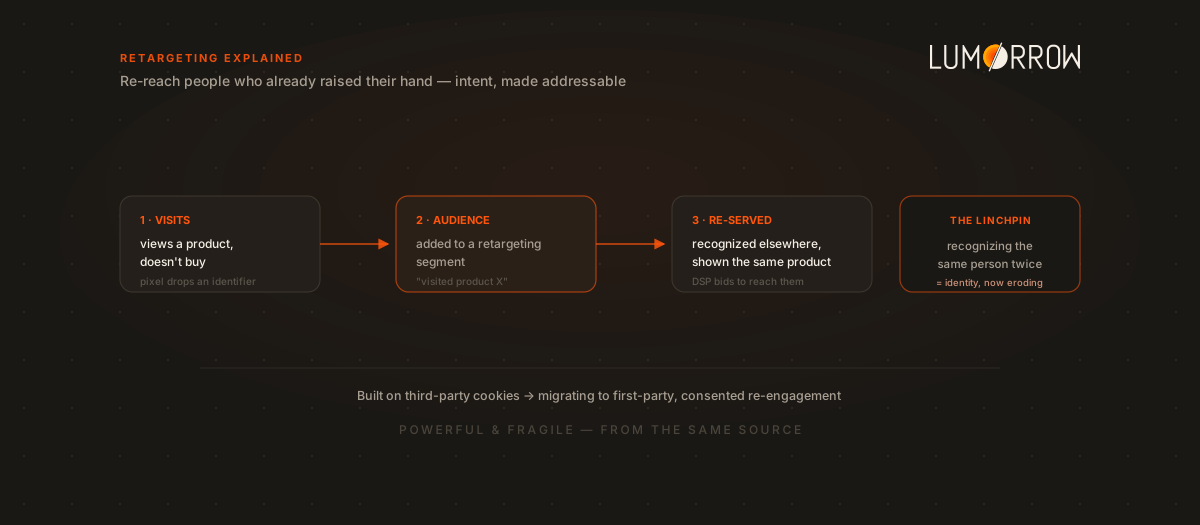
You look at a pair of shoes, don’t buy them, and for the next week those shoes follow you across the internet. That’s retargeting (also called remarketing) — the most familiar, most effective, and most quietly fragile tactic in digital advertising. Everyone has experienced it; far fewer understand how it actually works or why it’s getting harder.
Here’s how retargeting works and what’s changing.
What retargeting is
Retargeting shows ads to people who have already interacted with a brand — visited its site, viewed a product, added something to a cart, or used its app — but didn’t convert. Instead of reaching cold strangers, it re-engages warm prospects who already showed intent.
That’s why it’s so effective: the audience has demonstrated interest. A person who viewed a product is far more likely to buy than a random impression, so retargeting reliably delivers strong measured performance — which is also why it can consume a disproportionate share of budgets.
How it works
The classic flow depends on being able to recognize the same person again later:
- A visitor lands on a site. A small piece of code (a pixel or tag) drops an identifier — historically a third-party cookie — marking that browser as “visited product X.”
- That identifier is added to a retargeting audience (a segment of people who did a specific thing).
- Later, when someone from that audience appears in a bid request elsewhere on the web, the advertiser’s DSP recognizes them and bids to show them a relevant ad — often the exact product they viewed, assembled via dynamic creative.
The entire mechanism rests on one capability: recognizing that the person seeing the ad now is the same person who visited earlier. That’s identity — and it’s exactly what’s eroding.
Retargeting is intent made addressable — re-reaching someone who already raised their hand. Its power and its fragility come from the same source: it only works if you can recognize the same person twice.
Site vs. search retargeting
Two common flavors:
- Site retargeting — targeting people based on pages they visited on your site. The classic “you looked at this product” case.
- Search retargeting — targeting people based on what they searched for elsewhere, even before visiting your site, reaching intent earlier in the journey.
Both re-engage demonstrated interest; they differ on where the intent signal came from.
Why it’s breaking — and adapting
Retargeting was built on third-party cookies, so the cookieless shift hits it directly. Without a durable cross-site identifier, the pixel can’t reliably recognize a returning visitor on another site, and retargeting audiences shrink and decay. The same signal loss also worsens frequency capping — which is why poorly-capped retargeting can feel like being stalked by an ad.
The adaptations track the broader identity portfolio:
- First-party retargeting. Re-engaging authenticated visitors using your own first-party data and logged-in relationships — durable because it doesn’t need a third-party cookie.
- Onsite and owned-channel retargeting. Email and on-property messaging to known users.
- Cohort and contextual approaches. Reaching intent-similar audiences without tracking the individual.
Retargeting isn’t disappearing — it’s migrating from anonymous cross-web tracking toward consented, first-party re-engagement.
The takeaway
Retargeting re-engages people who already showed interest — visited a site, viewed a product, abandoned a cart — which is why it’s one of the most effective tactics in advertising and one of the easiest to over-spend on. It works only if you can recognize the same person again, so it was built on third-party cookies and is now being reshaped by their decline. The durable version leans on first-party data and owned channels: re-reaching the people you actually have a relationship with, rather than following strangers around the web.
Lumorrow evaluates the consented signals on each bid request in real time, pre-auction — so re-engagement runs on inventory and identity that are actually what they claim to be. See how the platform works →.