
FAST channels explained: free, ad-supported, and surprisingly like old TV
FAST channels are free ad-supported streaming TV — linear-style channels delivered over the internet. Here's what FAST is, why it exploded, how the economics work, and how it differs from AVOD and subscription streaming.
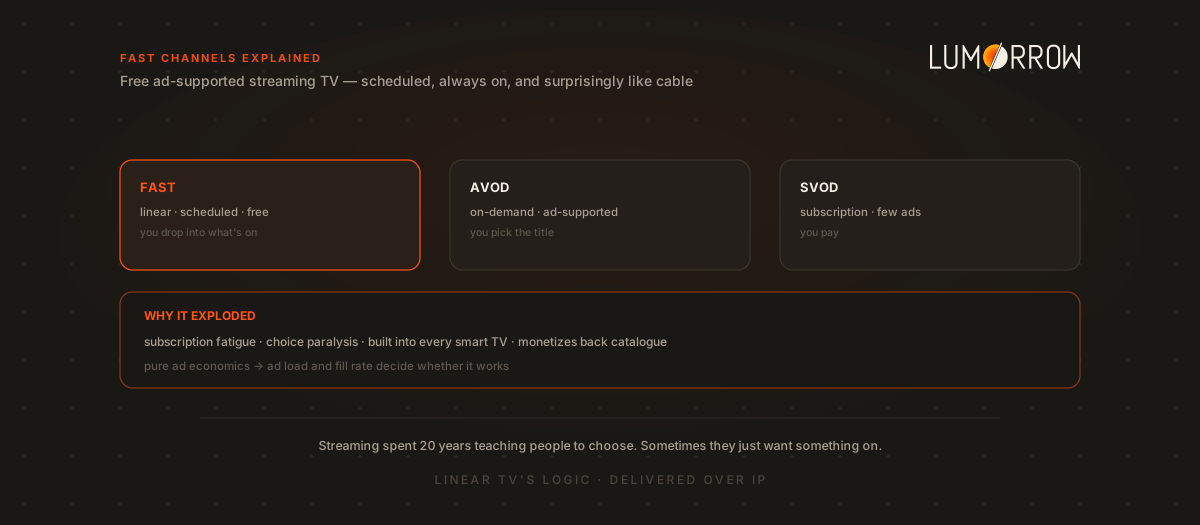
One of the odder plot twists in streaming: after two decades of on-demand everything, the fastest-growing format is a scheduled channel you can’t pause — free, ad-supported, and structurally almost identical to the cable TV streaming was supposed to kill. That’s FAST, and understanding why it works says a lot about both viewers and ad economics.
Here’s what FAST is and why it took off.
What FAST is
FAST — free ad-supported streaming TV — is linear-style channels delivered over the internet, free to watch, monetized entirely with advertising. You open the app, browse a channel grid, and drop into whatever is playing right now. No subscription, no account required, no choosing.
The critical distinction from other streaming:
- FAST — linear: scheduled programming, always running, ad-supported, free.
- AVOD — on-demand: you pick a title, ads play within it, free or cheap.
- SVOD — subscription video on demand: you pay, typically fewer or no ads.
FAST and AVOD are both ad-supported and often sit inside the same app, which is why they get conflated. The difference is linear vs. on-demand — FAST is much closer to traditional linear TV, just delivered over IP.
Streaming spent 20 years teaching people to choose. FAST rediscovered that a lot of the time, people don’t want to choose — they want something on. That’s not a step backwards; it’s a different job to be done.
Why it exploded
Several forces converged:
- Subscription fatigue. As services multiplied and prices rose, “free with ads” became genuinely attractive again.
- Choice paralysis. Endless catalogues create decision fatigue. A channel that’s simply playing removes the work — the same appeal channel-surfing always had.
- Cheap distribution. Smart TVs and streaming devices ship with FAST services built in and surfaced prominently, so channels reach big audiences without a subscriber-acquisition battle.
- Content library economics. FAST monetizes back catalogue — older shows, films, niche genres — that has little subscription pull but real value when it’s free and always on. It’s found money for rights holders.
- Advertiser demand. Advertisers want CTV reach, and FAST supplies large, ad-supported, TV-quality inventory.
How the ad economics work
FAST monetizes purely through advertising, which makes ad revenue per viewer-hour the whole business model. Mechanically it looks like the rest of CTV: breaks are ad pods filled with programmatic and direct demand, stitched into the stream via SSAI so playback stays seamless.
Two economic realities shape it:
- Ad load matters enormously. With no subscription revenue, the temptation is more ads per hour — but push too far and viewers leave, so ad load is a genuine yield balancing act.
- Fill is the constraint. Always-on channels generate enormous inventory around the clock, much of it in low-demand dayparts. Unsold breaks run promos or house content, so fill rate — not just CPM — drives the economics.
What it means for buyers
FAST inventory is attractive (real TV-screen reach, brand-safe premium content, buyable programmatically) with caveats worth knowing: content skews toward library and niche programming rather than marquee originals; measurement carries all the usual CTV difficulties; and because supply is abundant, quality and supply-path diligence matter — as with all CTV, fraud concentrates where CPMs are high and verification is immature.
The takeaway
FAST channels are free, ad-supported, linear-style channels streamed over the internet — structurally closer to cable than to on-demand streaming, and growing fast because they answer subscription fatigue and choice paralysis while monetizing back catalogue. Economically it’s pure advertising, so ad load and fill rate determine viability. For buyers it offers large, brand-safe CTV reach with the usual CTV caveats around measurement and supply quality.
Lumorrow evaluates CTV, FAST, and OTT supply quality in real time, pre-auction — where inventory is abundant and verification matters most. Explore CTV & OTT solutions → or see how the platform works →.