
Ad pods explained: how CTV ad breaks are actually structured
A CTV ad break isn't one ad — it's a pod of several slots that must be filled, sequenced, and de-duplicated together. Here's how ad pods work, why competitive separation matters, and what makes filling them harder than display.
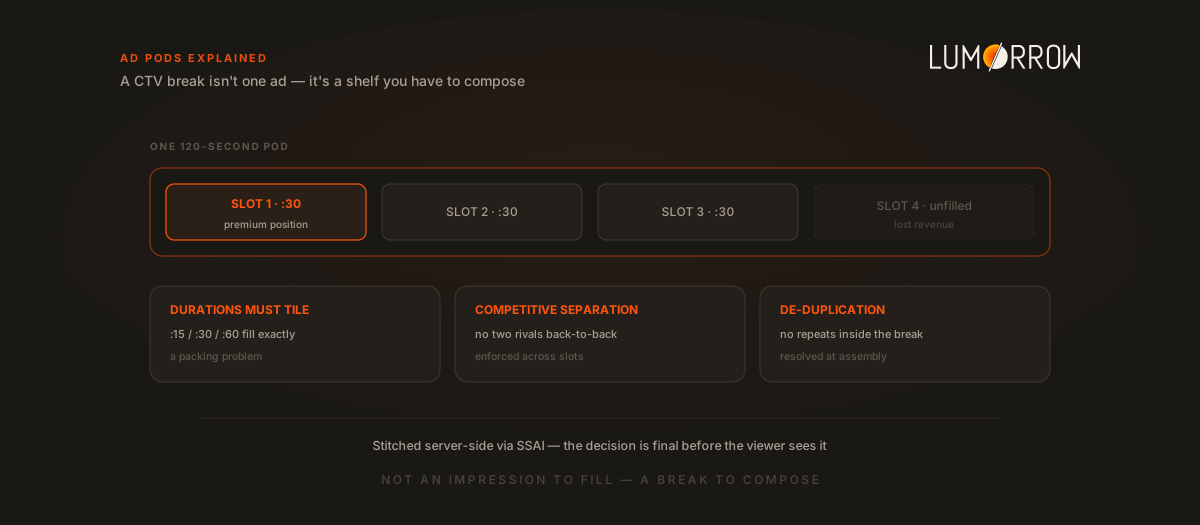
Display advertising thinks in single impressions: one slot, one auction, one ad. Television doesn’t work that way — a TV ad break is a sequence of spots that has to be assembled as a unit. As CTV inherited television’s structure, it inherited this too. The unit is the ad pod, and it’s one of the genuinely distinctive things about CTV that display-trained people consistently underestimate.
Here’s how ad pods work.
What an ad pod is
An ad pod is a set of ad slots grouped into a single commercial break within streaming content. Instead of one impression to fill, a two-minute break might contain four 30-second slots — and all of them need filling, in an order, as a coherent whole.
The vocabulary that goes with it:
- Pod duration — the total length of the break (e.g. 120 seconds).
- Slots — the individual ad positions within the pod.
- Position within the pod — first, middle, last. Not equal in value: the first slot typically commands a premium (highest attention, before viewers look away), and position is often priced accordingly.
- Pre-roll, mid-roll, post-roll — where the pod sits relative to the content.
Why pods make filling harder
Selling a pod is meaningfully more complex than selling a display impression:
- You’re filling a set, not a slot. The system must assemble multiple ads that fit the exact duration. Leftover unsold seconds either run house/promo content or leave the break feeling broken.
- Durations have to add up. Slots come in fixed lengths (:15, :30, :60) and must tile the pod without over- or under-running — a packing problem display never has.
- Competitive separation is mandatory. You cannot run two car brands back-to-back in the same break. The pod must be assembled with advertiser/category exclusivity enforced across the slots, which no single-impression auction handles natively.
- De-duplication within the pod. The same ad shouldn’t repeat inside one break — a specific, local case of frequency capping that has to be resolved at assembly time.
- It’s stitched server-side. Because CTV delivery runs through SSAI, the whole pod is assembled and spliced into the stream before it reaches the player, so decisions must be final and fast.
A display auction fills one hole. A pod auction fills a shelf — right total length, no two competitors adjacent, nothing repeated, and it has to be decided before the stream reaches the viewer.
How pods get filled programmatically
The OpenRTB spec supports pod bidding, letting a publisher describe the pod structure — duration, number of slots, position rules — so buyers can bid with that context. Two broad approaches exist:
- Slot-by-slot — each position auctioned individually. Simple, but risks poor overall pod composition (competitive clashes, awkward fills).
- Pod-level (holistic) — the pod optimized as a whole, choosing the combination of ads that maximizes total revenue while satisfying duration, separation, and dedupe constraints. Better outcomes, harder computation.
The second is where the industry is heading, because optimizing the set beats optimizing each slot in isolation — a constrained optimization problem, not a simple highest-bid-wins auction.
Why it matters commercially
Pods are where a lot of CTV yield is won or lost. Unfilled pod seconds are pure lost revenue on the most expensive inventory a publisher has. Poor sequencing degrades the viewing experience that makes CTV premium in the first place. And because pod decisions happen server-side and up front, the intelligence has to be applied before assembly — you can’t fix a badly-composed break after it’s stitched.
The takeaway
An ad pod is the set of ad slots making up a single CTV commercial break, and it must be filled as a unit — durations tiling exactly, competitive separation enforced across slots, no repeats, with position affecting value. That makes pod filling a constrained optimization problem rather than a simple auction, and it’s decided server-side before the stream reaches the viewer. If you’re coming from display, this is the mental model to update: in CTV you’re not selling an impression, you’re composing a break.
Lumorrow evaluates CTV and OTT supply quality and value in real time, pre-auction — before the pod is assembled and stitched. Explore CTV & OTT solutions → or see how the platform works →.