
Curation explained: how curated marketplaces are reshaping programmatic
Curation packages quality, verified inventory and audiences into ready-to-buy deals on the sell side. Here's what a curated marketplace is, why curation moved from the buy side to the sell side, and why it's one of the biggest shifts in programmatic.
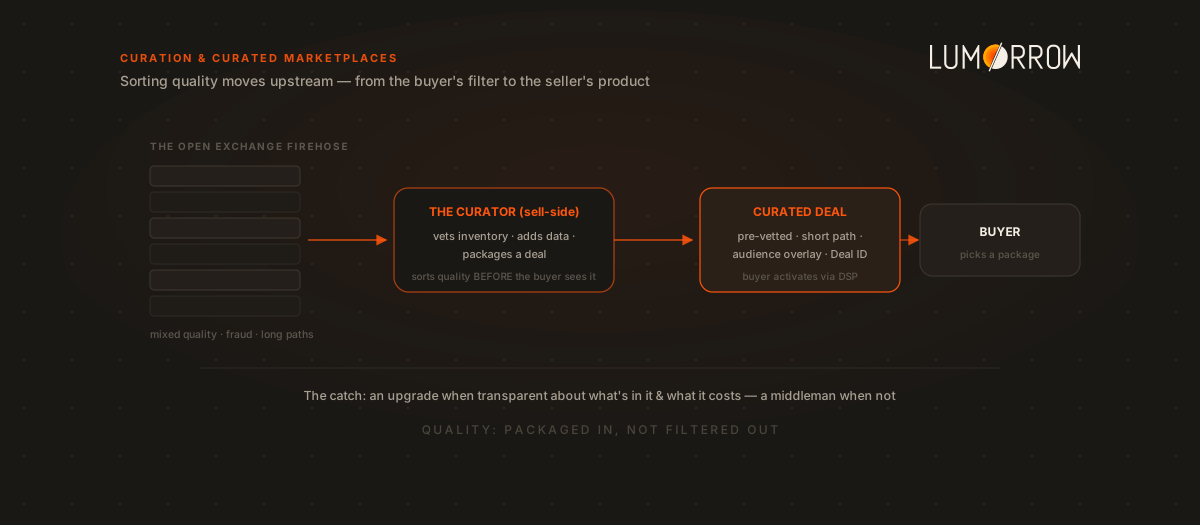
For most of programmatic’s history, the open exchange was a firehose — millions of impressions of wildly varying quality, and it was the buyer’s job to sort the good from the junk. Curation flips that: it moves the sorting to the sell side, packaging quality, verified inventory into ready-to-buy deals. It’s one of the defining shifts in programmatic right now, and it’s tightly bound to Lumorrow’s world of supply quality.
Here’s what curation is and why it matters.
What curation is
Curation is the practice of assembling a selected, quality-controlled pool of inventory — and often audiences and data — into a packaged deal that buyers can access through a Deal ID. Instead of a buyer manually filtering the open exchange, a curator does the filtering upfront and offers a clean, pre-vetted product.
A curated package typically bundles:
- Vetted inventory — supply that’s been checked for quality, brand safety, and fraud/MFA, on short, verified supply paths.
- Audience or data overlays — targeting applied at the point of curation, increasingly using first-party or clean-room data.
- A deal wrapper — packaged as a PMP or similar deal so buyers can activate it through their existing DSP.
The big shift: from buy-side to sell-side
Here’s the structural change worth understanding. Sorting quality inventory used to happen almost entirely on the buy side — the buyer’s DSP, verification vendors, and supply-path optimization filtering the firehose after the fact.
Curation moves that work upstream, to the sell side. The SSP or a dedicated curator assembles the quality pool before the buyer ever sees it, so buyers choose from pre-vetted packages rather than filtering everything themselves. It’s the same instinct as SPO, but performed proactively by the seller rather than reactively by the buyer.
The open exchange made quality the buyer’s problem to filter out. Curation makes quality the seller’s product to package in. That inversion — sorting upstream instead of downstream — is the whole shift.
Why curation is rising now
Several forces converged to make curation central in 2026:
- The cookieless transition. As third-party data fades, curators can attach first-party and contextual targeting at the supply level — a privacy-durable way to package audiences that doesn’t depend on the buyer’s cookies.
- Quality and fraud pressure. With MFA and invalid traffic draining budgets, buyers want pre-cleaned inventory rather than policing the open exchange themselves.
- Efficiency. Curated deals shorten supply paths and cut waste, delivering more working spend.
The debate
Curation isn’t uncontroversial. Because the curator sits between buyer and publisher and adds a fee, critics ask whether it introduces a new layer of cost and opacity — the very “ad tech tax” and supply-chain-transparency concerns curation is partly meant to solve. Done well, curation is quality packaged transparently on a short path; done poorly, it’s another undisclosed hop taking a cut. Which is why transparency about what’s in a curated deal and what it costs is the line between curation as an upgrade and curation as just another middleman.
The takeaway
Curation packages selected, quality-verified inventory (often with audience and data overlays) into ready-to-buy deals, moving the job of sorting quality from the buy side to the sell side. It’s rising because it offers privacy-durable audience packaging, pre-cleaned supply, and shorter paths — exactly what buyers want in a cookieless, fraud-conscious market. The catch is transparency: curation is a genuine upgrade when buyers can see what’s in the package and what it costs, and just another middleman when they can’t.
Lumorrow evaluates supply quality and provenance in real time, pre-auction — the foundation curation depends on, applied to every impression rather than a pre-packaged pool. See how the platform works → or explore it for demand partners →.