
Ad blocking explained: why users block ads, and what it costs publishers
Ad blockers strip ads from web pages, costing publishers billions in lost revenue. Here's how ad blocking works, why users adopt it, the acceptable-ads and anti-blocking responses, and the real lesson for the industry.
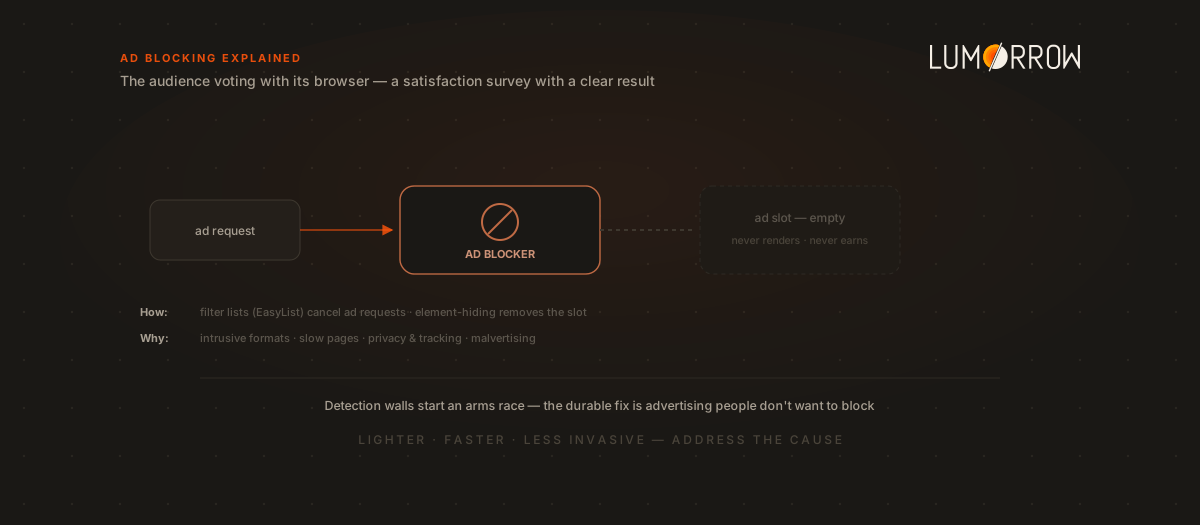
Ad blocking is the audience voting with its browser. Hundreds of millions of people run software specifically to not see the thing that pays for the content they’re consuming — a blunt, direct verdict on the state of advertising. For publishers it’s a serious revenue problem; for the industry it’s a warning that’s easy to fight and hard to actually heed.
Here’s how ad blocking works and what it really means.
What ad blocking is
Ad blocking is software — usually a browser extension, sometimes built into the browser or operating system — that prevents ads from loading or displaying on web pages and in apps. When a page tries to load an ad, the blocker intercepts and removes it, so the user sees the content without the advertising.
Adoption is driven by understandable frustrations: intrusive formats, slow page loads, privacy concerns about tracking, data usage, and outright security worries about malicious ads. People don’t block ads because they hate all advertising — they block it because too much of it got heavy, creepy, or hostile.
How ad blockers work
Most ad blockers use two core mechanisms:
- Filter lists. Community-maintained blocklists (the best-known is EasyList) enumerate the domains, URLs, and scripts known to serve ads. The blocker checks every request against these lists and cancels the ones that match — so the ad call never completes.
- Element hiding. Cosmetic rules hide ad containers on the page (via CSS selectors) so that even if something loads, the slot doesn’t display, leaving no ugly gap.
More advanced blockers also strip tracking scripts and fingerprinting, blurring the line between ad blocking and privacy tooling.
What it costs publishers
The impact is direct and large: a blocked ad is an impression that never renders and never earns. For ad-supported publishers, double-digit percentages of an audience running blockers can mean a substantial share of potential revenue simply erased — billions of dollars industry-wide. It hits content-first, tech-savvy audiences hardest, which are often exactly the valuable ones.
Ad blocking isn’t a piracy problem to be defeated — it’s a satisfaction survey with a very clear result. Users are telling you the experience got bad enough that they’d rather break your business model than tolerate it.
The responses — and why most miss the point
Publishers and the industry have responded several ways, with mixed wisdom:
- Acceptable Ads. Some blockers allow non-intrusive ads that meet strict standards (no autoplay, no huge takeovers) through by default — an implicit deal: keep ads tolerable and they’ll be shown. This rewards better experiences rather than fighting users.
- Anti-adblock walls. Detecting blockers and refusing content until they’re disabled. It can recover some revenue but antagonizes users and invites an arms race of counter-blockers.
- Reducing ad load and improving UX. The quieter, more durable response: fewer, lighter, less intrusive ads and faster pages — addressing the cause rather than the symptom.
- Alternative models. Subscriptions, memberships, and first-party relationships that reduce dependence on ad-blockable display.
The uncomfortable truth is that the sustainable answer isn’t better blocking-detection — it’s advertising people don’t feel compelled to block. Lighter ad load, real attention over impression volume, and cleaner supply all point the same direction.
The takeaway
Ad blocking is software that strips ads from pages using filter lists and element hiding, adopted by hundreds of millions of people frustrated by intrusive, slow, creepy, or unsafe advertising — and it erases a meaningful share of publisher revenue. The industry can fight it with detection walls and arms races, but the durable response is to treat ad blocking as the clear feedback it is: make advertising lighter, faster, more relevant, and less invasive, and fewer people reach for the block button in the first place.
Lumorrow’s real-time, pre-auction intelligence favors quality and validity over raw impression volume — aligned with the lighter, cleaner advertising that keeps audiences from blocking in the first place. See how the platform works →.