
First-price vs second-price auctions explained: how programmatic prices an impression
Programmatic auctions decide what you pay for an impression. Second-price ruled the display era; first-price took over around 2019 and changed everything. Here's how each works, why the industry switched, and what it means for buyers and publishers.
Every programmatic impression is sold in an auction — but how that auction sets the price has changed fundamentally, and the change reshaped the incentives of everyone in the market. The shift from second-price to first-price auctions around 2019 is one of the most consequential things that ever happened to programmatic, and it’s the key to understanding bid shading, floor pricing, and how buyers behave today.
Here’s how each auction type works and why the switch mattered.
Second-price auctions
In a second-price auction, the highest bidder wins — but pays just above the second-highest bid, not their own bid.
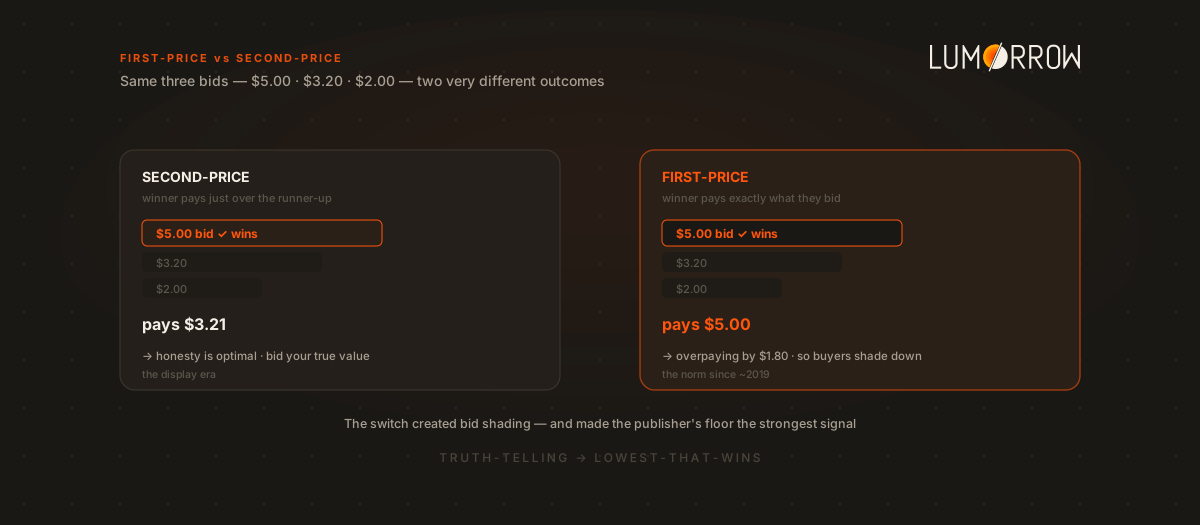
Say three buyers bid $5.00, $3.20, and $2.00. The $5.00 bidder wins but pays $3.21 — one cent over the runner-up. The winner’s own bid determined whether they won, not what they paid.
This has an elegant property: honesty is the optimal strategy. A buyer willing to pay $5 can safely bid $5, because if they win they’ll only pay just above the next bid anyway. Bidding your true value costs you nothing, so second-price auctions encouraged buyers to reveal what an impression was really worth to them. This was the model that built the early programmatic display market.
First-price auctions
In a first-price auction, the highest bidder wins and pays exactly what they bid.
Same bids — $5.00, $3.20, $2.00 — and now the winner pays the full $5.00. That $1.80 gap between their bid and the runner-up is money they didn’t have to spend.
This flips the incentive completely. Bidding your true value now means overpaying on every win. So the rational buyer stops bidding $5 and starts bidding the lowest number they think will still win — a practice called bid shading, now automated inside every DSP.
Second-price rewarded buyers for telling the truth. First-price rewards them for guessing how little they can get away with. Same auction, opposite behavior — and that behavioral flip is why bid shading exists.
Why the industry switched
If second-price was so elegant, why did the market move to first-price around 2019? A few reasons:
- Header bidding exposed the problem. As header bidding let publishers run multiple simultaneous auctions, chaining second-price auctions together produced murky, inconsistent pricing — and created room for hidden fees and undisclosed “auction mechanics.”
- Transparency demands. First-price is simpler and more transparent: you bid X, you pay X. No mystery about what the “second price” really was or whether the exchange was manipulating it.
- Trust. Second-price auctions required trusting the exchange to run them honestly — and not everyone did. First-price removed that trust requirement.
The trade-off: the industry gained transparency and lost the “just bid your true value” simplicity, replacing it with the shading arms race.
What it means for buyers and publishers
- For buyers: you can’t just bid true value anymore — you need bid shading to avoid overpaying, and your shading model is only as good as its data on what clears each auction.
- For publishers: your floor price became far more powerful. In a first-price world, the floor is the single strongest signal a shading model reads — set it well and you push buyers up; set it lazily and shading models pin bids right to it. This is why static floors leak so much yield.
Most of the open market runs first-price today, though pockets of second-price and hybrid dynamics still exist in places.
The takeaway
In a second-price auction the winner pays just above the runner-up, so honest bidding is optimal; in a first-price auction the winner pays exactly what they bid, so buyers shade their bids down to avoid overpaying. The industry switched around 2019 for transparency and trust, especially as header bidding made chained second-price auctions messy. The consequence shapes everything today: buyers need bid shading, and publishers’ floor prices became the most important lever they have. Understand the auction type and you understand why everyone behaves the way they do.
Lumorrow sets floors per impression, in real time, pre-auction — the strongest lever a publisher has in a first-price world. See how the platform works → or read the bid shading guide →.