
Getting paid: net terms, sequential liability, and the reconciliation gap
The auction is the interesting part. Getting the money is the part that decides whether a partnership works. Here's how publisher payment actually flows, and the three clauses that determine what you're owed and when.
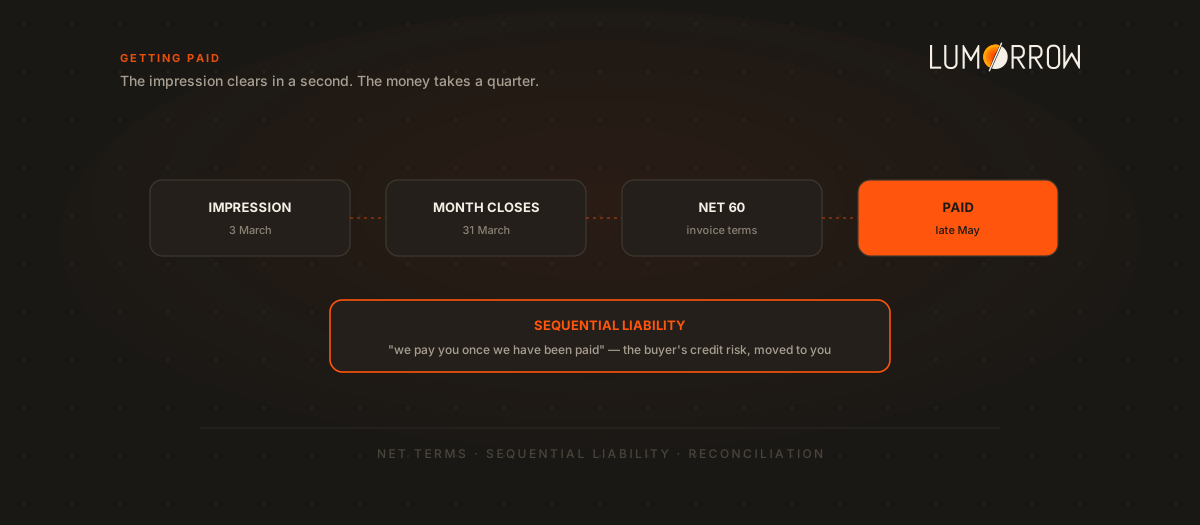
An impression clears in under a second. The money it earned takes between one and four months to reach you, passes through at least two balance sheets on the way, and arrives as a different number than the one in your dashboard.
That gap — between the auction and the bank transfer — is where publisher partnerships actually succeed or fail. Here’s what governs it.
Net terms, and what they really mean
“Net 30” sounds like a month. It usually isn’t.
Most programmatic payment runs on net terms from the end of the billing period, not from the impression. An impression served on 3 March falls into the March invoice, which closes on 31 March. Net 30 from that point means payment around 30 April — nearly sixty days after the ad ran. Net 60 pushes it to the end of May.
This isn’t sharp practice; it’s how the whole chain is structured, because your partner is waiting on their buyers too. But it does mean two things worth planning around:
- Your cash conversion cycle is longer than your reporting suggests. Revenue recognised in March may not fund anything until well into Q2.
- Onboarding a new partner delays cash twice — once for the terms, once because the first invoice period is usually partial.
Sequential liability — the clause that matters most
Buried in most supply agreements is a sentence that says, in effect: we will pay you once we have been paid.
That’s sequential liability, and it moves credit risk down the chain onto you. If a DSP or agency defaults, or disputes a campaign, or simply goes under, your partner’s obligation to pay you may not survive it.
It exists for a defensible reason — no intermediary wants to guarantee the solvency of every buyer in a market with thin margins. But you should know whether you’ve accepted it, because it changes what your receivable is worth:
- Ask directly: is payment sequentially liable, or guaranteed regardless of collection?
- Ask about concentration: if one buyer represents a large share of your revenue through this partner, their default is your problem too.
- Ask about recourse: if a buyer defaults, do you get visibility into which revenue is affected, or just a smaller payment with no explanation?
A partner who guarantees payment is taking on real risk on your behalf. That’s worth something, and it’s a fair reason for a slightly higher take rate.
The reconciliation gap
Your ad server says one number. Your partner’s dashboard says another. Neither is lying.
Discrepancies are structural, and the common causes are boring:
- Timing and time zones. If they close the day in UTC and you close in local time, every month has a seam.
- Counting method. An impression counted when the ad is served is a different event from one counted when it’s rendered or measured as viewable. The gap between served and rendered is real inventory that never painted.
- Invalid traffic filtering. They may remove traffic you counted. That’s the system working, but it shows up as a shortfall.
- Currency. If you invoice in one currency and they settle in another, the exchange rate and the date it’s struck both matter.
Small, stable discrepancies are normal and every ad ops team lives with them. What matters is agreeing in advance what counts as normal, whose numbers the invoice is based on, and at what point a gap triggers investigation. Settle that during onboarding, when nobody’s annoyed.
Deductions that appear later
Two arrive after the fact and surprise people:
- Invalid traffic clawbacks. Revenue is paid, then partially reversed when IVT detection catches up. Ask how far back adjustments can reach, and whether you’ll see them itemised.
- Make-goods and campaign adjustments. More common where direct-sold and programmatic share inventory.
Neither is unreasonable. Both are much easier to accept when the mechanism was explained up front.
What to do operationally
- Reconcile monthly, not quarterly. A one-month gap is a conversation; a six-month gap is an argument nobody can reconstruct.
- Keep your own baseline. Your ad server numbers are the only independent record you have.
- Track days sales outstanding by partner. Slow payment is a leading indicator of a partner in trouble, and it shows up in the ledger before it shows up in the market.
- Put the terms in the same document as the take rate. They’re two halves of the same commercial question.
The takeaway
Publisher payment is governed by three things: net terms, which are usually counted from the end of the billing month rather than the impression; sequential liability, which decides whether you get paid when a buyer doesn’t; and the reconciliation process, which decides whose numbers the invoice uses. None is negotiable after the fact and all three are easy to ask about before you integrate — which is exactly why they belong on the same list as everything else you vet.
Lumorrow settles with publishers on disclosed terms, with itemised reporting you can reconcile against your own ad server. See how it works for publishers →